A search for a “macbook trackpad not clicking fix” usually means your laptop has suddenly become far harder to use. You may still be able to move the pointer but cannot select anything, or the trackpad may feel unusually stiff, raised or completely unresponsive. The good news is that some causes are simple settings or software glitches. Others need prompt attention, particularly if the battery is expanding beneath the trackpad.
Before trying anything, save or back up important work if you still can. If you can connect a USB or Bluetooth mouse, do so. It will make the checks below much easier and can help you keep using the MacBook while you arrange a repair.
MacBook trackpad not clicking? Start with the safe checks
First, establish what “not clicking” means on your particular MacBook. On older models, the trackpad physically moves down when clicked. Many newer MacBooks use a Force Touch trackpad, which creates a click-like sensation using haptic feedback rather than a moving mechanism. When the MacBook is switched off, a Force Touch trackpad will not feel as though it clicks at all. That is normal.
If the MacBook is powered on and the trackpad does not respond, start with a restart. It sounds basic, but a temporary macOS process fault can stop input devices behaving properly. Choose Apple menu, Restart, rather than just closing the lid. Once it has restarted, test the trackpad before opening lots of apps.
Next, unplug everything connected to the MacBook. Hubs, docks, USB receivers and external mice can occasionally affect input settings or cause a software conflict. If the trackpad begins working once an accessory is removed, reconnect items one at a time to identify the culprit.
It is also worth wiping the trackpad gently with a clean, dry microfibre cloth. Grease, moisture or residue around the edge can make a mechanical trackpad feel sticky. Do not spray cleaner directly on the MacBook, force liquid around the trackpad, or use anything abrasive.
Check your trackpad settings
Using an external mouse, open System Settings and select Trackpad. On older versions of macOS, this may be called System Preferences. In the Point & Click section, check the click pressure setting if your MacBook has a Force Touch trackpad. Try changing it from Firm to Medium or Light, then test again.
Turn on “Tap to click” as a temporary workaround. This lets you select items with a light tap instead of pressing down. It will not repair a hardware fault, but it can make the machine usable while you work through the problem.
Also check whether macOS has been set to ignore the built-in trackpad when an external mouse is connected. This setting is often found in Accessibility under Pointer Control. It is particularly relevant if the problem started after using a wireless mouse or docking station.
Rule out a software problem
If settings have not helped, update macOS when possible. Apple updates can include fixes for drivers, power management and input behaviour. Only install an update with the MacBook connected to power and with a current backup, especially if it has already been behaving unpredictably.
Safe Mode is another useful test. It starts macOS with only essential software and helps show whether a login item, extension or third-party utility is interfering with the trackpad. On Apple silicon MacBooks, shut the machine down, hold the power button until startup options appear, select your startup disk, then hold Shift and choose Continue in Safe Mode. On Intel models, restart and hold Shift until the login screen appears.
If the trackpad works normally in Safe Mode but fails during ordinary use, the cause may be software rather than the trackpad itself. Remove recently installed mouse utilities, cleaning apps or system tools one at a time, then restart normally. If it still fails in Safe Mode, a physical fault becomes more likely.
Look for warning signs of a hardware issue
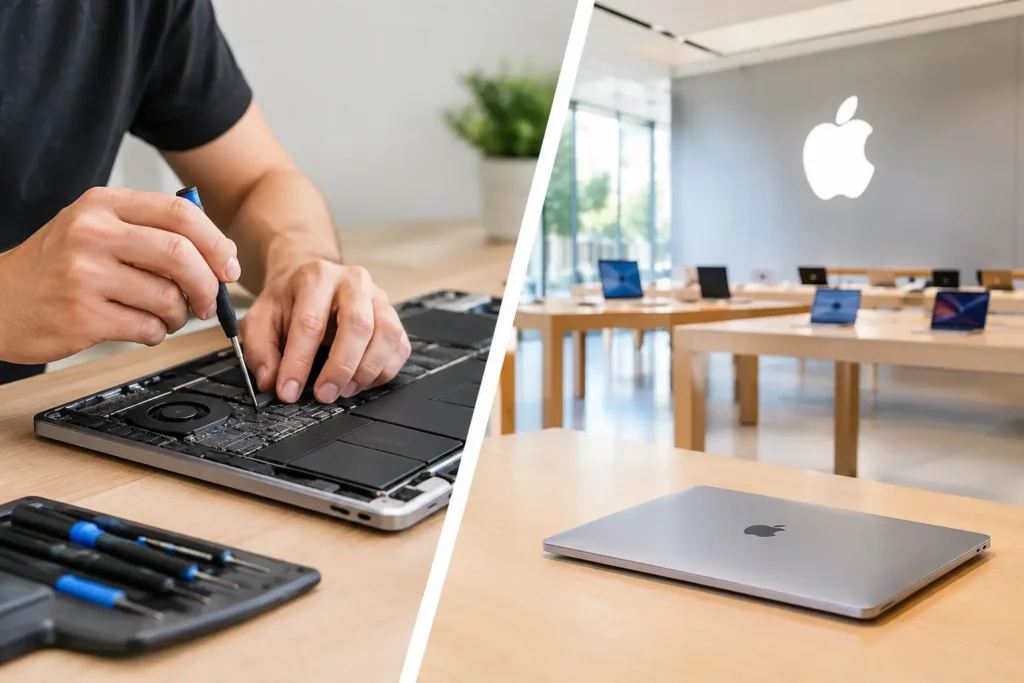
A trackpad that will not click can be caused by a worn mechanism, a failed trackpad cable, liquid damage or an internal battery beginning to swell. The last of these deserves special care. MacBook batteries sit underneath or close to the trackpad area, and expansion can push upwards, stopping it from moving or making the surface look uneven.
Stop using the MacBook and arrange a professional inspection if you notice any of these signs:
- The trackpad is raised, bowed, cracked or noticeably higher than the surrounding case.
- Clicking has become progressively harder over days or weeks, rather than failing suddenly.
- The bottom case is bulging, the MacBook rocks on a flat surface, or the lid no longer closes evenly.
- There is heat, a chemical smell, liquid exposure or visible corrosion around the ports.
Do not press harder in an attempt to make the trackpad click. Do not try to flatten it, pierce the battery, or keep charging a MacBook that appears swollen. A battery issue is not a DIY repair and continuing to use it can turn a manageable repair into more serious internal damage.
Why a click can fail while the pointer still moves
This is a common and confusing fault. The cursor may continue to move because the trackpad is still detecting your finger, while the click function has failed separately. On a mechanical trackpad, the physical switch or its mounting can wear out. On a Force Touch model, the haptic system, power supply or trackpad assembly may be at fault.
That distinction matters because there is no single universal MacBook trackpad not clicking fix. Turning on Tap to Click can help with a mechanical click failure, but it will not resolve a swollen battery or liquid damage. Likewise, reinstalling software will not repair a damaged cable.
Avoid the fixes that create bigger problems
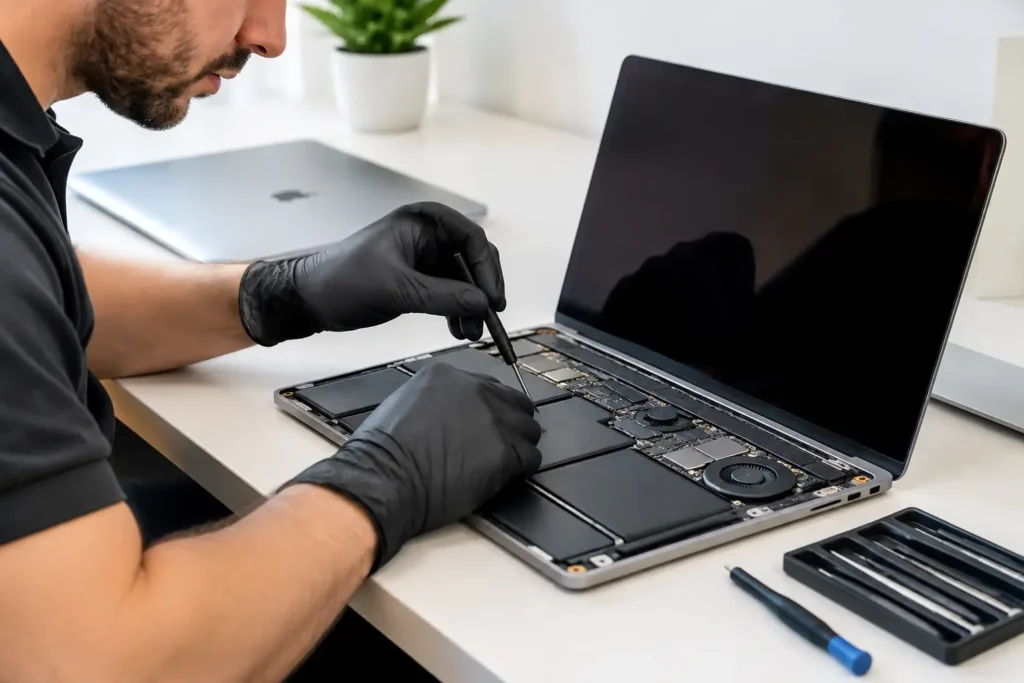
Online advice sometimes suggests opening the MacBook, disconnecting batteries or resetting internal components without the correct tools. That can be risky. Modern MacBooks are compact, use delicate connectors and may have adhesives or screws designed for specific tools. One slipped screwdriver can damage the logic board, display cable or battery.
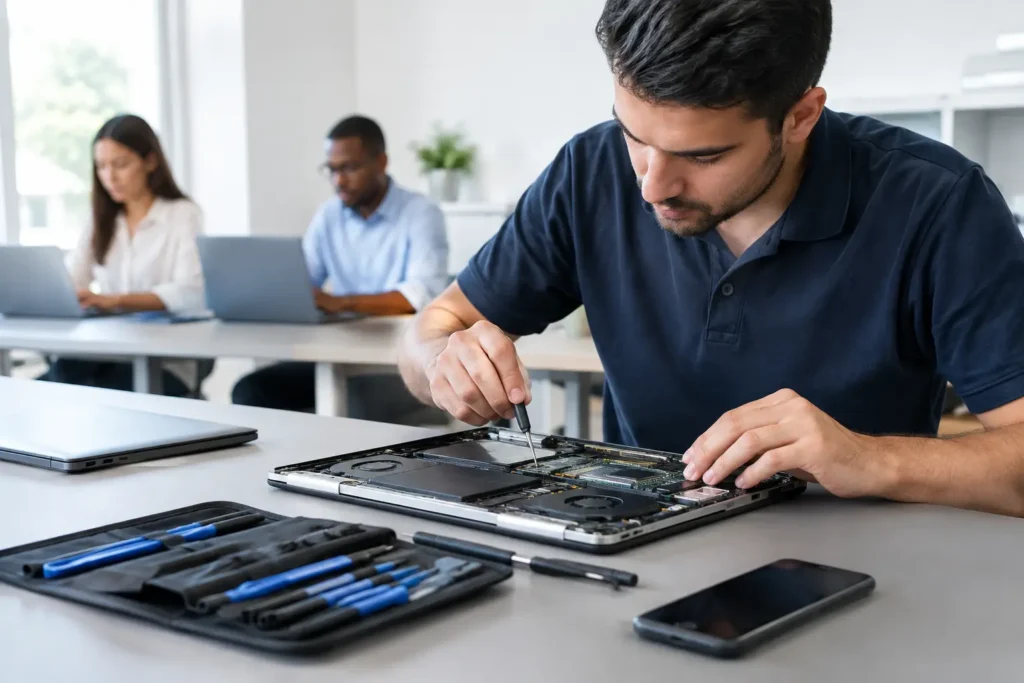
A reset of Mac settings may be reasonable when you have ruled out physical problems, but opening the device should be left to a trained technician unless you have suitable experience. This is especially true for models with signs of swelling, liquid damage or intermittent charging.
If your MacBook is still covered by a warranty, insurance policy or business support agreement, check the terms before arranging any third-party work. The best repair route depends on the model, age, condition and whether protecting a warranty is your priority.
When to book a MacBook trackpad repair
Book an assessment if the trackpad remains unresponsive after a restart, settings check and Safe Mode test, or if it feels physically wrong. A technician can identify whether the issue is the trackpad assembly, battery, cable, logic board or liquid damage before recommending the right repair. That is more cost-effective than replacing parts based on guesswork.
For customers in Barrow-in-Furness, Furness, Cumbria and the Lake District, TechLab Repairs can inspect MacBook input faults and explain the condition of the device in plain English. If a battery is affecting the trackpad, dealing with it early can protect the casing, keyboard and other internal components. Your data should be handled carefully too, particularly where the MacBook is used for work, school or family photos.
A non-clicking trackpad does not automatically mean a new MacBook is needed. Start with the safe checks, pay attention to any physical warning signs, and get it assessed promptly if the fault persists. A quick diagnosis can often get your everyday laptop back to doing its job without letting a small problem slow you down.