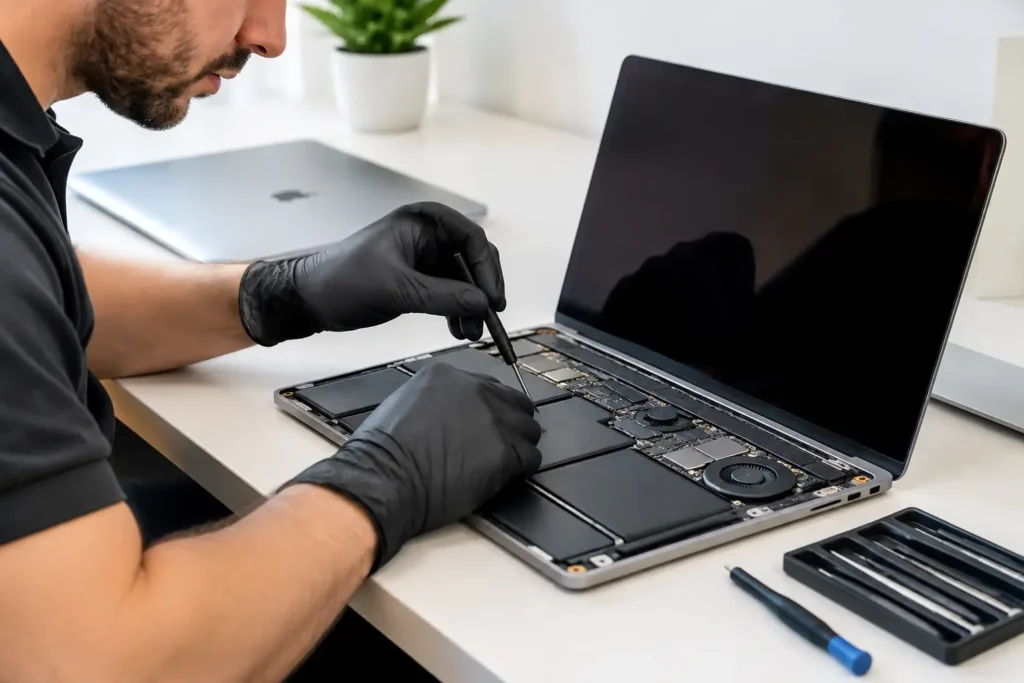
When a staff laptop refuses to power on at 8.45 on a Monday morning, the problem is not just the device. It is missed emails, delayed quotes, interrupted lessons, idle tills and a team trying to work around something that should simply work. That is why business device repair support matters – not as an add-on, but as part of keeping day-to-day operations moving.
For local firms, schools and organisations across Cumbria, sending devices away for assessment often creates more disruption than the fault itself. You can lose days just waiting for a diagnosis, never mind the repair. A local repair partner gives you a very different option – faster turnaround, clearer communication and a straightforward route to getting important kit back into use.
What business device repair support should actually cover
Good business device repair support is broader than fixing the odd cracked screen. Most organisations rely on a mix of equipment, and that mix is rarely tidy. One employee uses an iPhone, another uses a Samsung. The office has Windows laptops, the design team uses MacBooks, the reception desk runs from a desktop, and the meeting room tablet has somehow developed a charging fault again.
A proper support service needs to reflect real working environments. That means help with smartphones, tablets, laptops, desktops and specialist hardware, rather than support limited to one brand or one type of repair. It should also cover common faults that cause real downtime – screen damage, battery failure, charging issues, liquid damage, HDMI port faults, overheating, power faults and logic board problems.
There is also a practical difference between consumer repairs and business support. A business needs consistency. If five school tablets have the same issue, or a batch of office phones all need batteries, the process needs to be organised, cost-aware and quick enough to avoid dragging the problem out for weeks.
Why local business device repair support makes sense
The biggest advantage is speed. When devices stay local, assessment is usually quicker and communication is easier. You are not chasing a distant service centre or waiting for automated updates that tell you very little. You can speak to real people, explain what the device is used for, and get a realistic idea of turnaround.
Cost matters too. Replacing every failed device is expensive, especially for schools and growing businesses managing tight budgets. In many cases, a targeted repair is the smarter option. A battery replacement, screen repair or charging port repair can extend the life of a device significantly for a fraction of the cost of buying new.
There is also the question of convenience. Manufacturer routes can make sense for devices under specific warranty terms, but they are not always the best fit when speed is the priority. If a working device is central to someone’s role, waiting weeks for the official route to run its course may not be practical.
Security matters as much as the repair itself
Businesses do not hand over broken devices lightly, and with good reason. Phones and laptops often carry customer details, internal documents, saved passwords, financial records and school or staff information. A repair service that treats data security as an afterthought is not one you want anywhere near company hardware.
That does not mean every repair requires data access. In fact, many hardware jobs can be diagnosed and completed without intrusive handling of files or accounts. What matters is having a repair partner that understands the sensitivity of business devices, keeps handling professional and communicates clearly about what is and is not needed during the repair process.
For employers, that reassurance is not a luxury. It is part of choosing a reliable provider. Fast turnaround is valuable, but not if it comes with uncertainty over how devices are being handled.
The hidden cost of delaying repairs
A lot of organisations put off repairs because the device is still technically usable. The laptop works if it stays plugged in. The phone charges if you hold the cable at an angle. The tablet has a cracked screen, but the app still opens. On paper, that can look like a cost-saving decision. In practice, it often becomes more expensive.
Small faults tend to spread. A weak battery becomes swelling. A charging issue becomes complete power failure. A damaged screen worsens and starts affecting touch response. Liquid damage that seems minor can corrode internal components over time. Delaying action often narrows the repair options and increases downtime later.
There is also the productivity drain. Staff working around unreliable kit lose time every day, even if the device has not fully failed. That lost time is easy to ignore because it arrives in small doses, but across a team it adds up quickly.
What to look for in a repair partner
The right repair support is not just about technical ability, although that is the starting point. It is also about how the service fits your organisation.
Breadth of device support matters because most businesses do not run on one ecosystem alone. If your provider can only help with one brand, you will still end up juggling multiple repair routes. A one-stop service is simpler and usually more efficient.
Turnaround matters, but so does honesty. A dependable repair specialist should tell you when a same-day fix is realistic and when a fault needs deeper diagnosis. Overpromising helps no one, especially when a business is planning around the return of a key device.
Transparency on pricing matters as well. Businesses want to know whether repair is economical before approving work, particularly on older devices. Clear advice builds trust. Sometimes a repair is the obvious choice. Sometimes replacement makes more financial sense. Good support includes both answers.
For schools and organisations with multiple devices, volume handling is another useful sign. Can the provider manage repeat faults efficiently? Can they work through batches without turning every job into a separate drawn-out process? That makes a real difference when devices are shared across teams or classrooms.
Business device repair support for schools and local organisations
Schools, charities and public-facing services often face a slightly different challenge from private firms. Their devices may be heavily used, shared between multiple users and expected to last as long as possible. Budgets are under pressure, but downtime still causes immediate disruption.
In that environment, repair support is not simply reactive. It becomes part of asset management. Extending the life of laptops, tablets and phones through timely repairs can ease replacement pressure and help organisations get more value from equipment they already own.
Local support also helps when faults affect day-to-day delivery. A classroom set of tablets with charging issues, an office desktop with a power fault, or a staff iPhone that has taken a bad fall can all interrupt service quickly. Being able to get those devices assessed and repaired nearby is a practical advantage.
When repair is better than replacement – and when it is not
Repair is often the right call, but not automatically. If a relatively modern device has a cracked screen, poor battery life, charging port damage or a specific board-level fault, repair is usually the most cost-effective route. You keep the device in service, avoid unnecessary spending and reduce disruption.
But there are times when replacement is more sensible. A very old machine with multiple faults, poor overall performance and limited software support may not justify further investment. Equally, if the cost of the repair starts approaching the value of the device, it is worth stepping back and looking at the bigger picture.
That is why practical advice matters. The best support is not pushy. It helps businesses make a sensible decision based on age, condition, urgency and budget.
Why dependable local support builds resilience
Most businesses only think about repairs when something breaks. That is understandable, but the organisations that cope best with device issues usually have a trusted repair route in place before the next fault appears. They know who to call, what kind of devices can be handled and how quickly they are likely to get an answer.
For companies and schools in Barrow-in-Furness and the wider area, that local relationship can remove a lot of stress. Instead of scrambling when a laptop fails or a phone stops charging, you already have somewhere to turn for straightforward advice and fast action. That is exactly where TechLab Repairs fits best – as a dependable local option for organisations that need quick, secure and cost-effective help across a wide range of devices.
Broken tech has a habit of turning up at the worst possible moment. The right support does not just fix the fault – it helps your team get back to work with less fuss, less delay and far less guesswork.