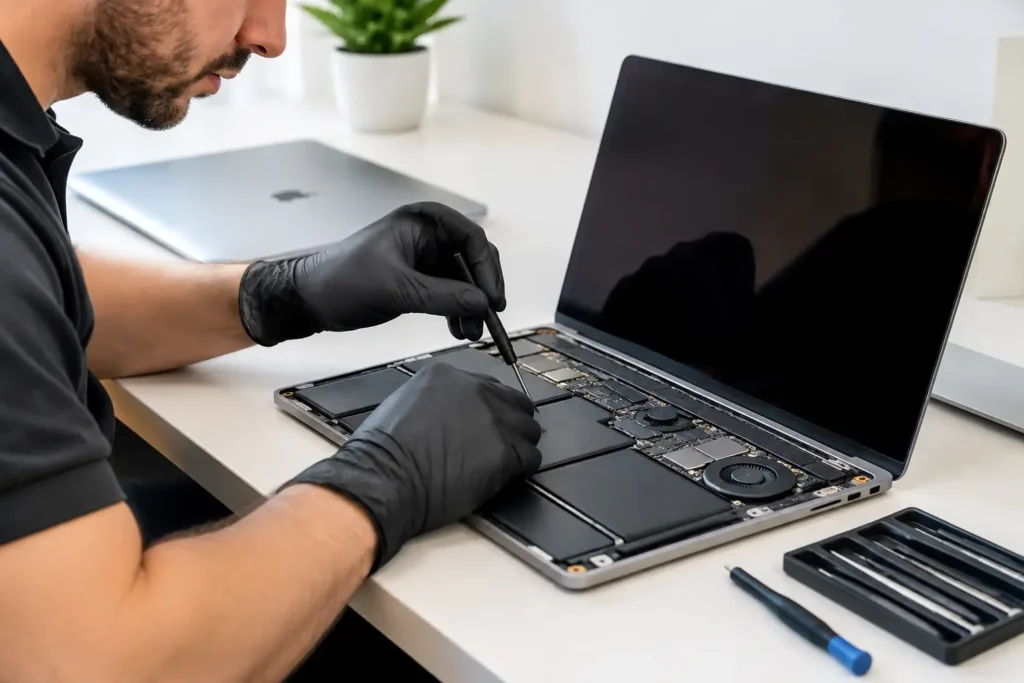
A cracked work phone, a laptop that will not charge or a classroom iPad stuck on a loading screen can bring far more than one person’s day to a halt. Business repair support packages are designed to stop small hardware faults becoming expensive disruption, giving local organisations a clear route to fast diagnosis, dependable repairs and practical ongoing help.
For businesses and schools across Barrow-in-Furness, Furness, Cumbria and the Lake District, the real value is not simply getting a device fixed. It is knowing who to call, what will happen next and how quickly staff or pupils can get back to work.
What a business repair support package should cover
A useful support package begins with the devices your organisation actually uses. That may mean a team of iPhones and Samsung handsets, office laptops, desktop PCs, iPads, MacBooks, printers, gaming equipment used in a leisure setting, or a mixture of older and newer hardware.
The right arrangement should not force every device into the same process. A dropped phone generally needs a quick screen replacement. A laptop with no power may need proper fault diagnosis before anyone can sensibly quote for a repair. Liquid damage is different again: speed matters, but a careful assessment is essential because the visible damage is not always the full story.
A good package gives you access to support for common faults, including screens, batteries, charging ports, power faults, HDMI ports and software-related issues. It should also cover more involved work when needed, such as logic board repairs or recovery following liquid damage. The aim is to have one trusted local point of contact rather than a different supplier for every type of device.
Why reactive repairs cost more than they appear
Many organisations wait until a device fails before looking for help. That is understandable, particularly for a small business watching every cost. The trouble is that an unexpected fault creates hidden expense: time spent searching for a repairer, arranging replacement equipment, chasing updates and moving staff onto temporary workarounds.
For a school, one faulty tablet may affect a lesson. For a tradesperson, a damaged phone can mean missed customer calls, inaccessible job details and delayed invoices. In an office, a laptop failure can leave a member of staff unable to access files or take part in meetings. The repair itself may be straightforward, but the downtime is not.
Business repair support packages bring structure to that moment. Your team knows where to take the device or who to contact. The repairer knows the type of equipment you run and the level of urgency involved. That familiarity helps reduce delays and avoids the uncertainty that comes with sending devices away to a manufacturer or a distant service centre.
Faster decisions, clearer spending
A support package does not necessarily mean paying a fixed fee to repair everything, regardless of condition. For many local organisations, the best option is an ongoing relationship with priority handling, agreed business pricing and a straightforward approval process for repairs.
That approach is often more practical than buying extended warranties for every device. Warranties can be useful for manufacturing faults, but they may not cover accidental damage, worn batteries, charging-port problems or liquid damage. They can also involve long turnaround times and complicated claims.
Before work starts, your organisation should receive a clear explanation of the fault, the recommended repair and the likely cost. This makes it easier for the person responsible for purchasing to decide whether a repair is worthwhile. A newer, high-value MacBook with a battery issue is usually worth repairing. An ageing laptop with several faults may be better replaced. Honest advice matters here – not every device should be repaired simply because it can be.
Support for the devices people rely on most
The most effective packages reflect how your team works day to day. Mobile devices may be the priority for a delivery team, estate agents, care providers or field engineers. For a school, tablets, Chromebooks and staff laptops may matter most. A retailer may need reliable card terminals, office computers and display screens, while a small office depends on laptops, chargers and phones remaining available.
This is why broad device knowledge is valuable. A repair partner able to work across smartphones, tablets, laptops, desktops, Apple devices, Samsung handsets and consoles can handle more of the issues that arise in one place. It also means fewer suppliers, fewer invoices to manage and less time explaining the same problem to different people.
TechLab Repairs works with businesses and schools that need exactly this sort of practical cover: local expertise, fast turnaround where possible and repairs tailored to the fault rather than a one-size-fits-all solution.
Data security must be part of the conversation
A damaged device may contain customer details, emails, photographs, financial information, lesson materials or commercially sensitive documents. Handing it over for repair can feel risky, especially if it is a director’s laptop or a school-owned tablet used by multiple pupils.
That is why data handling should be discussed before repair work begins. Your team should know whether a passcode is required, whether a backup is possible and what access is genuinely needed to test the device. In some cases, a technician can confirm a hardware repair without accessing personal content. In others, access may be needed to test cameras, calls, charging or applications properly.
The sensible approach is to back up important data whenever the device still allows it, remove any unnecessary accounts where appropriate and agree the testing process in advance. A reliable repair provider will treat the contents of every business device with care and explain what is needed in plain language.
Setting up a package that suits your organisation
There is no benefit in paying for a level of cover that does not match your device estate. A small office with ten laptops needs something different from a school with hundreds of tablets. Start by identifying how many devices you have, the makes and models in use, who owns them and which ones are critical to daily operations.
Next, decide what a fast response means for your organisation. Some faults can wait a few days. Others need same-day attention because they stop someone doing their job. This distinction helps you set sensible priorities and prevents every repair being treated as an emergency.
It is also worth agreeing how approvals will work. A nominated contact can authorise lower-value repairs quickly, while higher-cost work can be referred to an owner, business manager or IT lead. That keeps devices from sitting uncollected while people wait for a decision.
Finally, ask about volume discounts and repeat-repair arrangements. If you manage multiple devices, consistent pricing and a familiar repair process can make budgeting much easier. The details will depend on your equipment, repair history and likely demand, but the arrangement should be transparent from the outset.
Repair, replace or keep a spare?
A support package should help you make better decisions, not just repair more devices. Screen and battery replacements are often a cost-effective way to extend the life of a phone or laptop. Charging and HDMI port repairs can also return useful hardware to service for far less than the price of replacement.
There are occasions when replacement is the better call. If a device is no longer receiving essential security updates, repeatedly fails or cannot run the software your team needs, spending more money on repairs may not make commercial sense. A good local repair partner will tell you that directly.
For devices that are essential to your operation, keeping a small number of ready-to-use spares can reduce pressure further. A replacement handset or laptop does not eliminate the need for repair support, but it gives staff a temporary option while the original device is assessed. This is particularly useful for customer-facing roles and busy school departments.
Build support around real working days
Broken technology is rarely convenient. It happens before a presentation, during a busy trading period or on the morning a class needs its devices. The best business repair support packages remove some of that stress by putting a capable local team, clear repair choices and secure device handling within easy reach.
Do not wait for the next cracked screen or failed laptop to decide how your organisation will respond. Map out the devices your people cannot work without, agree a simple repair process and give your team the confidence that help is close by when they need it.