A cracked screen changes how you use your phone straight away. A small fracture can catch your finger, make messages harder to read and spread across the display after one knock too many. If you need an iPhone screen replacement, the aim is not simply to make the glass look better. It is to restore a screen you can rely on for calls, banking, maps, work and everything else your iPhone handles each day.
For customers across Barrow-in-Furness, Furness, Cumbria and the Lake District, the right repair comes down to three things: the full extent of the damage, the quality of the replacement part and the care taken during fitting. A low price can be tempting, but a screen is one of the most important components in your phone. It deserves more than a rushed fix.
When an iPhone screen replacement is the right call
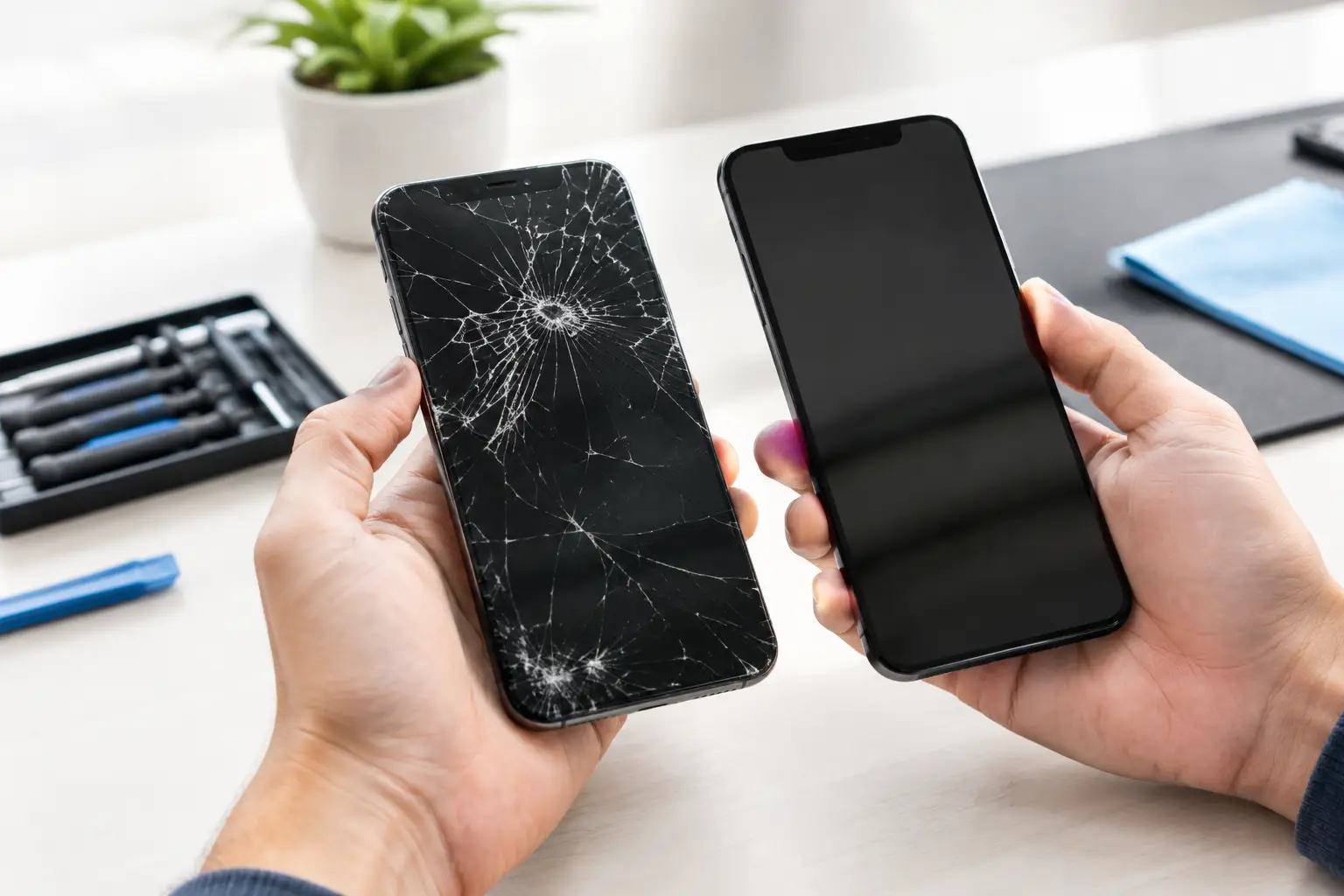
Not every damaged screen looks the same. Sometimes only the outer glass has cracked while the display still looks normal and touch controls work as they should. In other cases, you may see black patches, coloured lines, flickering, dead areas or an unresponsive touchscreen. These signs usually mean the display beneath the glass has also been damaged.
A replacement is normally the sensible option when cracks are spreading, the glass is lifting, touch input is unreliable or the display is no longer clear. It is also worth acting quickly if fragments are loose around the front camera, earpiece or Face ID area. Continued use can allow moisture and dust into the device, turning a straightforward screen repair into a more involved fault.
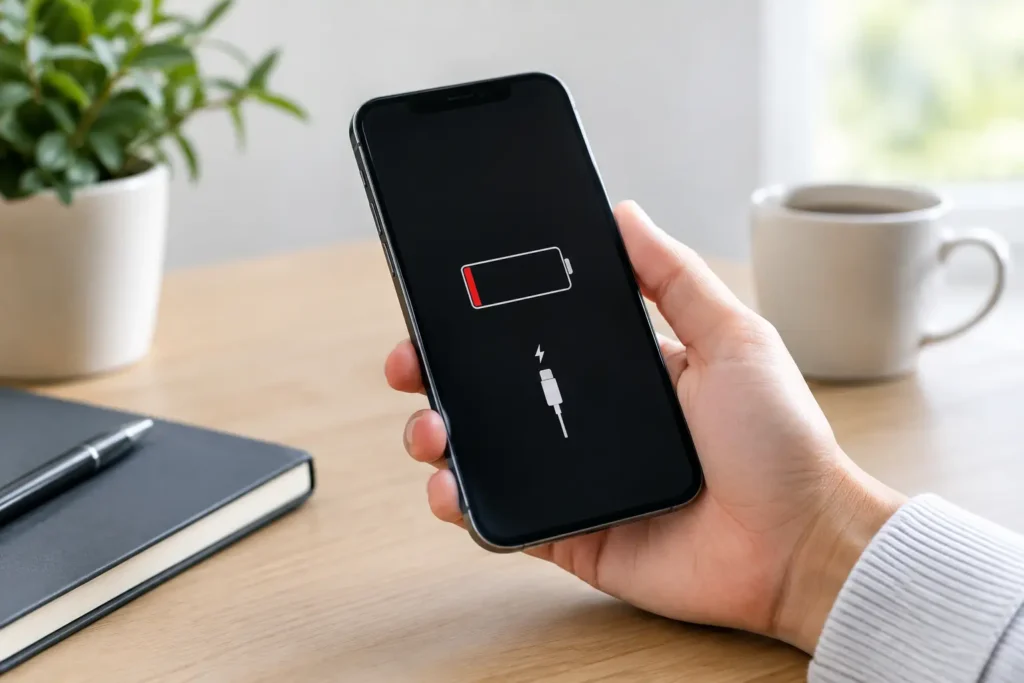
Do not assume a screen fault is always visible. If your iPhone vibrates or rings but the display stays black after a drop, the screen may have failed internally. Equally, a phone that has been dropped can suffer damage beyond the screen, such as a bent frame, weak battery connection or camera issue. Proper diagnosis avoids replacing a part without addressing the actual problem.
What affects iPhone screen replacement cost?
The model of iPhone is the biggest factor. Older devices with LCD displays are generally less expensive to repair than newer models with OLED panels. Larger Pro Max models, curved-edge display assemblies and newer generations can also cost more because the parts themselves are more complex and more expensive.
Part quality matters too. There are genuine Apple parts, high-quality compatible parts and lower-cost alternatives. Each option has a place, but they are not identical. A quality display should offer good brightness, accurate colour, responsive touch and a secure fit. Cheaper screens can sometimes compromise on colour depth, peak brightness, viewing angles or long-term durability.
The best choice depends on your phone, your budget and how you use it. If you rely on your iPhone for photography, business communication or detailed work, display quality may be a higher priority. If you are keeping an older device running as a spare or a child’s first phone, a more economical option may make perfect sense. A trustworthy repairer should explain the available choices clearly rather than pushing one solution for every customer.
Damage around the frame can affect the final repair as well. If an iPhone has landed hard on a corner, the housing may no longer sit perfectly flat. Fitting a new screen to a bent frame without addressing that issue can put pressure on the replacement and leave it more vulnerable to future damage.
Why professional fitting makes a difference
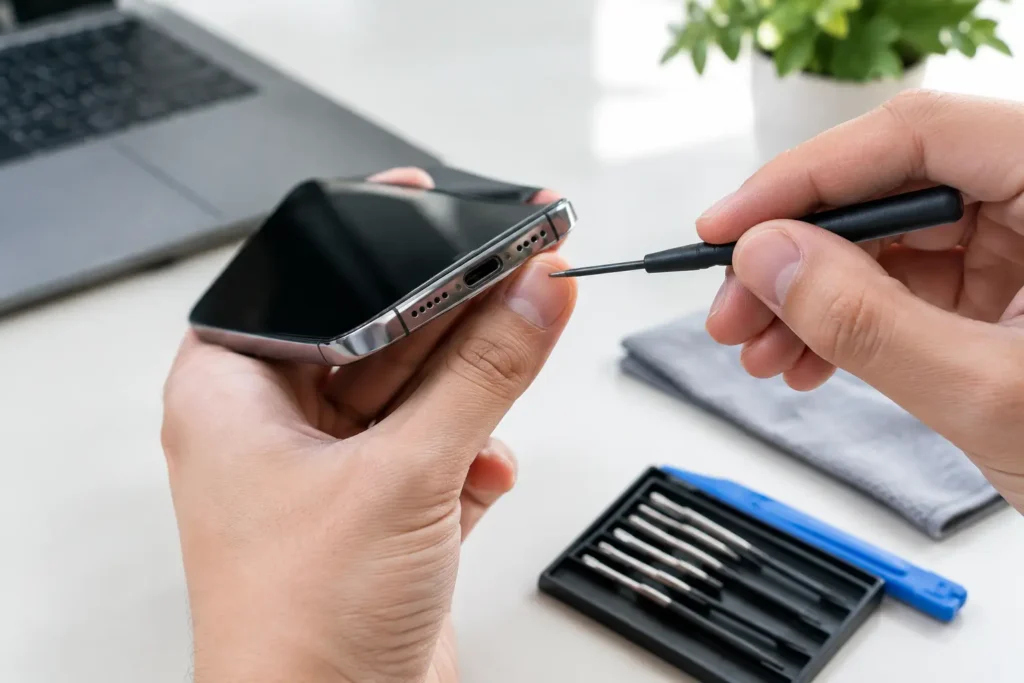
Modern iPhones pack a surprising amount of technology into the top of the display. The front camera, earpiece speaker, proximity sensors and Face ID components all need careful handling. A screen replacement is not a job for forcing open the device, transferring components carelessly and hoping for the best.
A professional repair begins with testing. The technician should check the display, touch response, cameras, charging, speakers and buttons, then inspect the frame for signs of impact damage. Once the replacement is fitted, those key functions should be tested again before the phone is returned.
Water resistance also needs an honest explanation. Opening an iPhone means its original factory seal has been disturbed. A careful repair can use replacement adhesive to help restore protection against everyday splashes, but no repaired phone should be treated as waterproof. Avoid submerging it, using it in heavy rain or taking it into the bathroom while a hot shower is running.
At TechLab Repairs, the focus is on practical, dependable repairs with clear advice, so you can make a decision that suits your device and budget. For many customers, a properly fitted screen is far more cost-effective than replacing an otherwise reliable iPhone.
Before you hand over your iPhone
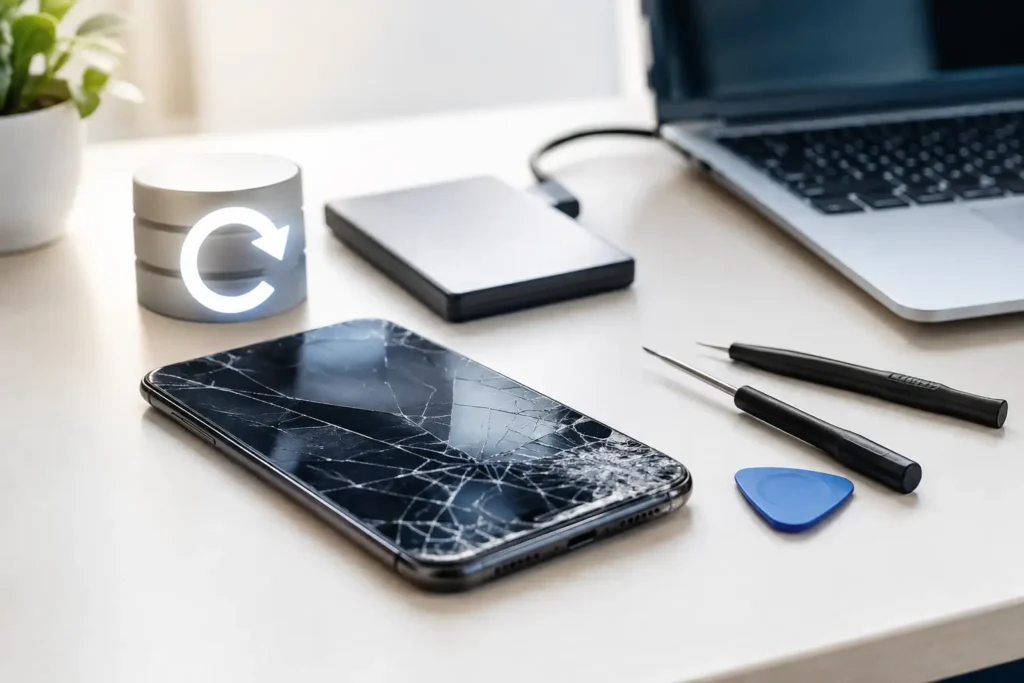
Your data is normally stored on the phone’s internal storage rather than the screen itself, so a display repair should not erase photos, messages or apps. Even so, backing up your iPhone beforehand is always sensible. A recent iCloud or computer backup gives you protection if an unrelated fault is discovered during assessment or if the phone has suffered more severe impact damage than first expected.
If you can access the screen, make a note of any issues already present. For example, perhaps the battery was draining quickly before the drop, or the rear camera had stopped focusing. Sharing that information helps separate pre-existing faults from damage caused by the accident.
You should also remove cases, screen protectors and any accessories before bringing the device in. If your screen is badly shattered, place the phone in a protective case or cover it lightly to reduce the risk of loose glass catching your hands or belongings. Do not press firmly on black patches or coloured lines, as pressure can make display damage spread.
Looking after your new screen
The first few days after repair are a good time to give your iPhone a little extra protection. Use a quality case with raised edges around the display and consider a tempered-glass screen protector. Neither will make a phone indestructible, but they can take the force of everyday knocks and scratches before the screen does.
Keep an eye on touch response, brightness and the earpiece after collecting your phone. Everything should feel normal. If something does not seem right, contact the repairer promptly rather than living with the problem. Reliable repair services want the device working as expected and should be ready to investigate genuine concerns.
It is also worth avoiding charging your phone on unstable surfaces, balancing it on car dashboards or carrying it loose with keys and coins. Most cracked screens are not caused by dramatic accidents. They happen during ordinary moments: getting out of the car, reaching for a pocket or knocking a phone off the kitchen worktop.
Repair or replace the whole phone?
A cracked screen does not automatically mean it is time for a new handset. If the battery is still reasonable, the cameras work, software support remains available and the phone meets your needs, a screen repair can extend its useful life considerably. That saves money and keeps a perfectly capable device out of the waste stream.
Replacement may be worth considering if the phone has several major faults at once, such as serious liquid damage, repeated power issues, a failing battery and extensive frame damage. The key is to assess the whole device rather than making the decision based on one crack alone.
A broken screen is frustrating, but it does not have to slow you down for long. Get the damage checked early, choose a repair option that matches how you use your phone, and give the new display the protection it deserves.