A phone that will not charge, a laptop with no sign of life, a games console that powers on and off again – these are the faults that make people fear the worst. Yet many of these cases do not need a full replacement. Professional logic board repairs can often bring a device back to life, protect your data and save a lot of money compared with buying new.
For most people, the logic board is the part they only hear about when something has gone seriously wrong. It is the main board inside the device, where critical components work together to manage power, charging, storage, processing and communication between parts. When that board develops a fault, the symptoms can look dramatic. The good news is that dramatic does not always mean beyond repair.
What professional logic board repairs actually involve
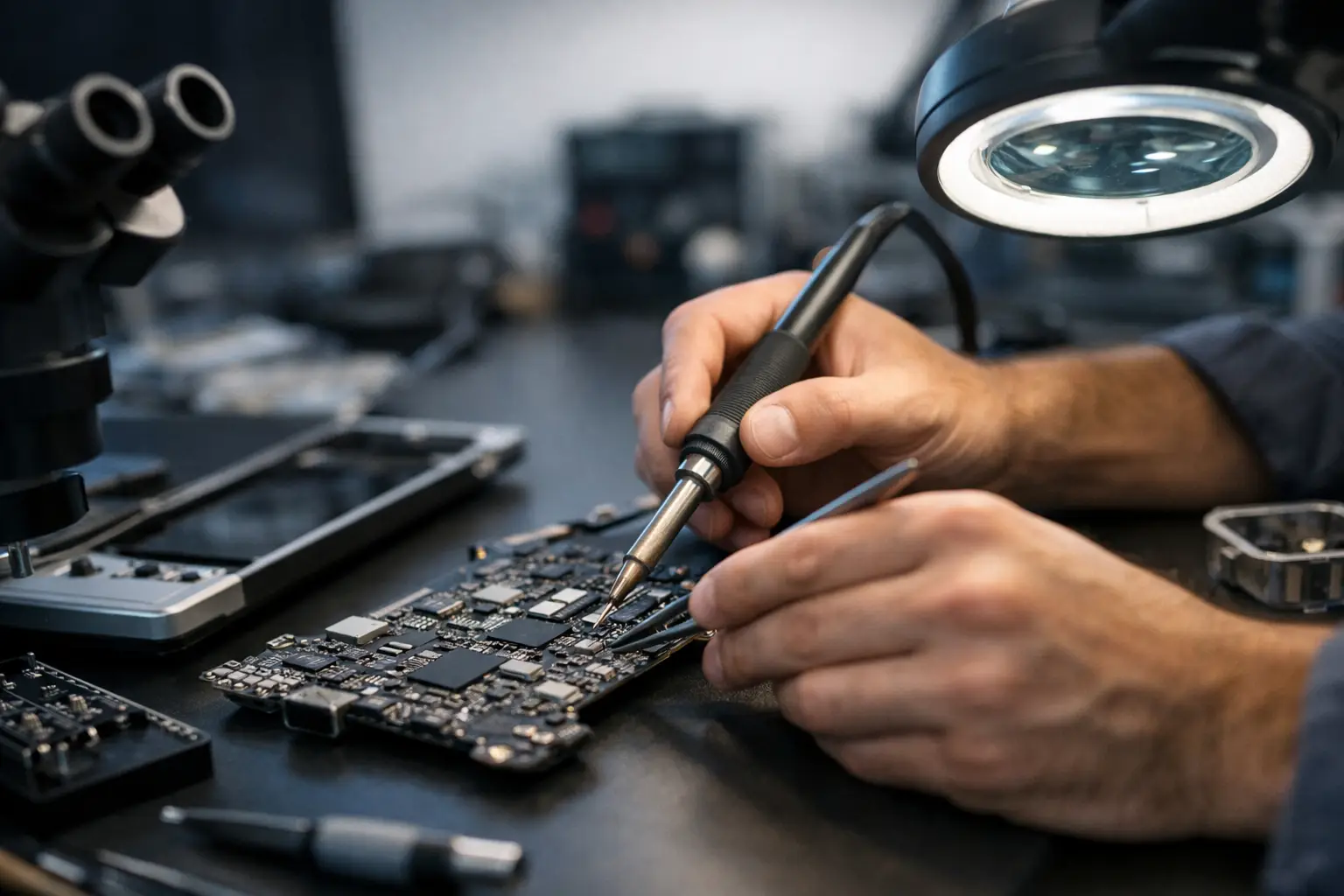
A logic board repair is not the same as swapping a screen, battery or charging port. Those jobs involve replacing a complete part. Board-level work is more precise. It means diagnosing faults on the board itself, then repairing or replacing damaged components such as connectors, chips, filters, capacitors or power management circuits.
This matters because many devices are rejected too quickly as “dead” when the real fault sits in one small area. A charging issue might be traced to a damaged circuit rather than the port itself. A no-power fault could come from a shorted component. Liquid damage might affect one section of the board while the rest of the device is still perfectly salvageable.
That is where proper testing makes all the difference. Guesswork gets expensive fast. A careful repair process looks at the actual cause, not just the visible symptom.
Signs your device may need logic board repair
Some faults point clearly towards the board rather than a simple external part. If your device has already had a new battery, screen or charging port fitted and the issue remains, that is one clue. If it has been exposed to liquid, dropped heavily or become unusually hot, that is another.
Common signs include no power at all, intermittent charging, boot loops, no image with the device still running, failed touch after impact, random restarts, missing Wi-Fi or network function, and devices that are no longer detected by a computer. On laptops and desktops, you may also see failure to post, no backlight, keyboard and trackpad faults, or sudden shutdowns under load.
None of these symptoms guarantees a board fault. Sometimes the problem is simpler. That is exactly why a proper diagnosis matters. You want to know whether the repair is realistic, what the likely cost is, and whether your data is at risk before anyone starts replacing parts.
Why diagnosis matters more than the fault description
Customers often arrive with a clear theory about what has gone wrong. Sometimes they are right. Often, they are understandably guessing. A phone that will not charge may seem to need a new charging port, but if the charging circuit on the board has failed, replacing the port will change nothing. A laptop that appears dead may have a power rail short, a failed component near the charging stage or corrosion from an old spill that has only now caused trouble.
Professional logic board repairs start with diagnosis because the same symptom can come from several different causes. Good repair work is not just technical skill with soldering tools. It is the ability to test properly, trace the fault and decide whether repair is the best option.
That also helps avoid wasting money. There is no point fitting standard replacement parts when the root issue sits elsewhere. Equally, there is no value in pursuing an uneconomical board repair if the damage is severe and replacement makes more sense. The honest answer is sometimes “yes, we can repair this” and sometimes “you would be better putting that money towards another device”.
Liquid damage is serious, but not always terminal
Few faults cause more panic than liquid damage, especially when important photos, work files or school documents are involved. The mistake many people make is leaving the device for days, trying to charge it, or assuming that if it turns on once, it is fine.
Liquid damage can create corrosion that spreads over time. A device may partially work at first and then fail later as damaged areas worsen. On the other hand, quick action and proper board cleaning can stop further damage and improve the chances of repair.
This is one area where professional logic board repairs are especially valuable. Instead of simply drying the outside and hoping for the best, a technician can inspect the board, identify corrosion, test affected circuits and carry out targeted repairs. Sometimes the goal is full recovery. In other cases, the priority may be data retrieval before the fault worsens. It depends on the condition of the board and how quickly the device is assessed.
Phones, laptops and consoles all fail in different ways
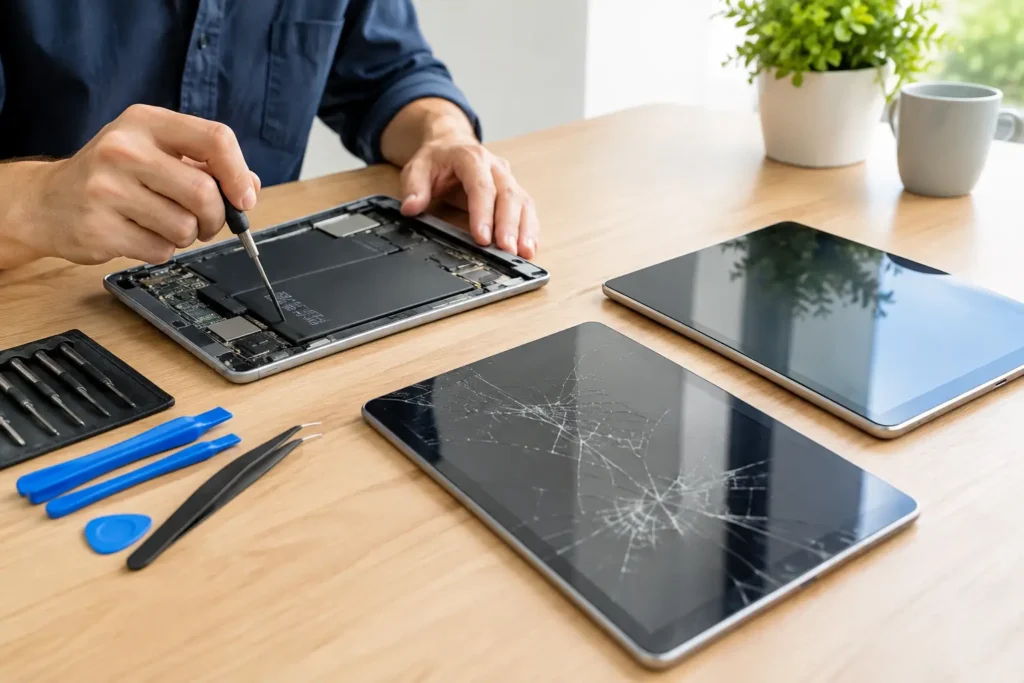
Board repair is not one single service applied in the same way to every device. A smartphone board is densely packed and often affected by charging faults, power issues, impact damage and liquid exposure. Tablets can suffer similar faults, though access and part layout vary a lot by model.
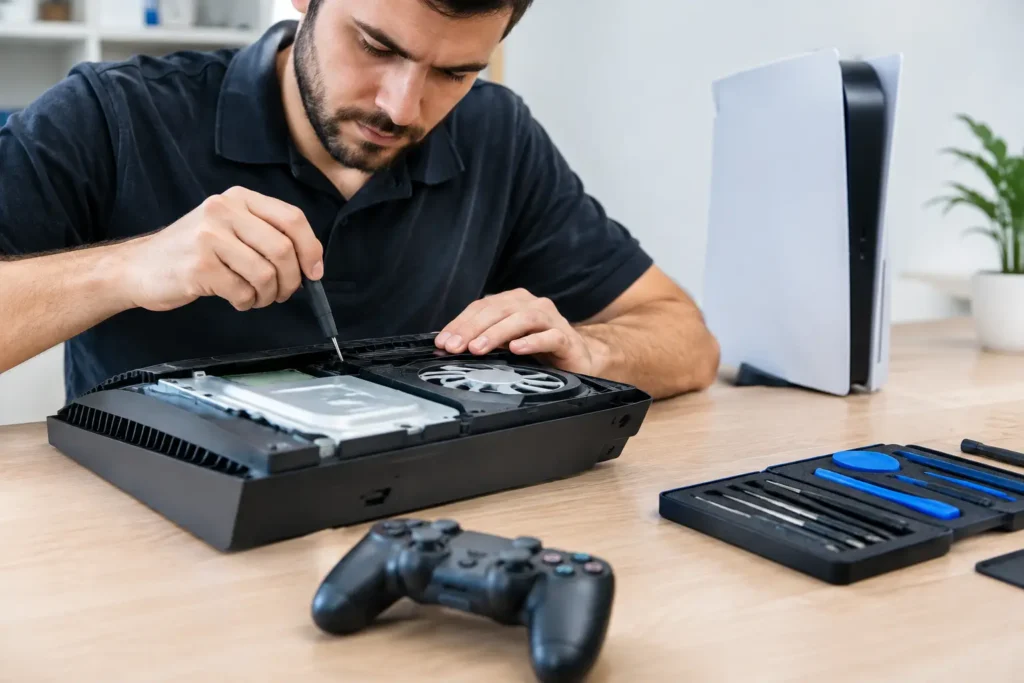
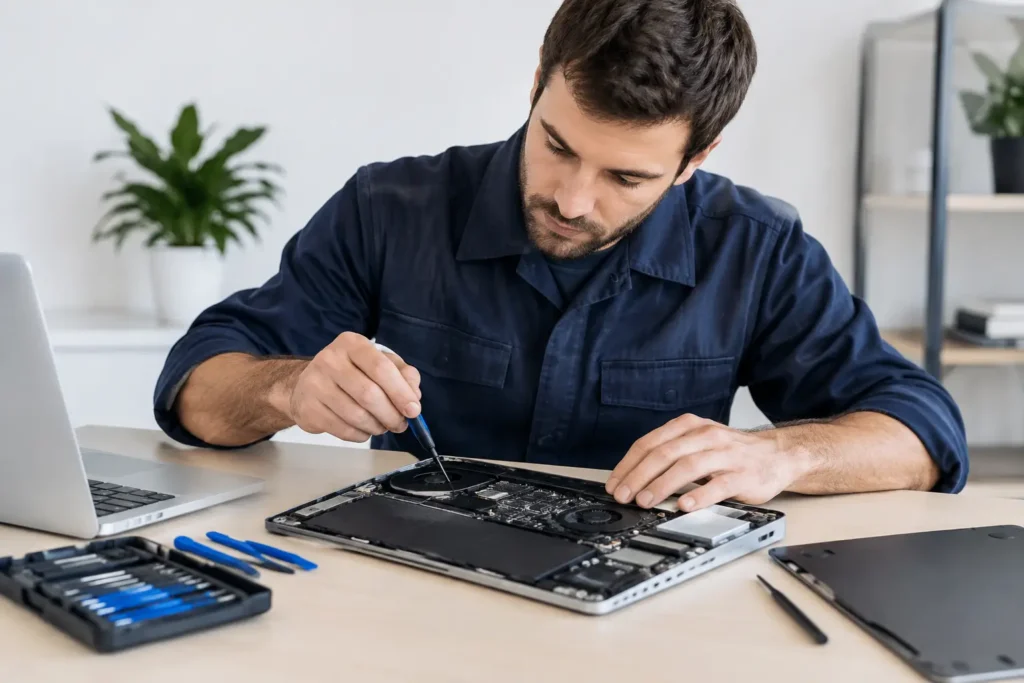
Laptops and MacBooks often present with no-power faults, battery charging issues, backlight problems, short circuits, USB-C charging faults and damage from spills. Desktops and iMacs can show start-up failure, no display output or power instability. Gaming consoles frequently come in with HDMI damage, overheating-related faults or no-display issues that may involve more than the port itself.
That breadth matters. A general repair approach is not enough if the real fault is at board level. You need someone who understands how these different devices fail and what a realistic repair path looks like.
Data security is part of the repair, not an extra
When a main board fails, the first concern is usually whether the device can be saved. The second is often the data. Family photos, business documents, coursework, account access, saved games, customer records – it is all tied to that piece of hardware.
That is why trust matters as much as technical skill. A proper repair service should handle devices securely, keep diagnosis focused on the fault and be clear about whether the repair is intended to restore full use, recover data, or both. For business and school customers in particular, secure handling is not negotiable. It is part of the job.
In many cases, repairing the board is the most practical route to keeping data intact because modern devices do not make storage removal easy. If the board can be stabilised, even temporarily, that may be enough to recover what matters most.
When repair is the smart choice – and when it is not
Not every device is worth repairing, and saying otherwise helps nobody. If the board has severe multi-layer damage, heavy corrosion across several areas or a failed component that cannot be sourced reliably, replacement may be the better route. Age, overall condition and the value of the device also matter.
But there are plenty of situations where board repair is clearly the smarter option. A premium phone with a charging circuit fault, a MacBook with a liquid-damaged power stage, or a console with a board-level display fault can often be repaired for far less than replacement. That is especially true when the rest of the device is in good condition.
For local customers, speed plays a part too. Sending a device away to a manufacturer or specialist depot can mean longer waits, uncertain outcomes and, in some cases, automatic replacement instead of genuine fault repair. A local service with board-level capability can often give you a clearer answer much sooner.
What to expect from a reliable repair service
A trustworthy repair process should feel clear from the start. You should be told what symptoms have been noted, whether diagnosis is needed before quoting fully, and what happens if the device turns out to be beyond economical repair. You should also know whether there is any risk to data and whether turnaround depends on component availability.
At TechLab Repairs, that practical, straight-talking approach matters because customers are usually already stressed by the time they ask about board faults. They do not need jargon for the sake of it. They need a realistic path forward, sensible pricing and confidence that their device is being handled by people who know what they are doing.
Professional logic board repairs are not magic. Some devices cannot be saved. Some will need a new board, and some are simply too badly damaged to justify the cost. But many faults that look terminal are repairable with the right diagnosis and the right skill.
If your phone, laptop, tablet or console has stopped behaving properly, do not write it off too quickly. The smartest next step is usually not replacement – it is getting a proper answer from someone who can test the board, explain the options and help you decide what is worth doing.