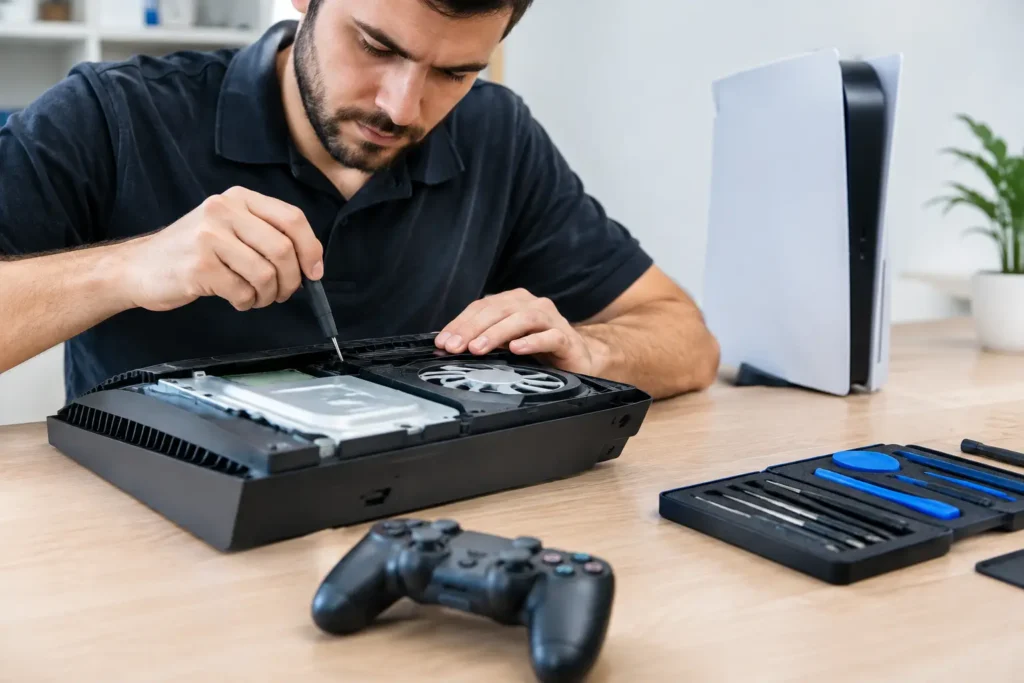
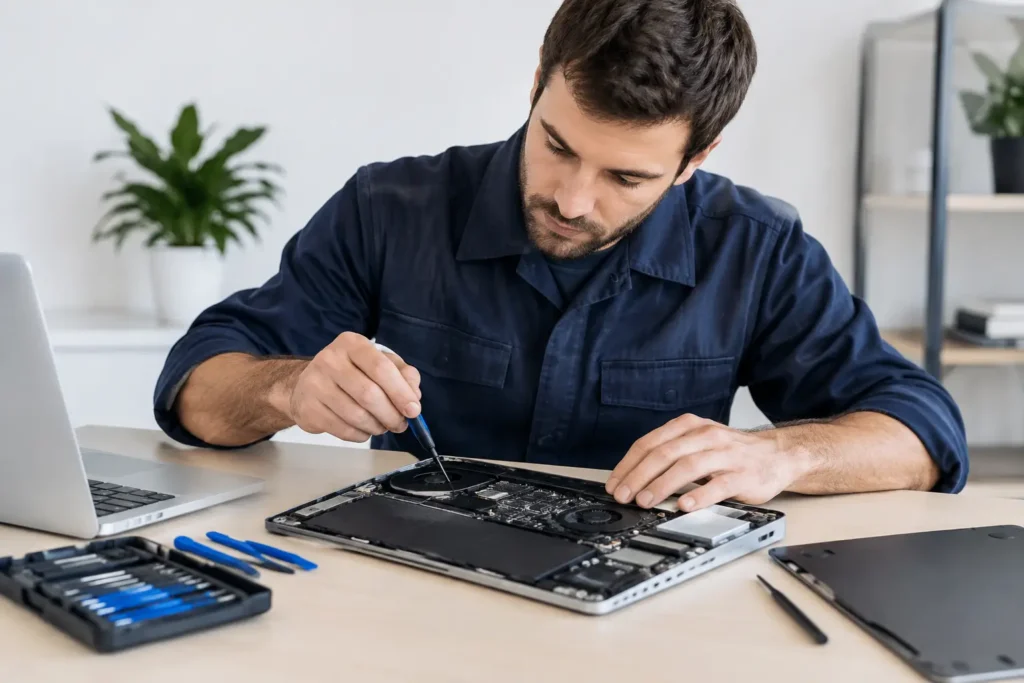
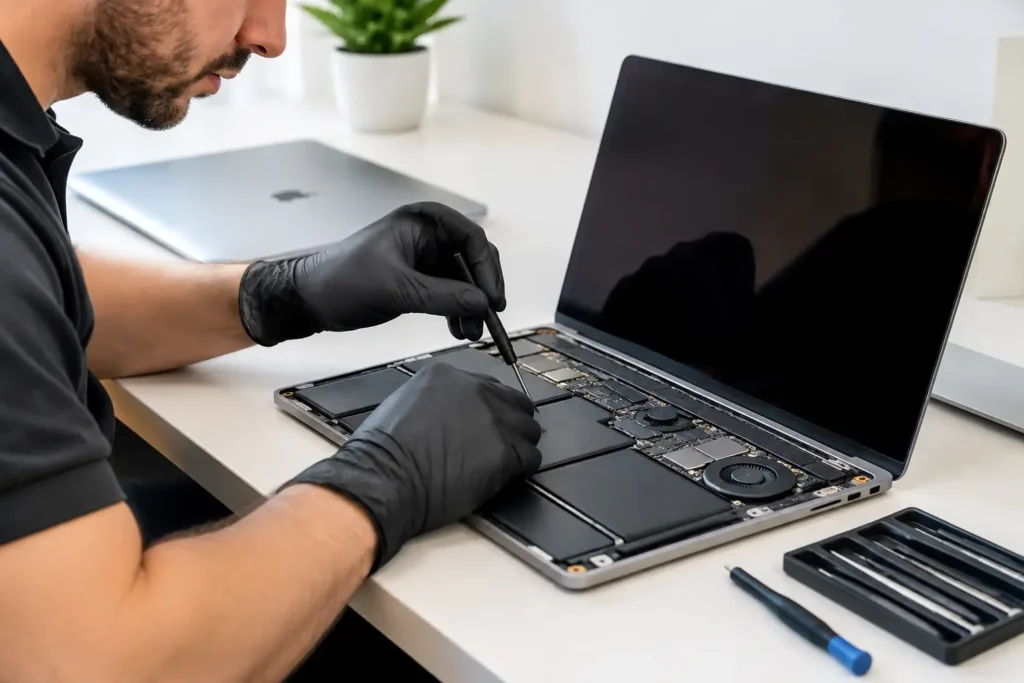
When you hand over a phone, laptop or tablet for repair, you are not just passing across a faulty device. You are also trusting someone with photos, messages, saved passwords, work documents, school files and sometimes sensitive business information. That is why repair shop data protection matters just as much as the quality of the repair itself.
For many customers, the real worry is not the cracked screen or dead battery. It is what happens to the information sitting inside the device while it is out of their hands. A good repair shop understands that concern straight away. It treats data privacy as part of the service, not as an afterthought added in small print.
Why repair shop data protection matters
A modern device holds far more than most people realise. A smartphone can contain banking apps, family photos, medical messages, private emails, location history and access to cloud storage. A business laptop might hold client records, contracts, internal passwords and financial documents. Even a games console can contain payment details and personal account access.
That means a repair is never only a technical job. It is also a trust job. If a shop handles devices carelessly, uses weak processes or allows too many people to access customer equipment, the risk goes well beyond inconvenience. It can lead to privacy breaches, account compromise, business disruption and serious reputational damage.
For local customers choosing between a nearby repair specialist and sending a device away, this often becomes a deciding factor. Speed matters, price matters, and so does confidence that your data will be treated properly from the moment you book the repair to the moment you collect the device.
What customers should expect from a secure repair service
Repair shop data protection should be visible in the way a business works. Customers should not have to guess whether their information is being handled carefully. A trustworthy repair provider explains its process in plain English and gives clear reassurance about what technicians need access to and what they do not.
In many hardware repairs, there is no need for staff to look through a customer’s personal content. Replacing a battery, fitting a new charging port, changing a screen or repairing a HDMI port should be approached with minimal access to data. Where device testing is needed, it should be limited to the functions relevant to the repair.
That does not mean every repair can be done with zero interaction with the software side. Liquid damage, logic board faults and no-power issues can be more complex. In those cases, diagnosis may require the device to be powered, connected or checked more thoroughly. The key point is whether the shop has a disciplined process rather than an informal one.
A professional repair service should also be upfront about passcodes. Some faults can be tested without them. Others cannot. If a passcode is needed, customers should be told why, how it will be used and whether they can remove it again before collection. That transparency makes a big difference.
The practical side of data protection in a repair shop
Good intentions are not enough. Secure handling depends on everyday habits, and those habits need to be consistent.
The first part is controlled intake. When a device arrives, the repair notes should focus on the fault, visible condition and any agreed testing requirements. Customer details should be recorded accurately but not excessively. There is no reason to gather more personal information than the job actually needs.
The second part is physical security. Devices waiting for repair should not be left on open counters, mixed with unrelated stock or accessible to anyone walking through the workspace. A proper check-in system, labelled jobs and restricted storage help reduce mistakes as well as risk.
The third part is technician access. Not every member of staff should be handling every device. Where possible, jobs should be assigned to the technician working on that repair, with a clear trail showing who received it, who diagnosed it and who signed it off. That is especially important for business and school clients handing over multiple devices.
Then there is testing. A secure workshop tests what needs testing and leaves the rest alone. If a microphone repair has been completed, test the microphone. If a charging fault has been fixed, confirm charging. There is no need to browse galleries, open messages or explore unrelated apps.
Finally, communication matters. Customers should know whether a repair carries any chance of data loss, particularly in cases involving severe liquid damage, board-level faults or storage issues. Being honest before work begins is far better than trying to explain it afterwards.
Repair shop data protection for business and school devices
For organisations, the stakes are even higher. A broken staff laptop or pupil iPad may hold far more sensitive information than a typical personal handset. That shifts the conversation from customer reassurance to operational risk.
Schools need to think about student records, staff communications and safeguarding concerns. Businesses need to think about client confidentiality, payroll information, email systems and account access. In these cases, a repair partner should be able to show that it understands the difference between fixing a device and managing a potentially sensitive asset.
Sometimes the safest route is for the organisation to remove access before handing the device over. That could mean logging out users, disabling accounts, backing up data or issuing supervised test credentials rather than full user access. In other situations, the device may be too damaged for that to happen, which is where a trusted local repair partner becomes valuable. Speed helps, but controlled handling matters more.
For local organisations across Cumbria, working with a nearby specialist often gives better visibility than posting devices away. You know where the equipment is, who is handling it and how quickly decisions can be made if the repair becomes more complicated than expected.
What customers can do before handing over a device
A secure repair process is shared between the shop and the customer. The repairer has to handle the device responsibly, but customers can reduce risk as well.
If the device still works, back it up first. Remove anything you can safely remove, such as bank cards from digital wallets or saved access you no longer need during the repair. If possible, log out of sensitive accounts and make a note of your passwords rather than relying on auto-fill alone.
You do not always need to factory reset a device before repair, and in many cases that would get in the way of proper testing. But you should at least ask whether it is necessary to share your passcode. For some jobs it is not. For others, the shop may only need it temporarily to confirm the fault has been resolved.
For business users, it is worth checking whether company policies already cover third-party repairs. Many do, but they are often ignored until a device fails and someone needs a quick fix. A clear internal process saves time and avoids panic.
What makes a local repair shop trustworthy
Trust is built in small moments. It shows in how a repair is booked, how questions are answered and whether the business explains things clearly without hiding behind jargon.
A trustworthy repair shop will tell you what it can do, what it cannot do and where the risks sit. It will not promise that every repair carries zero chance of data loss, because that would not be true. Serious board faults and liquid damage can be unpredictable. What matters is whether the shop takes sensible precautions and communicates honestly.
It also helps when the business is set up around long-term reputation rather than one-off transactions. A local repair company serving families, students, professionals, schools and businesses cannot afford to be casual about privacy. Its reputation depends on customers feeling confident enough to return, recommend it and bring in their next device without hesitation.
That is where a specialist such as TechLab Repairs earns trust – by combining technical skill with careful device handling, straightforward advice and the kind of local accountability people actually value.
Data protection is part of the repair, not an extra
Customers should never feel awkward asking how their information will be handled. It is a fair question, and a professional repair shop should be ready to answer it.
The best repairs fix the hardware problem without creating a new worry in the background. That means clear processes, limited access, sensible testing and honest communication from start to finish. When a repair shop gets that right, customers notice. They feel safer handing over the device, and far more confident collecting it.
If your phone, laptop or tablet needs attention, do not just ask how fast it can be repaired. Ask how it will be handled while it is there. The right answer tells you a lot about the business you are trusting with your tech.