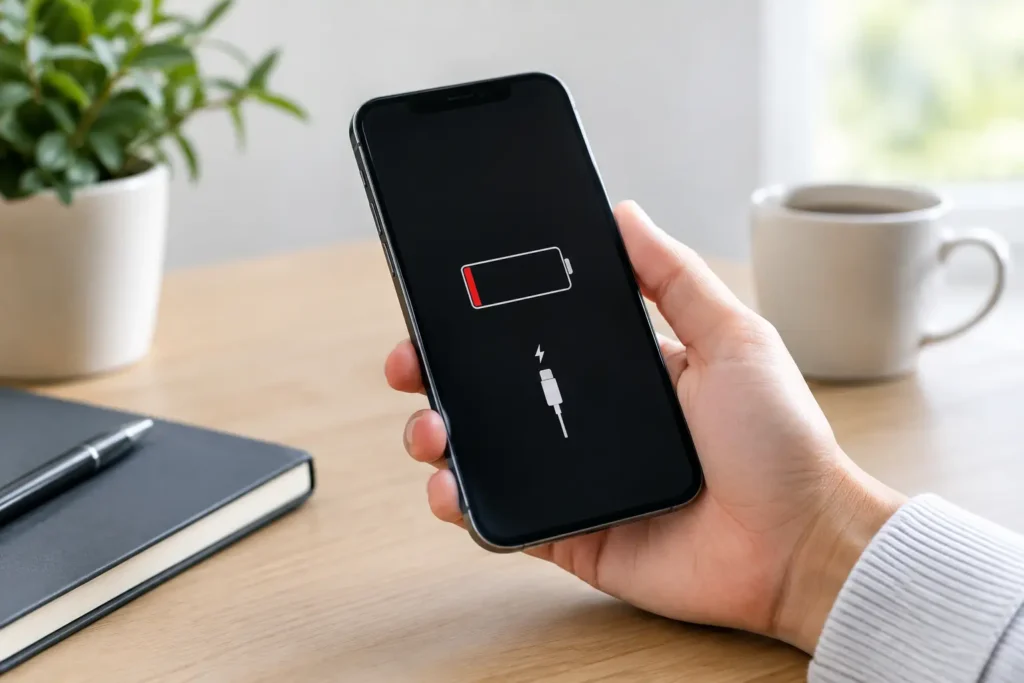
When an iPhone stops charging, keeps rebooting, loses touch, or shows no sign of life after a drop or liquid damage, the problem is not always the screen or battery. In many cases, logic board repair iPhone work is what actually brings the device back. That matters because the right diagnosis can save you from paying for parts you do not need – or replacing a phone that is still repairable.
For most people, the logic board is the part they never think about until something goes badly wrong. It is the main circuit board inside the phone, and it controls how key components work together. Charging, audio, touch response, Wi-Fi, cameras, Face ID, storage, power management – all of it depends on that board doing its job properly.
What is logic board repair on an iPhone?
Logic board repair means diagnosing and fixing faults on the iPhone’s main board rather than swapping out a larger, simpler part such as a display or battery. That might involve replacing damaged chips, repairing broken solder joints, restoring damaged lines, removing corrosion after liquid exposure, or resolving power faults that stop the phone from turning on.
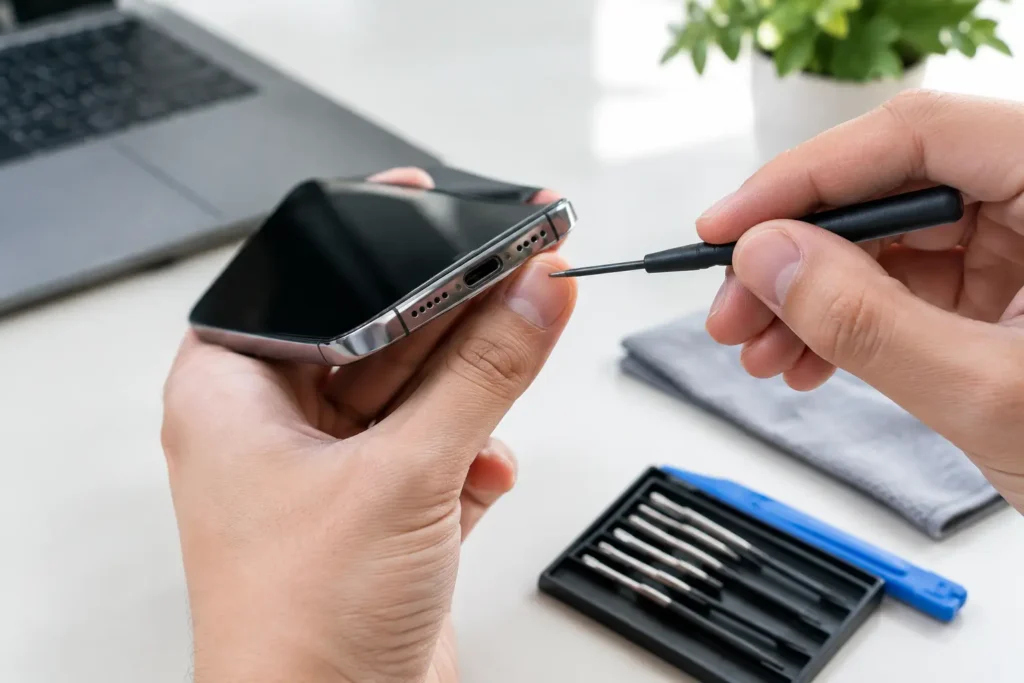
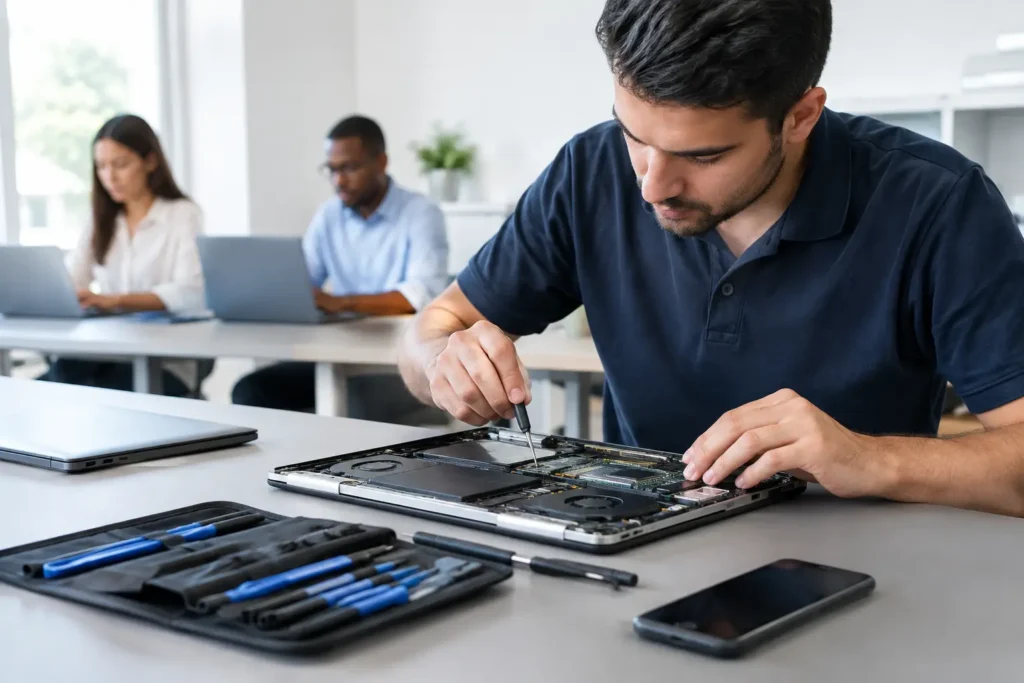
This is specialist work. A cracked screen replacement is fairly straightforward on many models. Board-level repair is different. It takes proper diagnostic equipment, microsoldering skill, and experience with common iPhone fault patterns across multiple generations.
That is why two repair quotes for the same dead iPhone can be completely different. One shop may class it as beyond repair. Another may know exactly where the failure usually sits and fix it without replacing the whole device.
Common faults that lead to logic board repair iPhone jobs
Some iPhone problems look random from the outside, but they often point to a board-level issue. The most common examples include charging faults that persist after a charging port replacement, no power, boot loops, no image with vibration or sound still present, touch not working properly, audio failures during calls, failed backlight, overheating, and battery drain that does not improve with a new battery.
Liquid damage is one of the biggest triggers. Even if the phone still powers on after getting wet, corrosion can continue developing on the board. Days or weeks later, you may see intermittent faults that get worse over time.
Drops and bends can also damage the board. The phone does not need to look smashed for this to happen. A hard impact can crack solder joints or damage tiny components while leaving the outer casing looking fairly normal.
Then there is failed repair history. If a handset has had poor-quality previous work, missing screws, torn connectors, or accidental board damage during an earlier repair, logic board work may be needed to put things right.
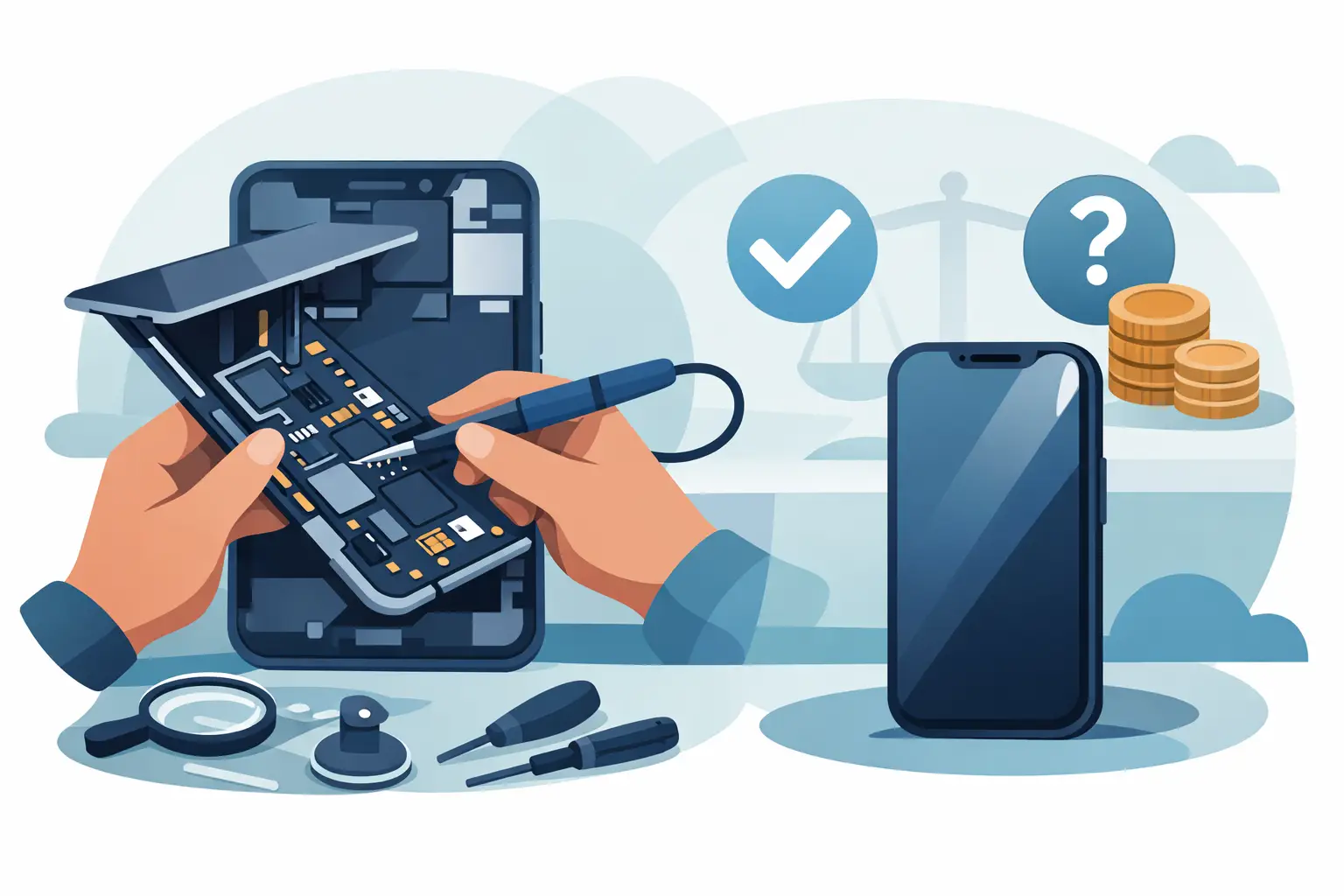
When repair is worth it and when it is not
This is where a good repair shop earns its keep. Not every board fault should be repaired, and any honest technician should say so.
If the iPhone is relatively recent, holds important data, or would cost far more to replace than to repair, board repair often makes strong financial sense. It can also be the best option for business users or students who need their exact device and data back quickly.
If the phone is much older, already has multiple faults, and would still need an expensive screen or battery on top of the board work, the numbers may not stack up. In that case, replacement may be the more sensible route.
Data value changes the decision as well. For many customers, the phone itself is not the main issue. The photos, messages, notes, work apps, and account access stored on it matter more than the hardware. If logic board repair offers the best chance of data recovery, it can be worth considering even on an older model.
Why diagnosis matters more than guessing
A lot of wasted money in phone repair comes from guessing. A customer is told it needs a battery. Then a charging port. Then a screen. The fault remains because the actual issue sits on the board.
Proper diagnosis should come first. That means checking power draw, inspecting the board, testing known-good parts where appropriate, and identifying whether the failure is in charging circuits, power management, backlight, touch circuitry, audio, or another subsystem.
A reliable shop should explain the problem in plain English. You should not need an electronics background to understand what went wrong, what can be done, what it is likely to cost, and whether there are risks involved.
The risks and trade-offs with board-level repairs
Logic board repair is not a magic fix, and it is better to be upfront about that. Some faults are clean and predictable. Others are linked to severe liquid damage, layered board issues, missing pads, or prior failed attempts. In those cases, the repair can be more complex and the outcome less certain.
There is also a difference between restoring function and restoring every feature. A phone may be repairable, but specific functions such as Face ID could remain affected if certain components are damaged in a way that cannot be fully reinstated. That does not mean the repair is poor – it means the hardware limitations need to be clearly explained before work starts.
The best repairers are honest about this. They will tell you when a board repair has a high success rate, when it is borderline, and when the sensible answer is to stop spending money.
How to spot a trustworthy iPhone logic board repair service
Look for clear communication first. If a shop talks only in vague terms and avoids explaining the diagnosis, that is not a great sign. You want a technician who can tell you what symptoms point to, what tests are needed, and whether the repair is aimed at full restoration or data recovery.
Experience matters too. iPhones have recurring fault patterns depending on model and generation, and an experienced specialist will have seen many of them before. That familiarity speeds up diagnosis and reduces trial-and-error repair work.
Turnaround is also important, especially if the phone is central to work or family life. Sending a device away for an unknown period is frustrating. A local specialist can often assess the issue faster, keep you updated properly, and give you a realistic timescale.
Data handling should never be an afterthought. Phones contain banking apps, family photos, business emails, messages, saved passwords, and sensitive documents. Any repair provider should treat that seriously and handle devices with proper care and discretion.
At TechLab Repairs, this is exactly the sort of repair approach customers across Barrow-in-Furness, Cumbria and the Lake District look for – straightforward advice, fast local support, and repairs that are judged on what genuinely makes sense for the customer.
Repair or replace? A practical way to decide
If you are weighing up repair against replacement, ask four simple questions. How old is the phone? What would a replacement cost? Is the data on it important? And does the handset have other major faults besides the board issue?
If the phone is modern, the rest of the device is in decent shape, and the repair cost is comfortably below replacement, repair is usually the sensible move. If the device is old, heavily damaged, and likely to need several more repairs soon, replacement may be the better long-term option.
There is no one-size-fits-all answer here. A newer iPhone used for work is a different decision from an older spare handset kept at home for occasional use. The right choice depends on value, urgency, and the condition of the device as a whole.
What to do before booking a repair
Do not keep charging a phone that is overheating badly or showing clear signs of liquid damage. Do not leave it in rice either – that does not fix corrosion on a logic board. If there has been water exposure, switch it off if possible and get it assessed quickly.
If the phone still works intermittently, back it up straight away. Board faults often worsen, and what is recoverable today may not be recoverable next week.
Be ready to describe the fault clearly. Mention whether the issue started after a drop, water exposure, a failed update, battery swelling, previous repair work, or gradual decline. Small details can make diagnosis much faster.
The real value of good logic board repair
A proper board repair is not just about reviving a phone that looks dead. It is about avoiding unnecessary replacement costs, keeping your data where it belongs, and getting an honest answer about what is and is not worth doing. For customers who depend on their iPhone every day, that kind of clarity matters as much as the repair itself.
If your handset has stopped behaving normally and simple part replacement has not solved it, the next step should not be guesswork. It should be a proper diagnosis from a local repair specialist who knows iPhones inside out and can tell you, plainly, whether your phone has a strong chance of coming back to life.