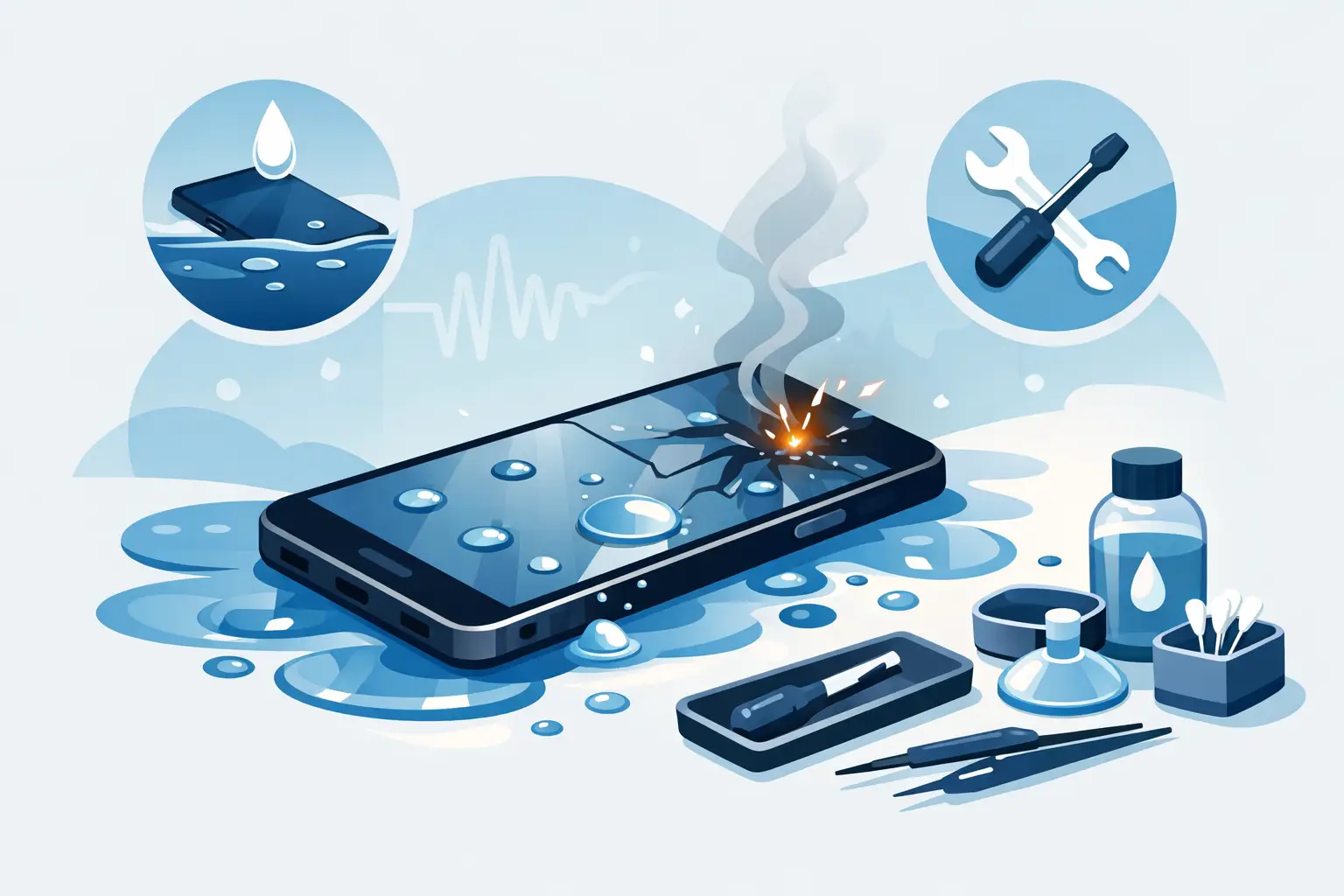
Tea across the kitchen counter. Rain straight into your pocket. A mobile phone dropped in the bath for two seconds that somehow feels like twenty. When you need mobile phone liquid damage repair, what you do in the first few minutes can make the difference between a straightforward fix and a dead handset.
Liquid damage is rarely just about the water you can see. The real problem starts inside the mobile phone, where moisture reaches the charging port, battery connections, screen layers and logic board. Even if the device powers back on, corrosion can keep spreading after the accident. That is why quick action matters.
Mobile phone liquid damage repair starts with the right first steps
The first job is simple – get the mobile phone out of the liquid and turn it off straight away if it is still on. Do not keep pressing buttons to check whether it works. Every extra second with power running through damp components increases the risk of shorting.
If the mobile phone has a case, remove it. Take out the SIM tray as well, as that can help a little with airflow and lets a technician check for internal moisture markers later. Dry the outside with a clean cloth or kitchen roll, but keep it gentle. You are trying to remove surface liquid, not force moisture deeper into the mobile phone.
What you should not do is just as important. Do not charge it. Do not connect it to a laptop. Do not use a hairdryer, and do not put it on a radiator. Heat can damage seals, screens and batteries, and blowing hot air can push moisture further inside.
Rice is the old favourite, but it is not a proper repair method. It may absorb a small amount of surface moisture over time, but it does nothing for mineral deposits, corrosion or trapped liquid beneath shields and chips. In some cases, rice dust makes things worse by getting into ports.
Why liquid damage is often delayed
One of the most frustrating things about mobile phone liquid damage repair is that some handsets seem fine at first. The screen lights up, messages come through, and it looks like you have got away with it. Then the problems start a few hours later or the next day.
That delay happens because liquid damage is a chemical problem as much as an electrical one. Tap water, soft drinks, coffee, alcohol and salt water all leave residue behind. Those contaminants begin reacting with metal contacts and tiny board components, leading to corrosion. A mobile phone that works today may develop charging faults, no sound, face recognition issues, camera failure or random restarting tomorrow.
This is why waiting to see what happens can be expensive. The sooner the device is opened, inspected and cleaned properly, the better the chance of saving key components and, in many cases, your data.
What a proper mobile phone liquid damage repair involves
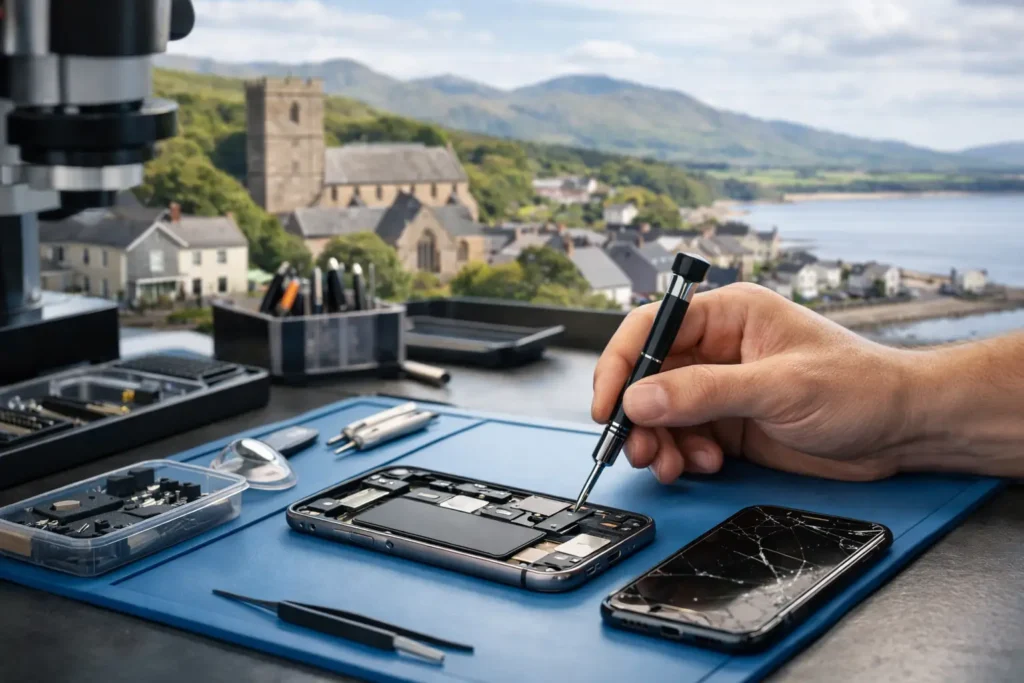
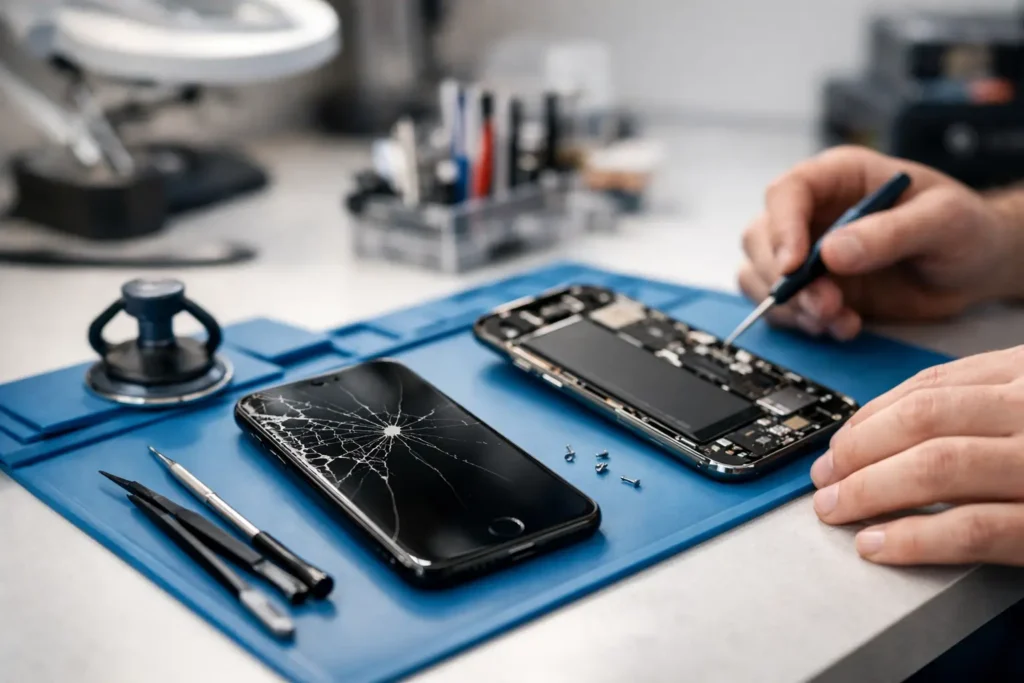
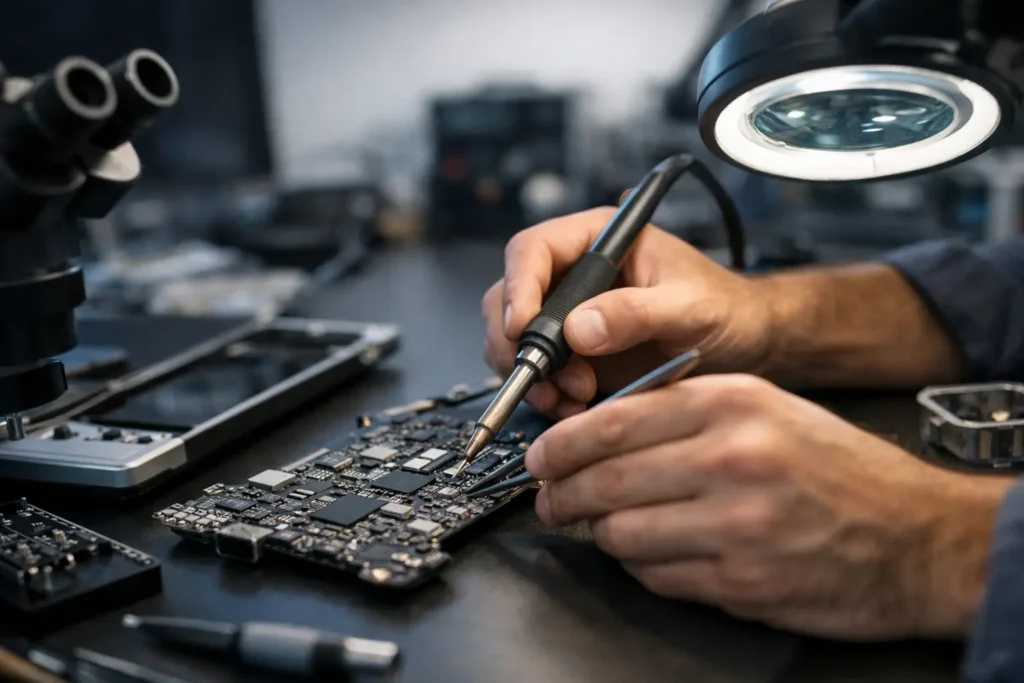
A real liquid damage repair is not just a quick dry-out. It normally starts with full disassembly so the internal parts can be assessed properly. That includes checking the screen, battery, charging assembly, cameras, speakers and main board for visible signs of moisture or corrosion.
From there, the technician will usually clean affected parts using specialist methods designed for electronics, not household products. The aim is to remove residue, stop corrosion where possible and identify what has actually failed. Sometimes the mobile phone only needs cleaning and testing. In other cases, one part has failed and can be replaced without needing a full device replacement.
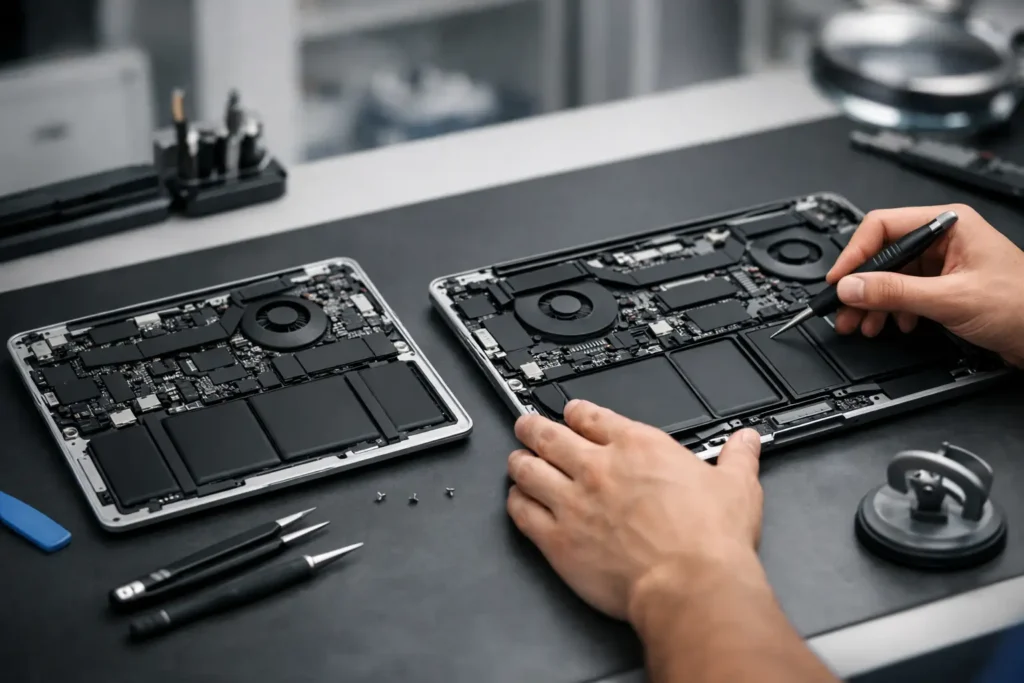
The more serious jobs involve logic board repair. This is where experience matters. Liquid can damage filters, connectors, backlight circuits, charging circuits and other tiny components that cannot be dealt with by swapping a simple part. Board-level repair can often save a device that would otherwise be written off, especially on premium phones where replacement cost is high.
At TechLab Repairs, that practical approach matters because customers are not just trying to save a mobile phone. They are trying to keep hold of photos, work apps, messages, banking access and all the everyday information tied to that device.
Is mobile phone liquid damage repair always worth it?
It depends on the mobile phone, the type of liquid, how long it was exposed, and how quickly action was taken. A recent iPhone or Samsung handset is often worth repairing, particularly if the rest of the device is in good condition. The cost of repair can be far lower than replacing the handset outright and setting everything up again from scratch.
Older or lower-value devices need a more balanced view. If the mobile phone has severe board corrosion, screen damage and battery issues all at once, repair may not make financial sense. In that case, a good repair shop should tell you plainly rather than push you into spending money on a bad bet.
Data can also change the calculation. If the mobile phone contains important family photos, business files, schoolwork or app access that is not backed up, a diagnostic and recovery-focused repair may still be worthwhile even if the handset itself is near the end of its life.
Common signs you need urgent repair
Some symptoms appear straight after exposure, while others creep in over time. If your mobile phone shows no power, gets hot, will not charge, restarts on its own or has a flickering display after contact with liquid, stop using it and get it checked.
Less obvious signs matter too. Muffled speakers, a microphone that cuts out, patchy touch response, misting inside the camera lens, unreliable Face ID or fingerprint recognition, and battery drain after a spill can all point to internal moisture damage. Even one small symptom is worth taking seriously.
For business users and schools, speed matters even more. A damaged work mobile phone can mean missed calls, lost access to email, interrupted payment systems or staff losing access to two-factor authentication. Quick diagnosis is not just about convenience – it helps keep operations moving.
Water is bad, but other liquids can be worse
People often say water damage, but many of the worst cases involve something else. Sugary drinks leave sticky residue that can bridge contacts and attract grime. Coffee and tea add contaminants. Alcohol can affect adhesives and screen layers. Salt water is particularly aggressive because it speeds up corrosion dramatically.
That means the repair approach can vary. A mobile phone dropped in clean water and brought in quickly may have an excellent chance of recovery. A handset soaked in lager overnight or exposed to seawater on a day out along the Cumbrian coast is a more serious case. Neither is automatically beyond repair, but the timeline and likely outcome are different.
Prevention helps, but it is not foolproof
Modern phones often advertise water resistance, but that is not the same as waterproofing. Seals weaken over time, especially after drops, screen replacements or general wear. Exposure to steam, high-pressure water, pools or the sea can still get past those protections.
If your mobile phone has been near liquid and you are relying on a water-resistance rating as reassurance, be careful. Resistance is a safety margin, not a promise. Once liquid gets into the charging port or inside the housing, that label stops being very useful.
A decent case can help against splashes and drops, but it will not rescue a device from every accident. Backups are still your best safety net. They turn a disaster into an inconvenience rather than a major loss.
Choosing a local repair service after liquid damage
When liquid is involved, sending a mobile phone away and waiting can work against you. Corrosion does not pause while the parcel is in transit. A local repair specialist can assess the device faster, explain whether repair is realistic, and often begin treatment sooner.
That local factor matters in places like Barrow-in-Furness and across Cumbria, where people often want a straightforward answer and a quick turnaround rather than the hassle of manufacturer post-ins. It is also reassuring to hand your mobile phone to a team that understands how important data security is, whether the device belongs to a parent, a student, a tradesperson or a local business.
The best repair experience is transparent. You should expect a clear diagnostic process, honest advice on whether the device is economically repairable, and realistic timescales. Liquid damage can be unpredictable, so no trustworthy technician should pretend every mobile phone is guaranteed to survive.
What to remember if your mobile phone gets wet today
If there is one thing to hold onto, it is this: do not test it, charge it or leave it sitting around in hope. Power it off, dry the outside, and get it looked at properly as soon as possible. Fast action does not guarantee a save, but it gives your mobile phone the best possible chance – and sometimes that is the difference between a repair bill and a full replacement.