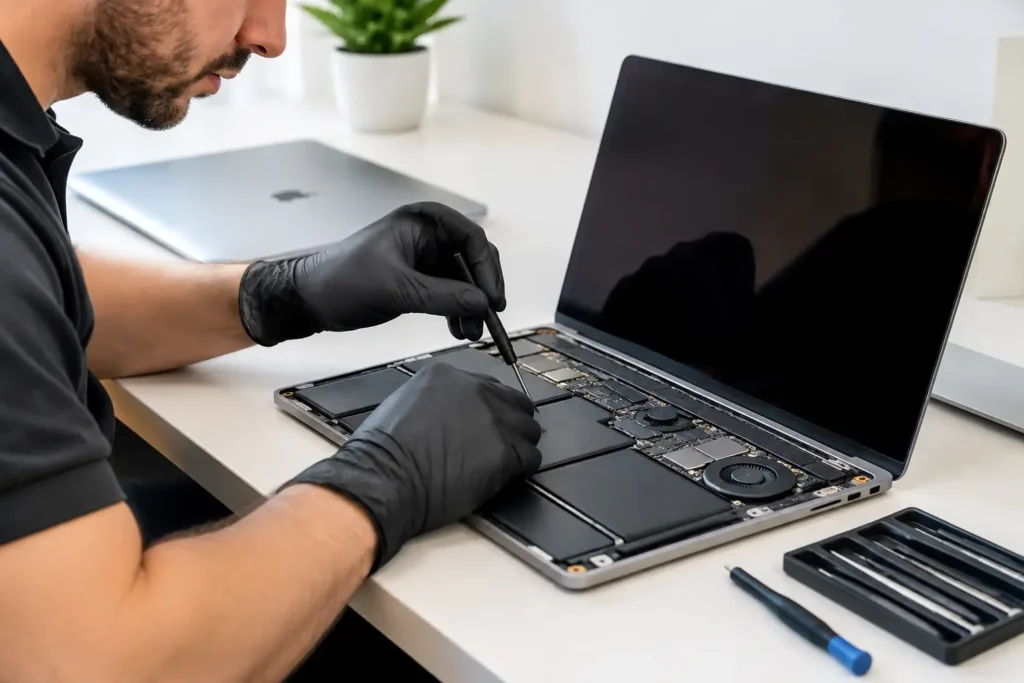
A Year 9 pupil opens a laptop for first period and the screen stays black. By lunchtime, IT has another three devices on the desk – one with a snapped hinge, one not charging, and one with keys missing after being forced into a bag. That is exactly where a good school laptop repair example becomes useful, because schools do not just need fixes. They need a repeatable way to get devices assessed, repaired and back in use without weeks of disruption.
For most schools, the real problem is not a single broken laptop. It is volume, timing and responsibility. Devices are used hard, moved between classrooms, shared by pupils and expected to last across the school year. When one fails, teaching is interrupted. When ten fail, it starts affecting budgets, timetables and staff workload.
What a school laptop repair example actually shows
A proper school laptop repair example should do more than list a fault and a price. It should show the chain of decisions behind the repair. Was the fault caused by impact, power issues, liquid damage or normal wear? Is the repair economical compared with replacement? Can data be protected? How quickly can the device return to the pupil or member of staff?
That matters because schools are balancing cost control with practical reality. Replacing every damaged device sounds simple until procurement, setup time and stock shortages get in the way. On the other hand, repairing every fault is not always sensible either. The best outcome often sits in the middle – repair what is worth repairing, replace what is beyond value, and spot recurring issues before they become a pattern.
A practical school laptop repair example
Let us take a common case. A secondary school has a fleet of student laptops used daily across lessons. One device is booked in with three complaints: the hinge is loose, the casing has split near the charging port, and the battery is no longer holding charge for a full morning.
On first look, staff may assume it is simply old and ready for replacement. In practice, the repair starts with diagnosis. The hinge fault may have put strain on the case, which then shifted pressure onto the charging area. The poor battery life could be age-related, but it could also be linked to charging instability if the power connection has been stressed over time.
After inspection, the repair path becomes clearer. The hinge assembly needs securing, the damaged casing section needs replacing, and the battery should be tested for health and replaced if degraded beyond reliable use. If the charging circuit on the board is sound, this is usually a repairable unit. If the board has also suffered damage, the cost calculation changes.
This is where schools benefit from straightforward advice. There is no point approving a cosmetic repair if the internal power fault means the laptop will fail again next month. Equally, there is no need to write off a device just because the outer shell looks rough. A reliable diagnosis saves money because it prevents half-fixes.
The faults schools see most often
School environments create a very specific type of wear. Hinges fail because laptops are opened from one corner and carried while half open. Charging ports loosen because leads are yanked out or bent under desks. Screens crack from pressure inside crowded bags, while keyboards suffer from spills, missing keys and dust build-up.
Battery issues are also common, especially in older school fleets. A laptop that lasts only 40 minutes in class is not really doing its job. Staff devices can have different problems – heavier software use, overheating, fan noise, failed SSDs or power faults after years of daily admin work.
The point is that school repair work is rarely random. Patterns appear. Once a repair provider sees enough of these devices, they can often tell whether a fault is isolated or part of a wider issue in the fleet. That helps schools make better decisions about care, replacement cycles and the models they buy next.
Why turnaround matters more than schools expect
Speed is not only about convenience. In schools, downtime multiplies. A single broken teacher laptop can delay lesson delivery, access to marking, presentations and admin. A batch of student devices can create a borrowing problem that spreads across departments.
That is why a school laptop repair example should always include turnaround expectations. A repair that is affordable but takes three weeks may not be the best value in term time. A faster local repair often saves more than it costs because it reduces disruption, avoids emergency replacements and keeps loan stock available.
For schools in Barrow-in-Furness and across Cumbria, using a nearby repair specialist can make a noticeable difference. Devices do not need to disappear into a distant returns system with vague timescales. They can be assessed, approved and returned with a much clearer process.
Data security is not optional
Schools cannot treat laptops like anonymous bits of hardware. Even student devices may hold saved logins, coursework, browser history or locally stored files. Staff laptops can contain sensitive information, reports and internal documents.
That means any repair process has to protect data as standard. Secure handling is not an added extra. It is part of doing the job properly. In some repairs, the storage drive never needs to be touched. In others, testing may require system checks. Either way, schools should expect clear communication about how devices are handled, what access is necessary and whether data backup is recommended before work starts.
A good local repair partner understands that trust is part of the service. Schools need confidence that the device will come back working, but also that its contents have been treated responsibly.
When repair is the better choice – and when it is not
There is no clever answer that says repair everything. Sometimes a laptop has reached the point where replacement is simply smarter. If the motherboard has major damage, parts are scarce, the battery is poor, the screen is marked and the unit is already underpowered for current school software, repair may only delay the inevitable.
But many devices are written off too early. A cracked screen, worn battery, faulty keyboard or damaged charging port often looks worse than it is. If the core system is healthy, these repairs can extend usable life at a much lower cost than buying new. For schools managing dozens or hundreds of devices, those savings add up quickly.
The sensible approach is to look at total value, not just the invoice. How old is the device? What is its role? How much useful life is likely after repair? Will the same model continue to be supported? These are the questions that turn a one-off fix into a smarter asset decision.
What schools should ask before approving repairs
The best repair relationships are clear from the start. Schools should know what fault has been found, what parts are needed, how long the work is likely to take and whether the quote changes if deeper issues are uncovered.
They should also ask whether the fault suggests wider fleet problems. If five laptops from the same batch have hinge failure, that is not bad luck. It may point to a casing weakness, user handling issue or the need for better storage and transport rules.
This is where an experienced repair company adds more value than just fitting parts. It can help schools spot patterns, reduce repeat damage and make future repairs less frequent.
A local approach works better for education
Schools need practical support, not a maze of ticket numbers and long waits. A local repair service can offer quicker assessment, easier communication and a more flexible approach to volume work. That is especially helpful when schools have a mix of student laptops, staff laptops, tablets and desktop equipment needing attention at different times of year.
For a provider like TechLab Repairs, school work is not an odd extra. It fits naturally with the wider repair service – fast diagnostics, secure handling, sensible pricing and support across multiple device types. That matters because schools rarely have only one kind of problem to solve.
The most useful school laptop repair example is the one that reflects real life. A device fails, someone needs a clear answer, and the repair either makes sense or it does not. When that process is handled properly, schools spend less, recover faster and keep pupils learning instead of waiting around for technology to catch up.
Broken school laptops are never convenient, but they do not have to become a bigger headache than they already are. With the right diagnosis and a repair-first mindset where it makes financial sense, a damaged device can go back to doing its job – and that keeps the school day moving.