A phone that will not charge, keeps restarting, shows no display, or gets hot for no clear reason often points to more than a worn battery or cracked screen. This complete guide to phone motherboard faults is here to help you spot the signs, understand what is actually going wrong, and decide whether repair or replacement makes the most sense.
For most people, “motherboard fault” sounds like the expensive worst-case scenario. Sometimes it is serious, but not every board issue means the phone is beyond saving. In many cases, the problem sits in one damaged circuit, a failed charging line, a shorted component, or corrosion after liquid exposure. The difference matters, because the right diagnosis can save both your device and your data.
What a phone motherboard actually does
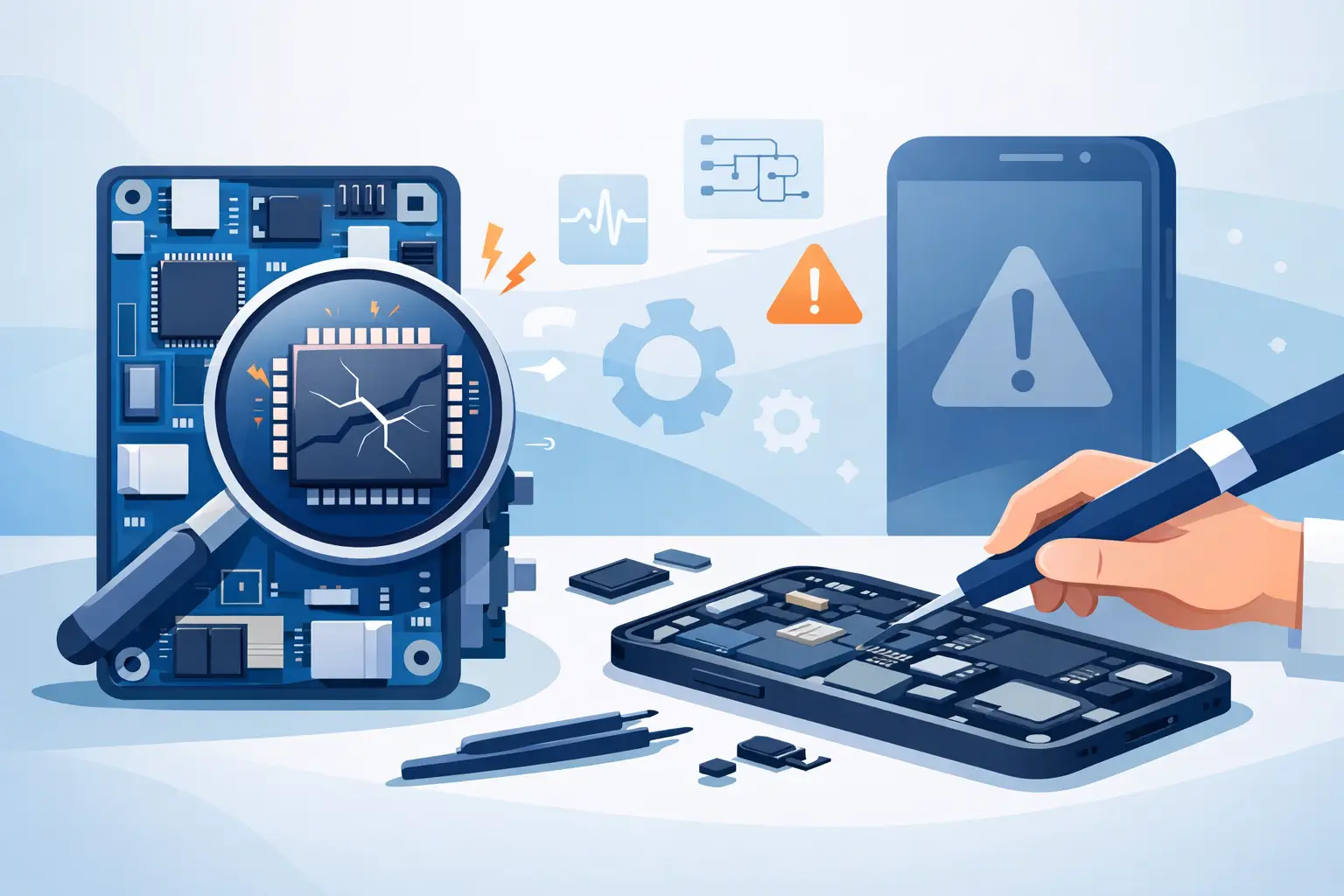
The motherboard is the phone’s main circuit board. It connects and controls the parts your handset relies on every day – power management, charging, storage, audio, cameras, touch response, network functions, and more. On some models, especially premium phones, this board is densely packed and layered, which makes diagnosis and repair more specialist work than replacing a battery or screen.
That complexity is why motherboard faults can look so different from one phone to another. One handset may appear completely dead. Another may still switch on but have no signal, no sound, or random freezing. The board sits at the centre of everything, so when it develops a fault, the symptoms depend on which circuit has failed.
Complete guide to phone motherboard faults: common warning signs
A proper diagnosis starts with the pattern of the fault, not guesswork. If a phone has one or more of these symptoms, motherboard damage becomes more likely.
The phone is dead with no signs of life
If there is no vibration, no charging symbol, no logo, and no current draw when tested, the issue may be on the power rail or power management section. This can happen after a drop, a poor-quality charger incident, liquid damage, or a short on the board.
It charges slowly, intermittently, or not at all
People often assume this is just the charging port. Sometimes it is. But if the port has already been ruled out, the fault may be in the charging circuit, a filter, a charging IC, or a damaged line on the board.
It keeps rebooting or gets stuck on the logo
Boot loops can come from software, failing storage, or board-level faults. If a reset or software restore does not solve it, the motherboard may be involved. This is especially true if the issue followed a drop, overheating event, or liquid contact.
No network, Wi-Fi, Bluetooth, or mobile signal
When one communication feature fails, it may be a parts issue. When several go down together, or come and go without reason, the board becomes a stronger suspect. Antenna lines, RF circuits, and solder joint damage can all cause this kind of fault.
No image, touch, sound, or backlight despite parts being intact
A phone can power on but still seem unusable because one function is missing. If a known-good screen still gives no image, or a speaker replacement changes nothing, the fault may sit on the board rather than in the part itself.
It overheats even during light use
A board short can create unusual heat near a specific chip or power line. That is different from normal warmth during charging or gaming. If the handset becomes hot quickly while idle, it needs proper testing.
What causes motherboard faults?
There is rarely one single cause. In repair work, the most common triggers are liquid, impact, power issues, failed previous repairs, and age-related component failure.
Liquid damage is one of the biggest culprits. Phones may survive the initial spill and then fail days later once corrosion starts spreading under shields and around components. This is why a handset that seems “fine after drying out” can still develop charging, audio, or power faults later on.
Drops and frame bends are another major cause. A hard impact can crack solder joints, damage board layers, or break tiny components free from the board. Some faults appear immediately. Others only show up once the phone heats up or flexes during normal use.
Power surges and poor-quality charging accessories can also play a part. Not every cheap charger will destroy a handset, but unstable voltage can stress the charging circuit. In some cases, that leads to failure in the power management area.
Then there is age. Phones used heavily for years go through thousands of charging cycles and plenty of thermal stress. Components can simply wear out. That does not always mean the whole board has failed, but it can mean one key chip or circuit has.
Why motherboard faults are often misdiagnosed
Board faults can mimic simpler issues. A dead phone may look like a flat battery. No charging may look like a damaged port. No display may look like a broken screen. That is why proper testing matters.
A good repair process checks the obvious first. Battery health, charge port condition, screen output, software behaviour, and current draw all help narrow the problem down. Skipping those steps wastes time and money. It can also lead to unnecessary part replacements when the real issue sits deeper on the board.
For local customers, this is often where using a specialist repair shop makes more sense than replacing parts at random. Board-level diagnosis is about evidence, not guesswork.
Can phone motherboard faults be repaired?
Yes, many can. The real question is whether they should be, based on cost, device value, fault severity, and the importance of the data inside.
A single failed component in the charging circuit is often worth repairing. So is corrosion in a localised area, provided it has not spread too far. Damage to backlight circuits, audio circuits, or certain power lines can also be repairable with the right tools and experience.
It becomes less straightforward when the board has severe liquid damage, multiple short circuits, broken internal layers, or major CPU and storage issues. Those jobs may still be possible in some cases, but they are more complex, less predictable, and not always cost-effective.
This is where honest advice matters. A trustworthy repair service should tell you when a board repair is sensible and when putting the money towards another handset is the better move.
Complete guide to phone motherboard faults: repair or replace?
There is no one-size-fits-all answer. It depends on the handset, the fault, and what you need from the repair.
If the phone is a newer iPhone or Samsung model with strong resale value, motherboard repair is often worth considering. The same applies if the handset contains photos, business apps, client messages, or schoolwork that has not been backed up. Data value can easily outweigh the cost of repair.
On the other hand, if the device is older, already damaged in several ways, and needs both board work and major parts, replacement may be the better financial choice. A cracked screen, poor battery, and motherboard fault together can push the total beyond what the phone is worth.
For businesses and schools, the decision is slightly different. Consistency and turnaround matter just as much as device value. If one board repair gets a key device back into service quickly and securely, that can be more practical than waiting on a replacement setup.
What to do if you suspect motherboard damage
First, stop charging the phone if it is getting unusually hot or has had liquid exposure. Continued charging can make a short worse. If it has been dropped in water or another liquid, do not rely on rice or home remedies. They do not remove corrosion from under the shields where the real damage often sits.
Second, avoid repeated restart attempts. If the phone is unstable, every extra power cycle can sometimes make data recovery harder, especially if storage is involved.
Third, get it assessed properly. At TechLab Repairs, this kind of fault is approached with practical testing and a clear explanation of your options, so you know whether the issue is repairable, whether your data is at risk, and what the most sensible next step looks like.
The value of board-level repair
When a motherboard fault is diagnosed correctly, repair can be a very good result. It may restore a phone you thought was dead, preserve data that matters, and cost far less than buying a like-for-like replacement. It also keeps devices in use for longer, which is better for budgets and better for reducing waste.
That said, motherboard work is not magic. Some faults are straightforward, some are time-consuming, and some are simply not economical. The best outcome comes from clear diagnosis, realistic expectations, and choosing a repair service that is comfortable working beyond simple part swaps.
If your phone is showing signs of a board fault, do not assume the worst – but do act quickly. The sooner the device is checked, the better the chance of a safe, cost-effective repair and the better chance you have of keeping the data that matters most.