A laptop hinge rarely fails all at once. It usually starts with a creak, a stiff lid, or a corner of the screen lifting away from the casing when you open it. If you are searching for how to fix laptop hinge problems, the first thing to know is this: the hinge itself is only part of the issue. In many cases, the real damage is in the plastic mounts, screw points, or screen cover around it.
That matters because the right repair depends on what has actually broken. Force the wrong fix and a simple hinge job can turn into a cracked screen, snapped bezel, or damaged display cable. Don’t let a broken device slow you down – a careful diagnosis comes first.
What usually goes wrong with a laptop hinge
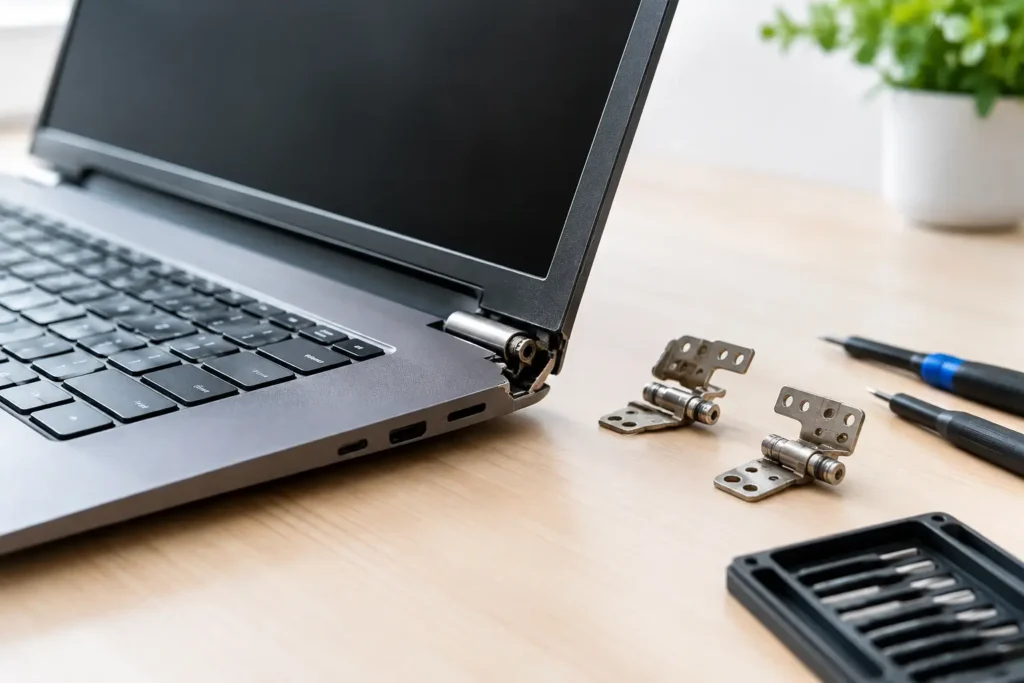
Laptop hinges are designed to hold the screen firmly in place while still allowing smooth movement. Over time, dust, wear, overtightened hinges, drops, or repeated one-handed opening can put extra stress on the assembly. On some models, the metal hinge remains intact while the plastic anchor points inside the lid or base break away.
You might notice the lid opening unevenly, a popping sound near one corner, visible separation in the casing, or resistance when moving the screen. Sometimes the screen still works perfectly, but the frame starts splitting apart. Other times, the pressure from the hinge damages the LCD, webcam cable, Wi-Fi antenna, or power cable routed through the hinge area.
This is why hinge repairs vary so much in cost and complexity. A loose screw is one thing. Rebuilding shattered mounting points inside a thin modern laptop is another.
Before you try to fix a laptop hinge
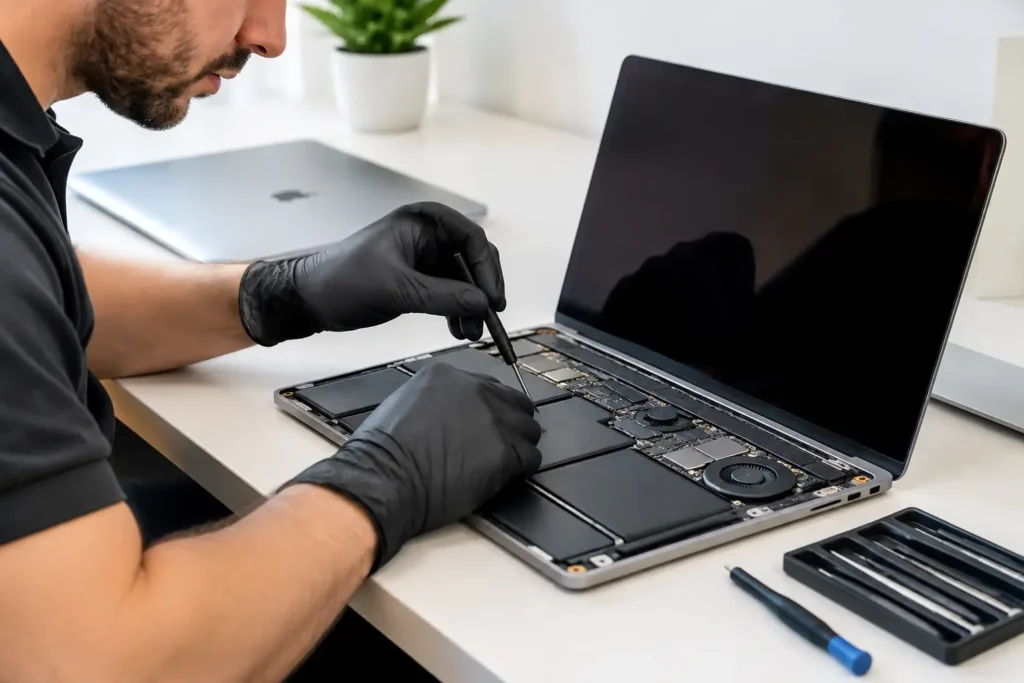
Start by switching the laptop off fully and unplugging the charger. If the battery is removable, take it out. If it is internal, don’t start dismantling anything unless you are comfortable working on electronics and have the correct tools.
Look closely at where the fault is happening. If the outer casing is splitting, if the display is flickering when moved, or if the hinge feels seized rather than loose, stop there. That usually means the repair goes beyond a quick tighten-up.
A hinge problem can put pressure on delicate parts very quickly. Opening and closing the laptop repeatedly to test it often makes things worse. If the lid only moves with force, avoid forcing it.
How to fix laptop hinge issues that are minor
There are a few cases where a laptop hinge fault is relatively straightforward. If the hinge has simply loosened and the screw mounts are still intact, a repair may involve opening the machine, exposing the hinge bracket, and tightening the screws back into place.
On some laptops, you can remove the bottom cover, inspect the hinge from the base side, and see whether the screws have backed out. If that is the only problem, the fix can be simple. Use the correct screwdriver, support the display carefully, and tighten the screws evenly without overdoing it. Too much force can strip the threads or crack the mount.
If the hinge itself is stiff, that is a different issue. A hinge can become so tight that every opening motion tears at the plastic around it. In that case, tightening screws alone will not solve the problem. The hinge may need to be loosened slightly or replaced altogether.
When the real problem is broken plastic mounts
This is the most common hidden fault. People assume the hinge has broken, but what has actually happened is that the small brass inserts or plastic posts holding the hinge screws have snapped away from the casing.
Once that happens, the hinge is no longer anchored properly. Every time you move the lid, the metal hinge pulls against loose plastic. That is when the palmrest lifts, the screen bezel separates, or the rear cover cracks.
Technically, these mounts can sometimes be rebuilt with specialist epoxy or reinforced repair methods. But it depends on the laptop model, the amount of damage, and whether there is enough original material left to secure the repair. A glue-only fix done at home often fails because the hinge tension remains too high. The repaired section simply breaks again under load.
For a lasting result, the hinge tension usually needs checking at the same time. Otherwise you are repairing the symptom, not the cause.
How to tell if the hinge needs replacing
A replacement hinge is usually needed when the metal hinge arm is bent, cracked, seized, or excessively stiff. You may also need a replacement if the hinge moves unevenly or has developed play that makes the screen wobble.
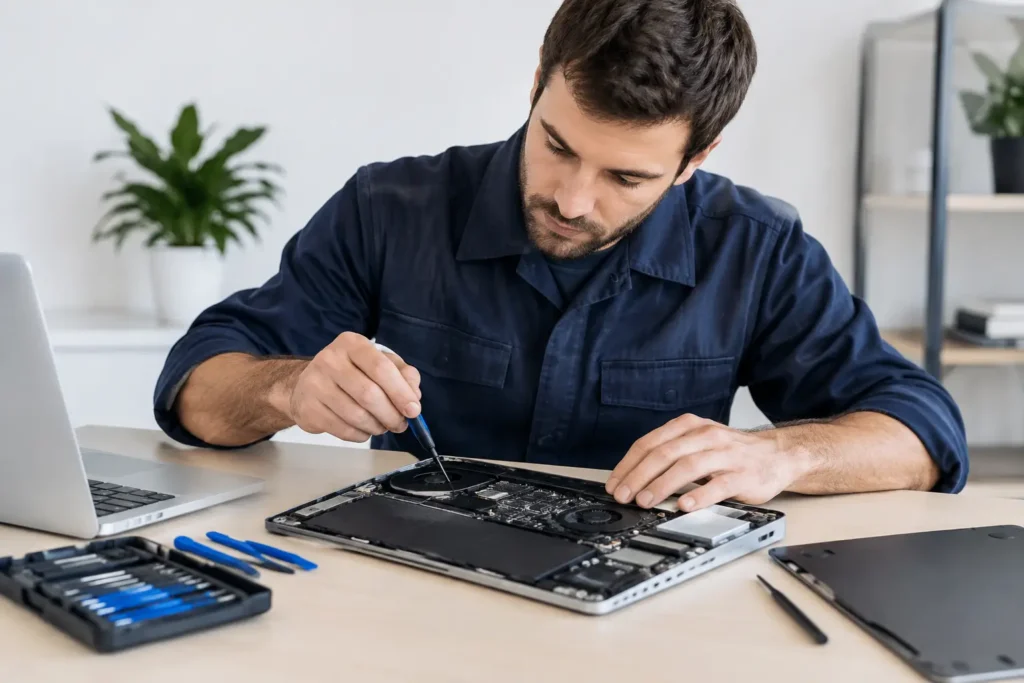
The difficulty is access. On many laptops, replacing the hinge means stripping down the display assembly, removing the screen bezel, detaching the LCD panel, and carefully routing cables back through the hinge channel. That work needs patience and the right tools because display panels, antenna cables, and webcam leads are easy to damage.
If your laptop is slim, premium, or uses glued screen assemblies, the job becomes more delicate again. A business laptop with a screw-fastened structure may be much easier to work on than an ultra-thin consumer model.
The risks of DIY hinge repair
There is nothing wrong with wanting to save money, and some confident users can handle basic repairs. But hinge faults are deceptive. What looks like one loose corner can involve the display housing, top case, bottom shell, internal cable routing, and screw mount damage all at once.
The main risks are cracking the screen during disassembly, damaging hidden cables, misaligning the lid, or reassembling the machine with unresolved hinge tension. Another common problem is using superglue as a quick fix. It might hold briefly, but it rarely provides the structural strength needed for repeated opening and closing.
There is also the question of data security. If you use your laptop for work, school, business records, or family photos, the last thing you want is a repair attempt turning a mechanical issue into a data recovery job.
When professional repair makes more sense
If the hinge has pulled the casing apart, if the screen is under strain, or if the laptop needs a full strip-down to reach the damaged area, professional repair is usually the safer and cheaper option in the long run.
A proper workshop can assess whether the hinge can be adjusted, whether the mounts can be rebuilt, or whether replacement parts are the better answer. That matters because replacing every visible part is not always necessary. In some cases, a targeted structural repair restores the laptop without the cost of a full lid assembly.
At TechLab Repairs, this is the kind of fault we see regularly. The goal is simple: find the actual cause, protect your data, and get the machine back to opening and closing properly without pushing you towards an unnecessary replacement.
What a proper hinge repair should achieve
A good hinge repair is not just about making the laptop open again. It should restore smooth movement, stable screen positioning, and solid support around the mounting points. The casing should sit flush, the screen should not twist when moved, and the hinge should not feel overly tight.
It should also leave no hidden pressure on the display. If the lid opens but the corner still flexes, the job is not really finished. The same goes for repairs that hold only if you open the laptop from one exact spot. A sound repair should cope with normal daily use.
Preventing the same problem from happening again
Once repaired, a hinge will last longer if you open the laptop from the centre of the lid rather than one corner. That spreads the force more evenly across both hinges. Keep the hinge area free from dust and grit, avoid overextending the screen, and never force a stiff lid.
If you notice resistance returning, get it checked early. A hinge that is beginning to seize can often be dealt with before it tears the casing apart. Leave it too long and a small mechanical issue can become a much larger structural repair.
Laptop hinge faults sit in that awkward category where the damage can look minor right up until the casing gives way. If your screen is lifting, creaking, or separating at the corners, treat it as an early warning rather than something to live with. The sooner the fault is diagnosed, the better the chance of a clean, cost-effective repair.