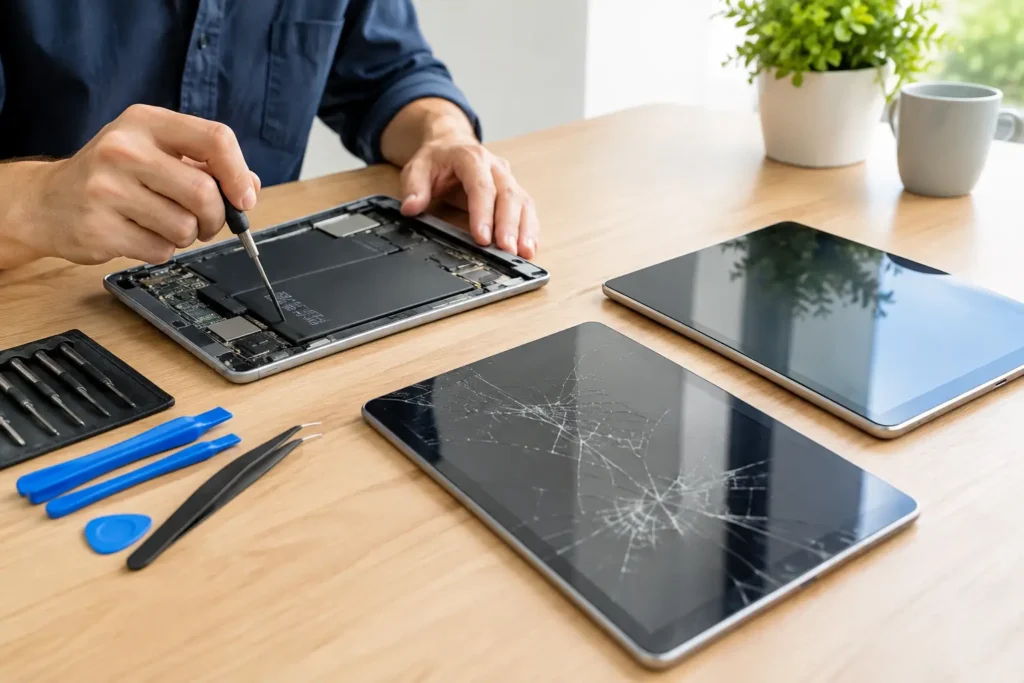
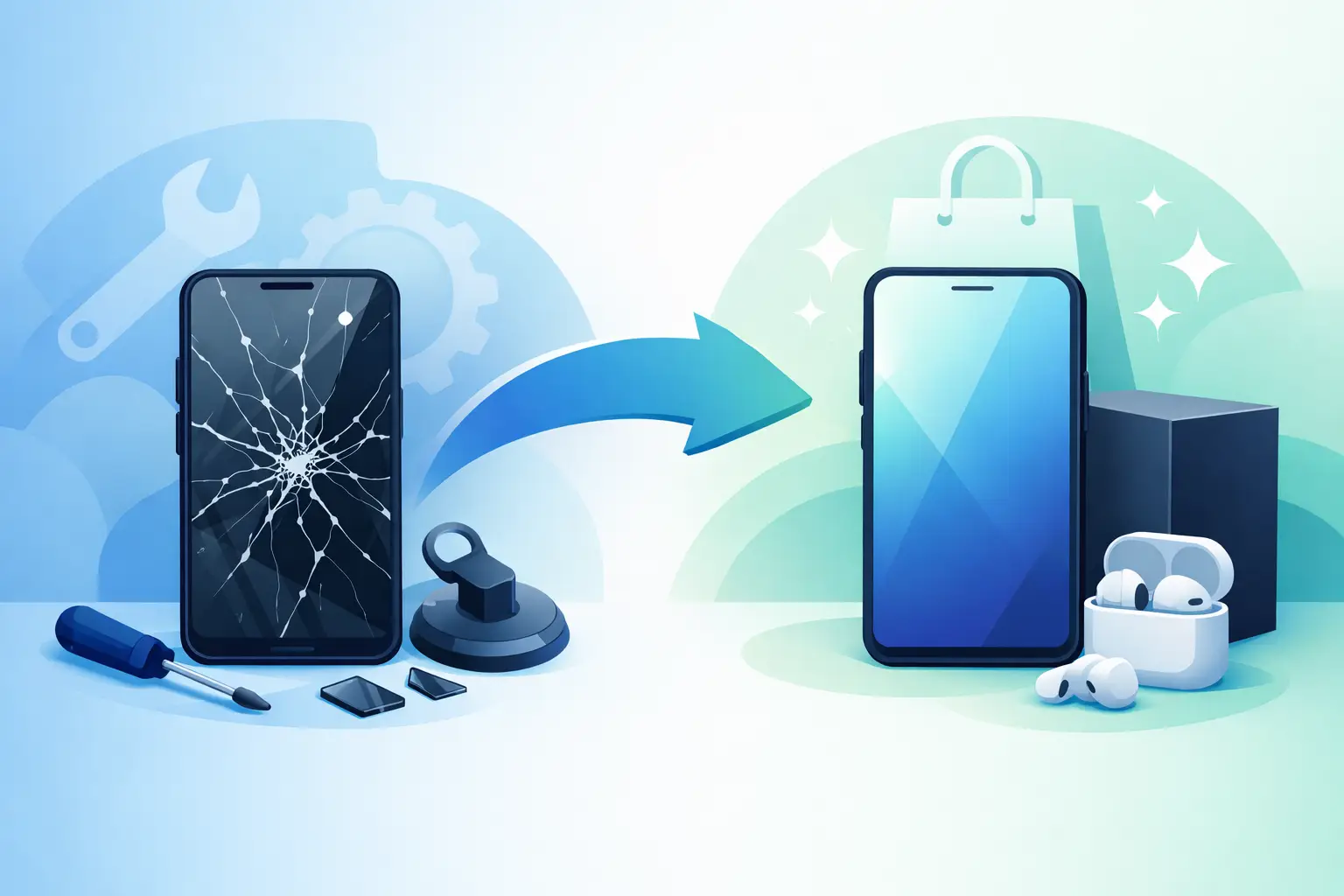
That moment when your phone slips, lands face-down and comes back with a spiderweb of cracks is bad enough. What usually follows is the bigger question – screen replacement or new phone? If you rely on your handset for banking, work, messages, photos and day-to-day life, you want the answer quickly, and you want it to make financial sense.
For most people, the right choice comes down to four things: the age of the phone, the cost of the repair, the condition of the rest of the device, and how urgently you need it back in proper working order. A cracked screen does not always mean the phone is finished. In many cases, it is a straightforward repair that gets you back to normal without the cost of replacing the whole device.
Screen replacement or new phone – what should you look at first?
Start with what is actually damaged. If the glass is cracked but the touch works properly, the display looks normal and the phone charges as it should, that is often a strong case for repair. The problem looks dramatic, but the fix can be much simpler than people expect.
If the screen is black, flickering, showing lines, missing touch response, or lifting away from the frame, the damage may be more than cosmetic. Even then, a screen replacement is still often worthwhile, especially on newer iPhones and Samsung phones where the rest of the handset may have years of life left in it.
The next question is whether the phone has other issues. A tired battery, poor charging port, bent frame or signs of liquid damage can change the picture. One fault is manageable. Several faults at once can push the balance towards replacement, particularly on older devices.
When a screen replacement makes the most sense
If your phone is fairly recent, a screen repair is usually the better-value option. Replacing the display on a phone that still performs well is almost always cheaper than buying a like-for-like replacement, especially if you are happy with the model and do not need the latest features.
This is especially true if the handset still holds charge well, runs the apps you use, and receives software updates. Many people replace a phone only because the screen is broken, not because the phone itself is no longer good enough. In that situation, repairing the screen can be the sensible move.
A repair also makes sense if you want to avoid the hassle of setting up a new handset. Moving apps, banking access, passwords, photos, eSIM settings and two-factor authentication can be more disruptive than people expect. A proper screen replacement keeps your familiar device in your hand and usually means less downtime.
For families, students and anyone watching the budget, repair can be the difference between a manageable bill and a much bigger spend. If the phone already does everything you need, paying for one targeted fix is often the most practical choice.
When a new phone is the better option
There are cases where replacing the handset is the smarter decision. If your phone is several years old, the battery is fading, storage is constantly full, performance is poor and the screen is now broken on top of that, repairing it may only delay a bigger upgrade.
Another factor is support. If your device no longer receives security updates, that matters. For users who keep work emails, personal documents, school accounts or payment apps on their phone, security is not a small detail. An older handset with multiple problems and no ongoing software support may not be worth investing in.
You should also think carefully if the repair cost is a large percentage of the phone’s current value. On some older or lower-value models, the maths simply stops working. If the repair bill gets close to what you would pay for a solid replacement device, upgrading can be the cleaner choice.
Then there is severe damage. If the screen is broken and the frame is twisted, the back glass is shattered, cameras are affected or there may be internal board damage, a repair may become less predictable and less economical. In those cases, a replacement phone may save time and repeat costs.
The cost question people really care about
Most customers are not asking for a technical lecture. They want to know whether repair is worth paying for.
A simple way to think about it is this: if a screen replacement restores a reliable phone for far less than the price of a comparable new device, repair is usually the sensible option. If the phone already had one foot in retirement, spending money on it becomes harder to justify.
It is also worth comparing against the true cost of a new phone, not just the advertised one. A replacement handset may mean a case, screen protector, charger, setup time and possible contract changes. The final spend can be higher than expected.
Repair, by contrast, is focused. You are paying to fix the actual fault. For many local customers, that is the biggest advantage – fast, targeted and affordable rather than starting over from scratch.
Screen replacement or new phone for iPhone and Samsung users
This decision comes up constantly with iPhones and Samsung handsets because they are widely used and often worth repairing. A cracked display on a recent iPhone or Galaxy model does not automatically mean you should replace the device. These phones often hold their value and performance well, making professional repair a strong option.
That said, model age matters. A newer iPhone with a damaged screen is very different from an older handset with poor battery health and limited storage. The same goes for Samsung models across different generations. What matters is not just the brand, but the overall condition of the phone in your pocket.
A good repair assessment should look beyond the obvious crack. Touch function, OLED or LCD condition, battery health, frame integrity, cameras, charging and any signs of water ingress all help determine whether repair is the better investment.
Don’t ignore the hidden risks of using a cracked screen
People often try to live with a broken screen for weeks or months. Sometimes that works. Often it gets worse.
Cracks can spread. Small chips can become sharp edges. Touch issues can appear later even if the display still works today. More importantly, damage to the front glass can make the phone more vulnerable to moisture and dust getting inside. What starts as a screen problem can turn into a bigger hardware issue if left too long.
There is also the usability side. Typing becomes frustrating, visibility drops, and the device becomes less reliable when you need it most. If your phone is essential for work, school runs, travel or keeping in touch, that daily inconvenience adds up quickly.
Why professional assessment matters
Not every broken screen tells the full story from the outside. A proper inspection helps you avoid guessing and gives you a clearer answer on whether to repair or replace.
That matters because a cheap decision can become an expensive one if the wrong route is taken. Replacing a phone too quickly can mean overspending when a repair would have solved it. Choosing a repair without checking for underlying damage can lead to disappointment if other faults emerge afterwards.
A trusted local repair specialist should explain the condition of the device in plain English, set out the likely repair path and be honest when a handset is no longer worth saving. That straightforward advice is what most customers want – no pressure, just the right solution for the device in front of them.
For people in Barrow, across Furness and around Cumbria, that local support also means less waiting and less worry about sending a device away. TechLab Repairs sees this decision every day, and in many cases the answer is simpler than customers fear.
A practical way to decide today
If your phone is under three years old, works well apart from the screen, and the repair cost is comfortably lower than buying a similar replacement, repair is usually the sensible choice. If the phone is older, struggling in daily use and showing several faults at once, moving to a new device may be the better long-term call.
If you are still unsure, ask yourself one honest question: before the screen broke, were you happy with the phone? If the answer is yes, a screen replacement is often all you need. If the answer is no, the crack may simply be the moment that confirms it is time to upgrade.
A broken screen feels urgent, but the decision does not need to be complicated. The best choice is the one that gets you back to a reliable device without paying for more than you actually need.