A cracked work phone at 9am can turn into a missed delivery, a delayed quote or a sales call that never happens. That is why phone repair for businesses is not just about fixing a device – it is about keeping staff productive, customers informed and daily operations on track.
For many local firms, mobiles are now part of the job rather than an optional extra. Field teams use them for photos, messages and maps. Office staff rely on them for two-factor authentication, email and client calls. Managers use them to approve jobs, check calendars and stay reachable. When one handset fails, the disruption spreads quickly.
Why phone failures cost more than the repair
The obvious cost is the repair itself, but that is rarely the full picture. A damaged screen might still light up, yet if a member of staff cannot type properly or answer calls, the business is already losing time. A failing battery causes different problems. Phones die mid-shift, drivers lose navigation, and teams start carrying chargers everywhere just to get through the day.
Then there is the replacement question. Many businesses assume a broken phone means buying a new one, especially if the device is tied to a contract or a staff upgrade cycle. In practice, that can be the expensive option. Replacing a phone often costs far more than dealing with a screen, battery, charging port or internal fault, particularly when several devices need attention at once.
There is also the admin burden. New handsets need setting up, accounts need moving across, apps need reinstalling and security settings need checking. Repairing an existing device often gets a member of staff back to work faster, with less disruption and fewer hidden costs.
What businesses usually need from phone repair for businesses
Consumer repair and business repair are not always the same thing. A personal phone repair can sometimes wait a day or two. A company phone often cannot. Businesses usually need speed, clear communication and confidence that sensitive information will be handled properly.
Fast turnaround matters because every hour counts when a team depends on its devices. Transparency matters because managers need to know what is wrong, what it will cost and whether the repair is worthwhile. Data security matters because phones may hold emails, contact lists, saved documents, customer details and access to internal systems.
That is why phone repair for businesses works best when it is treated as an operational service rather than a one-off fix. The right repair partner understands that the real issue is downtime, not just damage.
Common business phone faults and what they mean
Screen damage is still one of the biggest problems. In some cases, the glass is cracked but the phone works normally. In others, the touch layer is affected, the display goes black or lines appear across the screen. For a business, the difference matters. One device may be usable until a booked repair, while another needs urgent attention the same day.
Battery wear is another frequent issue, especially in older handsets used heavily throughout the working day. A battery that drops from 40 per cent to zero without warning is not a minor irritation if staff are on the road or attending appointments. Replacing the battery can often give the phone a useful second life and delay a full fleet refresh.
Charging faults are easy to underestimate. Dirt in the port can cause intermittent charging, but damaged connectors, board faults or worn cables can create the same symptoms. The key is proper diagnosis rather than guesswork. Buying new chargers for everyone will not solve a hardware issue.
Liquid damage is more complicated. Sometimes the phone seems fine at first, then begins to fail later as corrosion develops. Time matters here. The quicker the device is assessed, the better the chance of limiting further damage.
There are also less visible faults: microphone issues that affect calls, speaker faults that stop staff hearing customers clearly, camera problems for teams who document jobs, and logic board issues that can mimic battery or screen trouble. A business needs honest advice on whether repair is sensible or whether replacement makes more financial sense.
When repair is the smarter choice than replacement
It depends on the age of the device, the fault, and how the business uses it. If a handset is relatively current and the problem is a cracked screen or weak battery, repair is usually the obvious choice. The cost is lower, the turnaround is faster and staff can keep using a familiar device.
If the phone is very old, has multiple faults or no longer supports the apps the business needs, replacement may be more sensible. Even then, a proper diagnostic helps. Sometimes what looks like an end-of-life device only needs a single component replaced.
For schools and businesses managing several phones, the decision is rarely about one handset in isolation. It is about budget planning. Repair can help extend device life across the fleet, spread costs more predictably and avoid replacing multiple phones at the same time.
What to look for in a local repair partner
A business should not have to chase updates or wonder where its devices are. The basics matter: clear pricing, realistic turnaround times and straightforward advice. If a repair shop cannot explain the fault in plain English, that is a problem.
Breadth of support matters too. Many organisations use a mix of Apple and Samsung handsets, with different model generations still in service. Working with one local repair company that can handle a range of devices is simpler than juggling several suppliers.
Data handling should be taken seriously. That does not mean every repair requires access to business content, but it does mean devices need secure handling and professional processes. For firms dealing with customer information, finance or school records, trust is not optional.
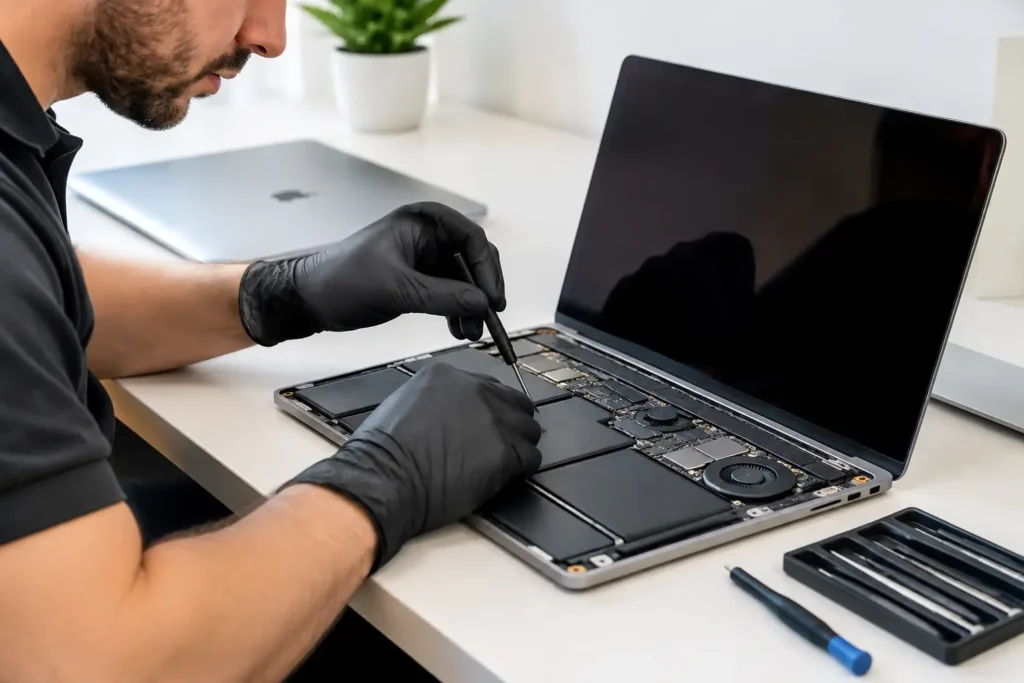
It also helps to work with a team that can support more than phones. In the real world, the same business with damaged mobile handsets may also have tablets with charging issues, laptops with battery faults or desktops that need diagnosis. A one-stop repair shop makes life easier.
The local advantage for Cumbria businesses
Sending devices away to a manufacturer can work in some situations, but it often means longer waits, less flexibility and more disruption. For businesses in Barrow-in-Furness, across Furness, and around Cumbria and the Lake District, local support is often the practical choice.
A nearby repair specialist can offer quicker assessment, easier communication and less downtime. It is also easier to build an ongoing relationship when you are dealing with a local team that understands how important fast turnaround is for schools, trades, offices and service businesses in the area.
That local approach is where a company like TechLab Repairs fits naturally. Businesses do not just need someone who can replace a screen. They need a dependable repair partner that can handle different devices, work quickly and treat every job with the right level of care.
Building phone repair into business continuity
The best businesses do not wait for half their handsets to fail before thinking about support. They have a plan. That might mean knowing where to send damaged devices, setting expectations for staff to report faults early and reviewing whether ageing phones would benefit from battery replacements before they become unreliable.
This is especially useful for organisations with shared devices or frontline teams. A phone with a slightly swollen battery, a loose charging port or a hairline crack can stay in circulation longer than it should because everyone is too busy. Early repair is usually cheaper and far less disruptive than waiting for a complete failure.
There is also value in having a repair partner who can advise honestly. Not every device should be repaired, and not every business needs the most expensive option. Good advice saves money because it focuses on what keeps the organisation running, not on what sounds impressive.
Phone repair for businesses is really about confidence
At its best, phone repair for businesses gives managers one less thing to worry about. Staff know what to do when a device fails. Downtime is reduced. Costs are easier to control. Important data stays protected. Work carries on.
Broken phones will always happen. Screens crack, batteries wear out and charging ports fail at the worst possible moment. The difference is whether your business treats that as a recurring headache or as a problem with a reliable fix. When you have the right support in place, a damaged handset stops being a crisis and becomes just another job sorted.