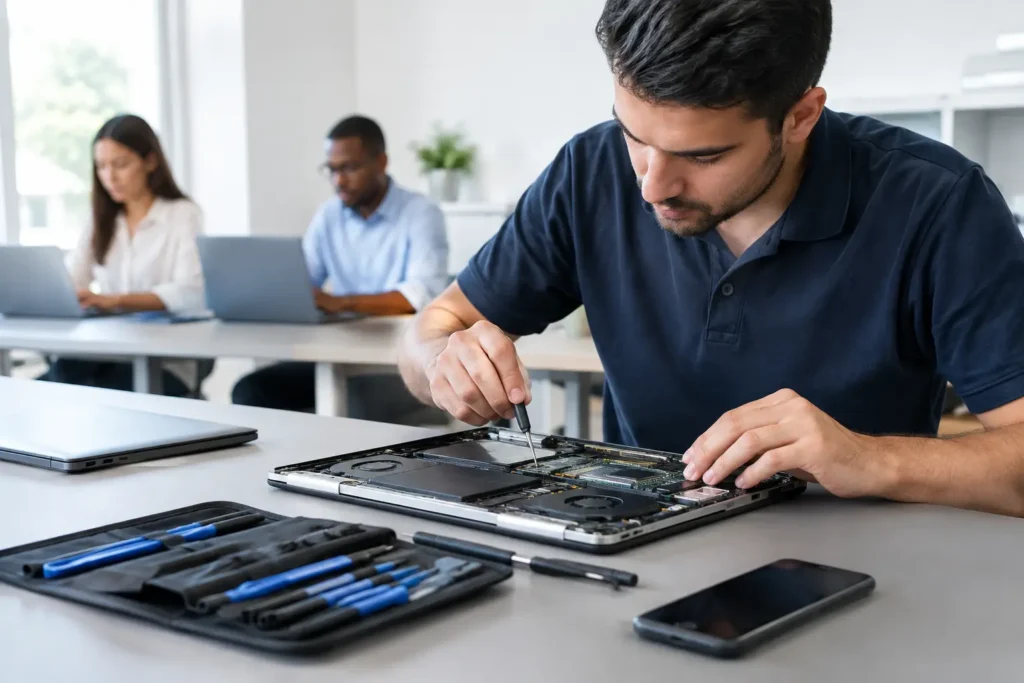
A cracked iPhone screen before a work call, a MacBook that will not charge before coursework is due, or an iPad that has suddenly stopped responding can throw the whole day off course. The right apple device repair experts do more than replace a part – they identify the real fault, protect the data you rely on, and give you a straightforward route back to a working device.
For customers across Barrow-in-Furness, Furness, Cumbria and the Lake District, choosing local repair can mean less waiting, clearer communication and a more affordable alternative to replacing a device that may still have plenty of life left.
What Apple Device Repair Experts Should Actually Offer
Apple devices are designed to work closely together, which is brilliant when everything is running properly. It also means that a fault can be less obvious than it first appears. A mobile phone that will not charge may have debris in the charging port, a damaged cable, a worn battery or a deeper fault on the logic board. Replacing a battery without checking the rest of the charging system can leave you paying for a repair that does not solve the problem.
A proper diagnosis matters. Experienced technicians test the device, listen to what happened before the problem started, and explain the sensible options before work begins. This is particularly valuable after liquid exposure, a hard drop or an update that seems to have coincided with a fault. The timing may be relevant, but it is not always the cause.
Good repair support should also be practical. You need a clear indication of cost, an honest view on whether repair is worthwhile, and a realistic turnaround time. Some repairs can be completed quickly; board-level faults, severe liquid damage and parts availability can take longer. Being direct about that is part of dependable service.
Common iPhone Repairs and Why They Need Care
A broken screen is the repair most people recognise straight away. Even when the glass damage appears minor, sharp edges, reduced touch response and exposed display layers can make the problem worse with everyday use. A quality screen repair should restore a clear display and reliable touch function, not simply cover the crack.
Battery issues are just as disruptive, though they are often easier to ignore at first. If your iPhone drops from 30 per cent to empty, shuts down in cold weather, feels unusually warm or needs charging several times a day, the battery may be worn. A battery replacement can be a cost-effective way to extend the device’s usable life, especially if the phone otherwise performs well.
Charging faults need careful diagnosis. Lint in the port is common, particularly on mobile phones carried in pockets or bags. However, repeated cable movement, no charging response or connection problems with a computer can point to damage inside the port or a fault elsewhere. Avoid forcing a cable into place or repeatedly using a damaged lead – both can turn a manageable repair into a more involved one.
Camera faults, speaker problems, microphone issues and failed buttons can also affect how usable an iPhone feels. These faults are not always caused by the component you can see. A dropped handset may damage an internal connector, while moisture can affect several parts gradually over time. Accurate assessment prevents guesswork.
iPad and Mac Repairs Need a Different Approach
An iPad is often the household device that does everything: schoolwork, streaming, video calls, recipes, banking and games. That makes a damaged screen or failing charge port more than an inconvenience. iPad repairs can be more delicate than phone repairs because screens, batteries and internal components are tightly fitted. A technician should take the time to check touch response, display quality, cameras, speakers and charging after the repair.
MacBooks and iMacs bring another layer of complexity. Slow performance does not always mean a device needs replacing. Storage problems, battery wear, overheating, software conflicts and failing components can all produce similar symptoms. A Mac that runs hot or makes excessive fan noise may need cleaning and investigation, but it could also have a more serious internal issue.
Liquid damage is a good example of why speed and expertise matter. If a MacBook has had a drink spilled on it, switch it off, disconnect the charger and do not keep trying to power it back on. Rice is not a repair method, and heat can cause further damage. The best chance of recovery comes from prompt professional assessment and internal cleaning where appropriate.
Data Security Is Part of the Repair
Your device contains far more than hardware. It may hold photos, messages, saved passwords, work documents, customer information and school files. That is why secure handling should be a basic expectation, not an extra.
Before handing over an Apple device, back it up if it is still working and you can do so safely. For an iPhone or iPad, this may mean a cloud backup or a backup to a computer. For a Mac, make sure essential documents are copied somewhere safe. If the device will not switch on, tell the technician that data recovery is a priority before any repair work begins.
You may be asked to provide the device passcode for testing after repair. Only use a repair business you trust to handle this responsibly, and ask how access is managed. Where possible, remain available to enter the passcode yourself. Clear processes protect both the customer and the repair team.
Repair or Replace? Make the Decision With the Facts
A new Apple device can be tempting when a repair is needed, but replacement is not always the best value. If an iPhone only needs a screen or battery, repair can be significantly more sensible than buying a new handset. The same applies to many iPads and Macs that are otherwise meeting your needs.
There are situations where replacement may be the better choice. Extensive liquid damage, repeated major faults, obsolete software support or a repair cost that approaches the value of a newer device all deserve an honest conversation. The aim is not to repair every device at any price. It is to help you make a decision that works for your budget, your usage and the life you can realistically expect from the device.
For businesses and schools, this calculation is broader. A device out of action can interrupt lessons, delay jobs and leave staff unable to access essential systems. Repairing several devices locally can reduce downtime and preserve familiar equipment, while a clear service arrangement makes costs easier to plan.
Choosing Local Apple Device Repair Experts
Look for a repair service that can explain the problem in plain English. You should not feel pressured into a repair you do not understand, nor left wondering what has happened to your device. A good local team will tell you what they have found, what the repair involves and what result is realistic.
It is also worth checking the breadth of experience. Apple repairs cover more than iPhone screens. A specialist should be comfortable assessing iPads, MacBooks, iMacs, charging faults, batteries, display issues and more complex hardware problems. That range matters because a single household can easily have several different devices needing support.
At TechLab Repairs, the focus is on fast, affordable repairs backed by straightforward advice and careful handling. Whether the issue is obvious or your device is simply not behaving as it should, getting it checked early can prevent a small problem becoming a bigger one.
A Few Steps Before You Bring Your Device In
If your Apple device is usable, remove any case and note the fault clearly. Does the issue happen all the time or only when charging? Did it begin after a drop, spill or software update? These details help speed up diagnosis. Bring the charger if charging is the problem, as the cable and plug can sometimes be part of the issue.
If the device has been exposed to liquid, power it down and avoid charging it. If the battery is swollen, stop using the device immediately and arrange an assessment rather than trying to press the screen or casing back into place.
A broken device does not have to mean a disrupted week. Get the right advice early, protect your data where you can, and let an experienced local technician work out the most sensible next step.