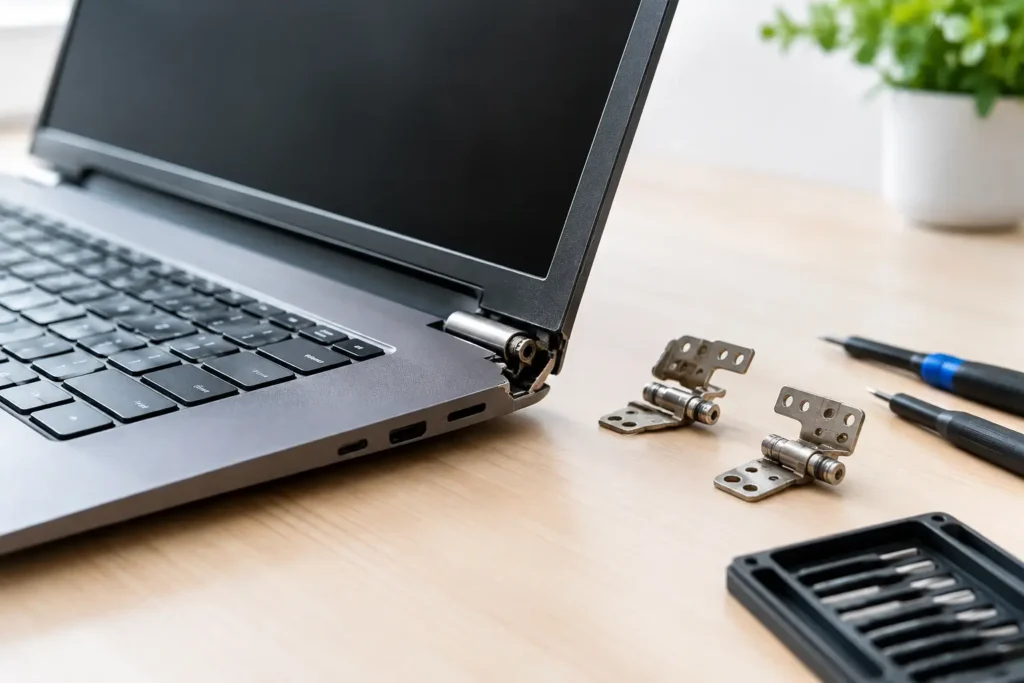
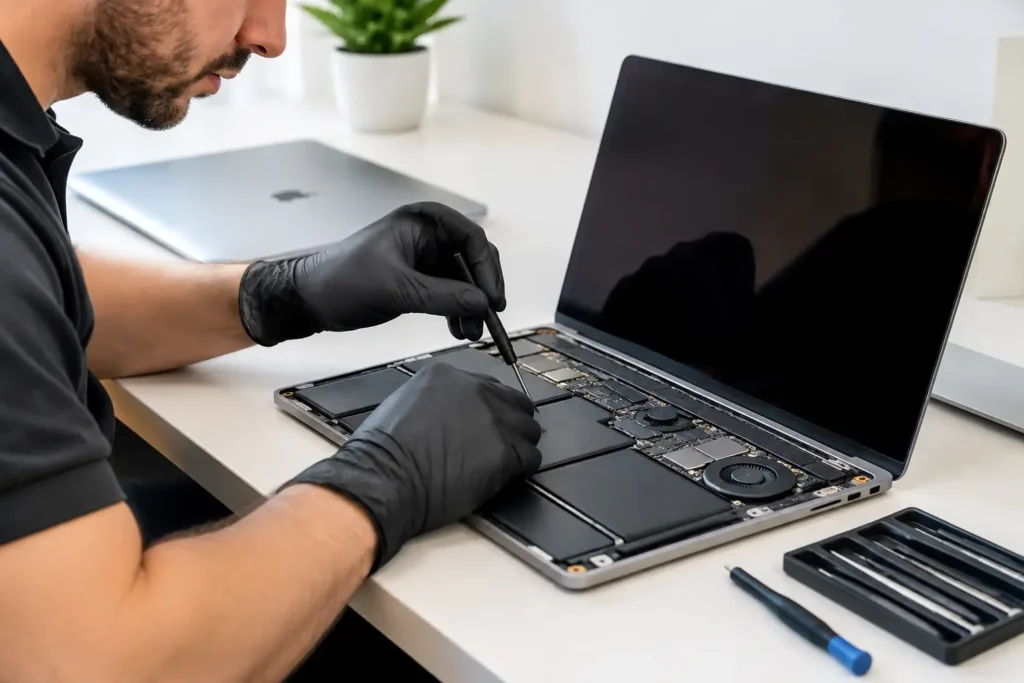
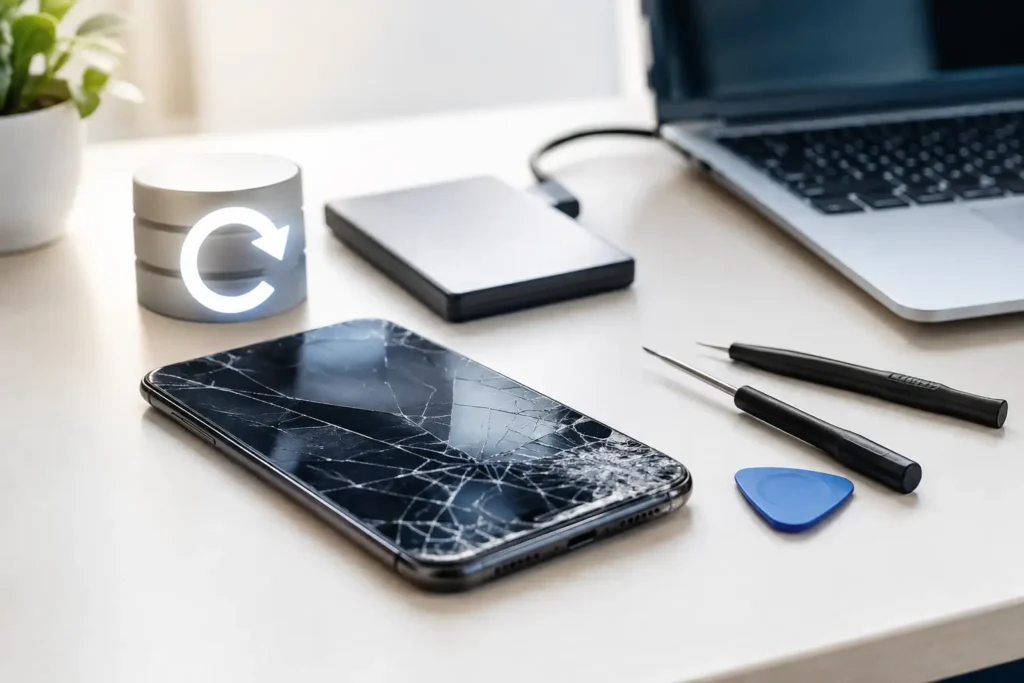
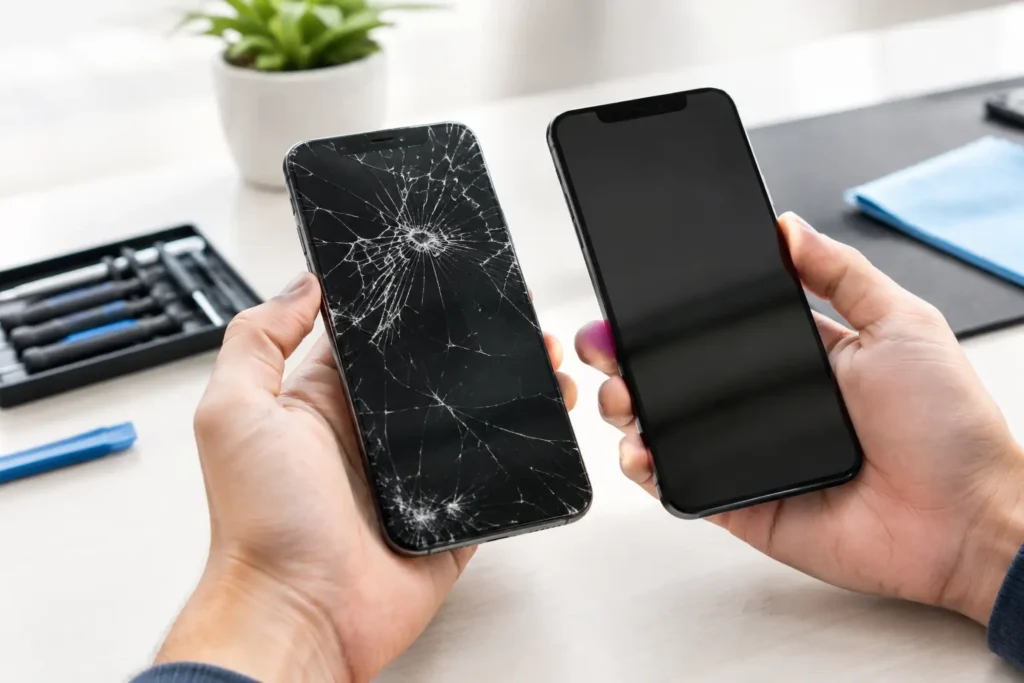
Your Switch stops charging the night before a family weekend, or the screen cracks after one awkward drop on the kitchen floor. That is usually the moment people start searching for a reliable nintendo switch repair service – not because they want anything fancy, but because they want the console working again without paying for a full replacement.
For most Switch owners, the real question is not simply whether the console can be repaired. It is whether the repair is worth it, how quickly it can be done, and whether the fault will be properly diagnosed rather than guessed at. If you use your console regularly, or your children do, speed and trust matter just as much as price.
When a Nintendo Switch repair service makes sense
A faulty games console can look worse than it is. A Switch that will not power on might have a charging issue rather than a dead motherboard. A console with drifting controls may only need Joy-Con repair or replacement rather than a new system. Even a damaged screen does not always mean the device is beyond saving.
This is why diagnosis matters. A good repair service does not jump straight to the most expensive option. It checks what has actually failed, explains the likely cause, and tells you whether repair is the sensible choice. In many cases, repairing a Switch costs far less than replacing it, especially if the fault is limited to the screen, charging port, game card reader, fan, battery or internal connectors.
There are situations where replacement may be the better route. Severe liquid damage, multiple board-level faults, or a console that has already had poor-quality repair work can become less economical. Even then, honest advice is part of a good service. You should know what you are paying for and why.
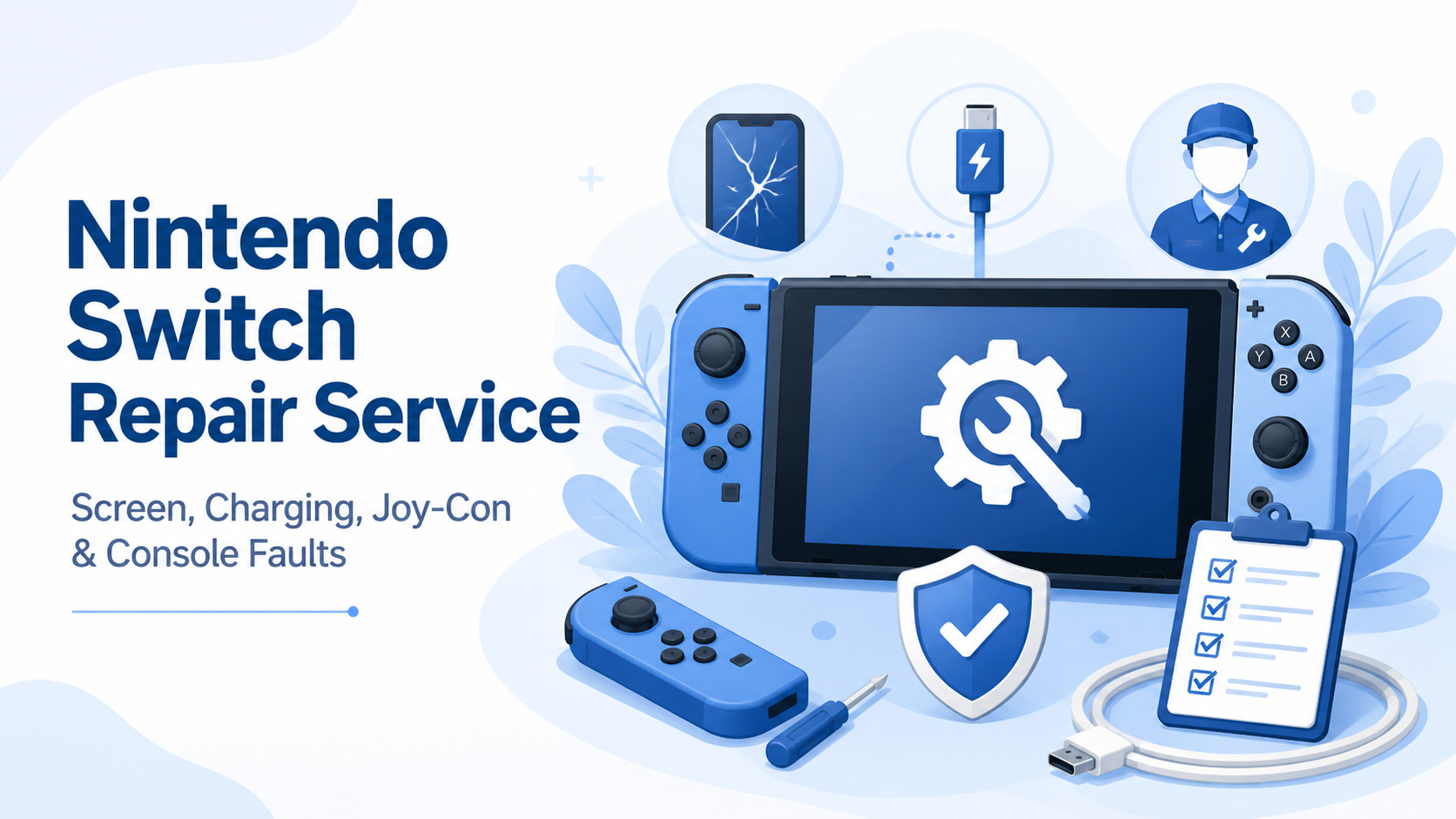
Common faults a Nintendo Switch repair service can fix
The Nintendo Switch is portable by design, which is part of its appeal and part of the reason it gets damaged. It travels in bags, gets used by children, docks and undocks repeatedly, and is often charged more heavily than many people realise. Over time, wear and accidental damage start to show.
Cracked screens and display problems
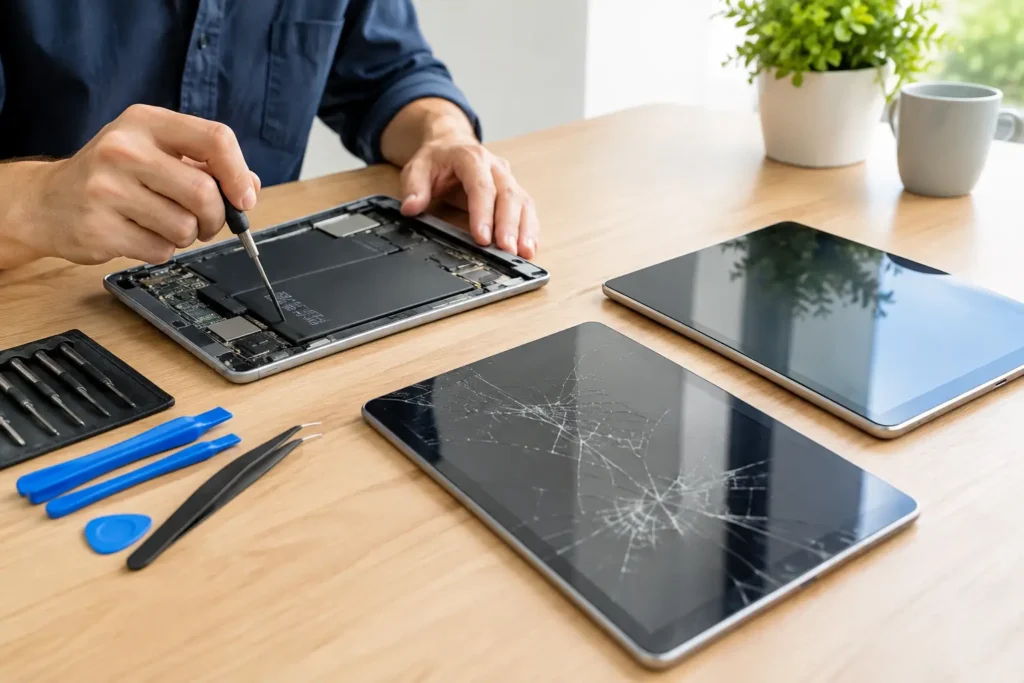
A cracked front glass or faulty display is one of the most obvious issues. Sometimes the image still appears underneath the damage. Other times the screen goes black, flickers, shows lines, or stops responding to touch properly. The right repair depends on the exact model and which layer has failed.
This is where experience helps. Replacing a screen is not just about fitting a part. It needs careful disassembly, correct fitting, and testing afterwards to make sure brightness, touch response and overall function are all as they should be.
Charging port and power faults
If your Switch only charges at a certain angle, charges slowly, or does not charge at all, the USB-C charging port may be damaged. This is a very common fault because the port is under regular strain from cables and docking.
A charging issue can also be caused by battery failure, power management faults, or damage on the board itself. That is why proper fault finding is essential. Swapping parts without confirming the cause can waste time and money.
Joy-Con and controller issues
Joy-Con drift is probably the fault most people recognise. If your character moves on screen when you are not touching the controls, the analogue stick is often the culprit. Rail connection issues, charging faults and button problems are also common.
These faults are frustrating, but they are usually very repairable. The best approach depends on whether the problem sits with the controller itself or with the console rails and internal connections.
Overheating and fan noise
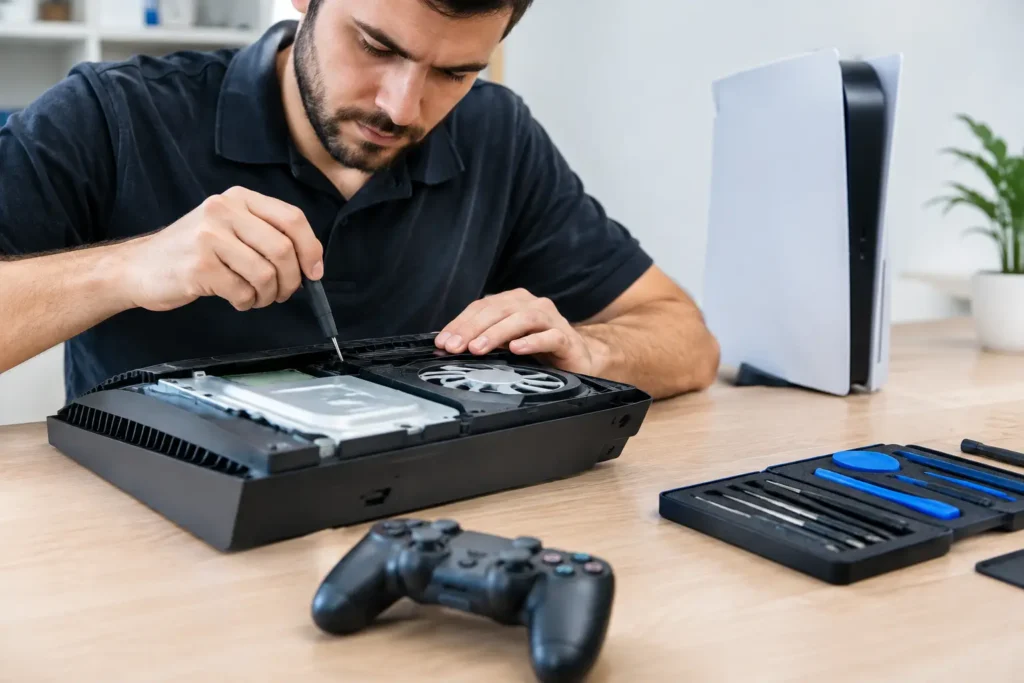
If the console gets unusually hot, the fan becomes loud, or games crash after running for a while, internal cooling may be the issue. Dust build-up, fan failure and dried thermal compound can all affect performance.
Left too long, overheating can lead to wider damage. It is one of those faults that starts as an annoyance and can turn into a more expensive problem if ignored.
Game card and dock-related faults
If cartridges are not being read properly, there may be an issue with the game card reader. If the Switch works handheld but not through the dock, there could be a fault with the dock itself, the USB-C port, or the console’s video output circuitry.
These are exactly the kinds of problems that benefit from hands-on testing. Symptoms can overlap, so guessing from one sign alone rarely tells the full story.
What to look for in a local Nintendo Switch repair service
When your console is out of action, sending it away for inspection can feel like a hassle. A local repair service gives you the chance to speak to someone directly, ask questions, and get a realistic timeframe before committing.
The first thing to look for is clear communication. You should know whether the repair shop handles console repairs regularly, what sort of faults they see, and whether they offer an assessment before work starts. Vague promises are not much use when you want your device back quickly.
The second is turnaround time. Some repairs are straightforward and can be completed quickly once parts are available. Others, particularly board-level faults or liquid damage cases, take longer. Fast service matters, but so does accuracy. A rushed repair that fails a week later is not really fast at all.
The third is trust. Your device may not hold the same kind of personal data as a phone or laptop, but you still want careful handling, quality parts and reliable workmanship. If the repair involves internal board work, charging circuitry or delicate screen assembly, experience makes a real difference.
For customers in Barrow-in-Furness and across the wider Cumbria area, using a nearby specialist can be simpler than dealing with distant repair centres. TechLab Repairs, for example, focuses on fast, affordable local repairs across a wide range of devices, which is exactly what many households want when a games console suddenly stops working.
Repair or replace – what is the better value?
This depends on the model, the fault and the overall condition of the console. If you have a standard Switch with a damaged screen but otherwise solid performance, repair is often the sensible option. The same applies to charging port faults, battery issues, fan problems and many controller faults.
If the device has suffered heavy liquid damage, severe board corrosion or multiple failures at once, the maths can shift. A professional assessment should tell you whether repair still offers value or whether replacement would be more practical.
There is also the question of convenience. Replacing a console might sound easier until you factor in cost, game saves, account setup, accessories and the simple annoyance of starting over. A targeted repair often solves the problem for much less disruption.
Why proper diagnosis matters more than quick guesses
A lot of console faults share similar symptoms. A dead battery, damaged charging port and power management issue can all make a Switch appear completely lifeless. Screen damage and board damage can both cause display failure. Dock issues can look like console faults and vice versa.
That is why a proper nintendo switch repair service should begin with diagnosis, not assumptions. Good technicians test the fault, inspect likely failure points, and work out the real cause before recommending a fix. It is a better result for the customer and usually a cheaper one too, because it reduces unnecessary part changes.
This matters even more if the console has already been opened elsewhere. Missing screws, damaged connectors and poor soldering from previous repair attempts can complicate what should have been a simple job. A repair shop needs to spot that early and be honest about the implications.
Getting your Switch repaired without the stress
Most people bringing in a faulty console want the same three things. They want a fair price, a sensible turnaround and reassurance that the repair will be done properly. The good news is that many common Switch faults are very repairable when handled by an experienced local team.
If your console has stopped charging, has a cracked screen, suffers from Joy-Con drift, overheats, or refuses to read games, it is usually worth getting it checked before writing it off. Repair is often the quickest route back to normal, especially for families, students and regular gamers who use the console week in, week out.
A broken Switch does not always need replacing. Quite often, it just needs the right hands on it and a clear answer on what comes next.