You notice it most when you are in a rush. The laptop takes ages to start, tabs freeze, apps hang for no obvious reason, and even opening an email feels like a job. If you are searching for the best fixes for slow laptops, the good news is that many cases are fixable without replacing the whole machine.
The trick is knowing whether the slowdown is caused by software clutter, ageing hardware, heat, or a fault that needs proper repair. Some fixes take five minutes. Others are worth doing only if the laptop still has a few solid years left in it. Here is where to start.
Start with what happens at startup
A slow laptop often gives itself away in the first two minutes after you switch it on. If the desktop appears quickly but the machine still feels unusable for a while, too many startup programmes are usually the culprit.
Apps such as chat tools, cloud storage, update managers and background utilities love to launch automatically. One or two is fine. Ten or fifteen can drag the whole system down before you have even opened a browser.
Open your startup settings and disable anything non-essential. Be sensible here – antivirus, touchpad software and core system tools should stay. Music apps, game launchers and programmes you rarely use can wait until you open them manually. This will not solve every performance problem, but it is one of the quickest improvements you can make.
Clear out storage, but do it properly
Nearly full storage slows laptops down more than people expect. Windows and macOS both need breathing room for updates, temporary files and virtual memory. If your drive is packed to the limit, the whole machine can start feeling sluggish.
Begin by removing large files you no longer need, emptying the recycle bin, and uninstalling programmes you forgot were there. Old downloads, duplicate photos, video files and unused games are common offenders. If your desktop is covered in years of random files, tidy that as well.
There is a trade-off, though. Deleting things blindly can create new problems, especially if you remove folders tied to software or work files you still need. If the laptop holds important documents, back them up first. A careful clean-up helps. A rushed one can be expensive.
One of the best fixes for slow laptops is updating the system
Outdated operating systems, drivers and applications can all affect performance. Sometimes the issue is not that your laptop is old – it is that it is running a mess of half-finished updates, old graphics drivers or buggy software versions.
Run system updates fully and restart the laptop afterwards. Check for browser updates too, because a lot of perceived slowness actually comes from the browser rather than the machine itself. If one application is constantly freezing while everything else is fine, the problem may be local to that app.
That said, updates are not magic. On much older laptops, a big operating system update can sometimes make things feel worse rather than better. If your machine already has very limited memory or a weak processor, newer software can ask more of it than it can comfortably give.
Check memory use before blaming the whole laptop
People often describe a laptop as slow when the real issue is that it runs out of RAM. This is especially common if it struggles with lots of browser tabs, video calls, schoolwork, or office apps all open at once.
Open Task Manager on Windows or Activity Monitor on Mac and look at memory usage. If RAM is constantly near the limit, the laptop starts leaning heavily on storage as temporary memory, and that is far slower. The result is stuttering, lag and endless waiting.
If you only ever use the laptop for light browsing and email, you may simply need to close a few heavy apps. If you work with spreadsheets, creative software or dozens of tabs, a RAM upgrade might be worth it – if your model allows one. Some newer laptops have memory soldered in, which means no upgrade path at all.
Heat can make a good laptop feel like a bad one
Laptops hate dust. Once vents and fans clog up, heat builds quickly and performance drops to protect the hardware. This is called thermal throttling, and it can make a decent machine suddenly feel painfully slow.
Typical signs include fans running loudly, the base becoming hot, or the laptop slowing down after ten or fifteen minutes of use. You might also notice poor performance during video streaming, gaming or meetings.
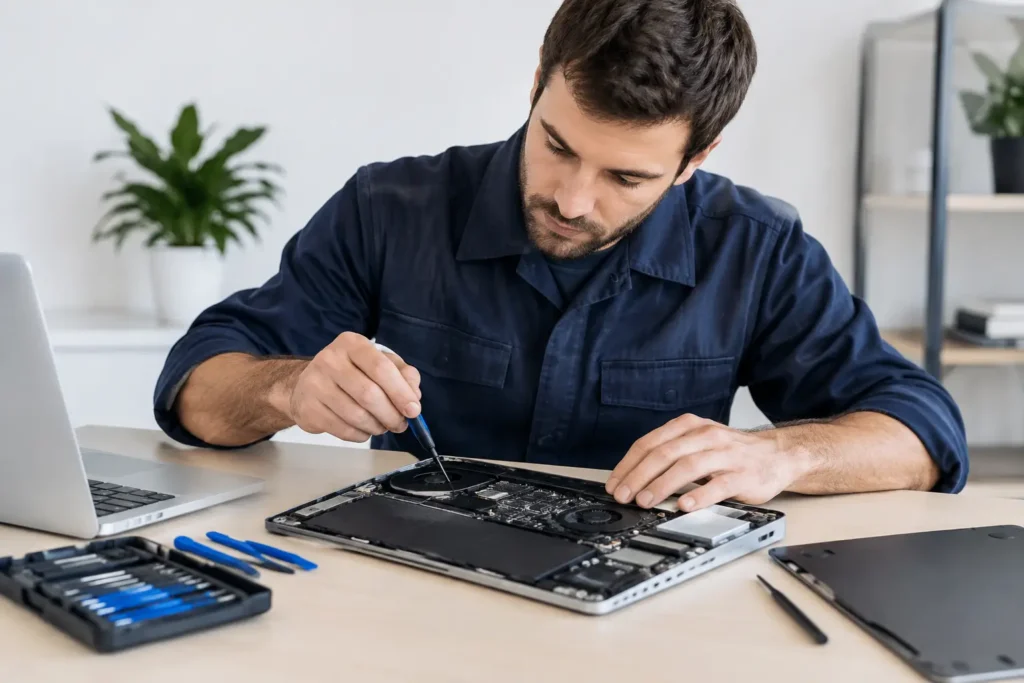
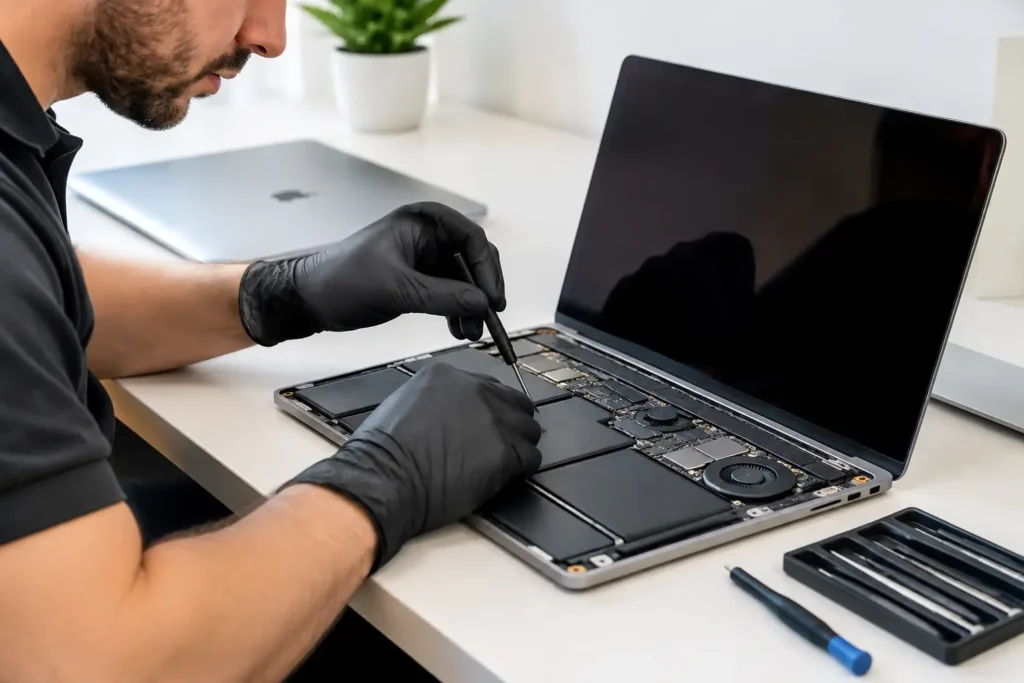
A proper internal clean can make a real difference, particularly on older laptops that have never been opened. In some cases, replacing worn thermal paste also helps temperatures settle. The important point is this: if heat is the issue, no amount of deleting files will fix it.
Swap a hard drive for an SSD if the laptop still uses one
If there is one upgrade that often transforms an older laptop, it is replacing a traditional hard drive with a solid-state drive. This can improve boot times, app loading and general responsiveness far more than most people expect.
Old mechanical drives are much slower and more prone to wear. If your laptop rattles away endlessly while loading basic tasks, there is a fair chance it still relies on one. An SSD does not make an ancient processor modern, but it removes one of the biggest bottlenecks in everyday use.
This is one of the best fixes for slow laptops when the machine is otherwise in decent condition. It is especially good value on laptops used for study, admin work, email and general home use. If the laptop also has very low RAM or a failing battery, it is worth weighing up the total spend before going ahead.
Look for signs of a failing drive, not just a slow one
There is a difference between a laptop that is slow and one that is becoming unreliable. Freezing, clicking noises, failed boots, corrupted files and repeated repair messages can all point to storage failure.
When that happens, speed is no longer the main issue – your data is. Family photos, coursework, business files and account information can all be at risk if the drive is deteriorating.
If you suspect drive failure, stop pushing the laptop and get the data backed up as soon as possible. Continuing to use it heavily can make recovery harder. This is where professional diagnosis matters, because what looks like general slowness can actually be the early stage of a proper hardware fault.
Malware and background junk still catch people out
Not every slow laptop has a virus, but unwanted software is still a common cause of poor performance. Browser extensions, adware, fake optimisers and bundled programmes can all eat resources in the background.
Run a trusted security scan and remove anything suspicious. Also check the browser itself. Too many extensions, especially shopping plug-ins, toolbars and coupon add-ons, can make web use feel far slower than it should.
Be careful with so-called cleaning tools that promise instant speed boosts. Many do very little, and some create more clutter than they remove. Straightforward maintenance nearly always beats gimmicky software.
Resetting the system can help, but only when it is the right move
If the laptop has years of software clutter, odd settings conflicts or stubborn performance problems, a system reset or clean reinstall can restore a lot of lost speed. This is often effective when no single app seems to be the cause and the machine has simply become bogged down over time.
Still, this is not a casual fix. You need your files backed up, software licences noted down, and logins ready. If the slowdown is caused by failing hardware, a reset may give only temporary relief or none at all.
For home users, it can be a sensible fresh start. For business laptops or school devices, it is better handled carefully so nothing important is lost. Data security matters just as much as performance.
When repairs make more sense than replacing the laptop
Sometimes people put up with a slow laptop because they assume the next step is buying a new one. That is not always true. If the problem comes down to dust build-up, a tired hard drive, failing memory, battery swelling affecting cooling, or another hardware issue, repair can be the more cost-effective choice.
A good local repair shop should be able to tell you whether the laptop is worth saving, what upgrade path makes sense, and when replacement is honestly the better call. That kind of straight answer matters. There is no point spending money on a machine that is already at the end of the road.
At TechLab Repairs, we see plenty of laptops that people assumed were finished when they only needed the right fault diagnosed properly. Fast turnaround helps, but so does clear advice with no guesswork.
What to try first if your laptop is suddenly slow
If the slowdown is new, begin with the basics: restart the machine, check free storage, review startup apps, and run updates. If it has been getting worse over months, consider heat, drive health and memory limits. And if you notice crashes, strange noises, or file errors, treat it as a hardware warning rather than an annoyance.
A slow laptop is frustrating, but it is usually not random. There is almost always a reason for it, and once you find that reason, the fix becomes much clearer. Start with the simple checks, do not ignore the warning signs, and if the machine still drags its feet, get it looked at before a performance problem turns into lost data.