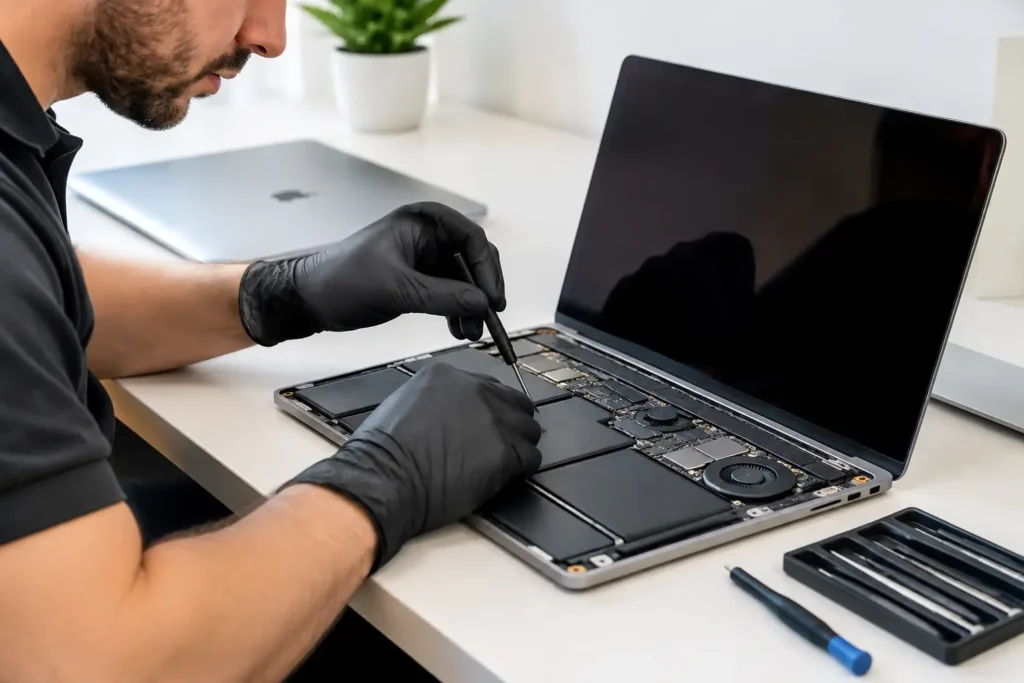
That moment when your laptop stops charging, overheats halfway through work, or shows a cracked screen after one small knock can feel expensive before you have even looked at the options. In reality, the best reasons to repair laptops often come down to something simple – most faults are fixable, and fixing them is usually quicker, cheaper and less disruptive than replacing the whole machine.
For people across Barrow-in-Furness, Cumbria and the Lake District, a laptop is rarely just a nice extra. It is where schoolwork gets finished, meetings happen, invoices get sent, photos are stored and evenings are spent streaming or gaming. When it goes wrong, you do not want guesswork. You want to know whether repair is the sensible move.
The best reasons to repair laptops start with cost
A brand-new laptop can be a major expense, especially if your current one only has a single hardware fault. A failing battery, damaged screen, faulty charging port or broken keyboard can make a machine feel finished when it is not. In many cases, repairing that one part costs far less than buying a new device with similar performance.
That matters even more if your laptop was a decent-spec model to begin with. Replacing a quality machine with another quality machine is rarely cheap. Repair lets you keep the device you know, without taking the hit of a full upgrade before you actually need one.
There is a trade-off, of course. If the laptop is very old, has multiple faults and is already struggling with modern software, replacement may be the better long-term choice. But for many everyday problems, repair is the more cost-effective answer.
You keep your files, settings and working setup
One of the biggest hidden costs of replacing a laptop is not the device itself. It is the time and stress involved in moving everything over. Files, passwords, software licences, bookmarks, email accounts, desktop layouts and all the small settings you barely think about can take hours to rebuild.
Repair often avoids that disruption. If the issue is a screen, battery, DC jack, fan, keyboard or another hardware component, there is every chance you can keep your current setup exactly as it is. That is a major benefit for busy households, students in the middle of assignments and businesses that cannot afford downtime.
It is also why secure handling matters. When a laptop contains personal documents, family photos or business data, people want reassurance that the machine is being worked on carefully and professionally. A trusted local repair service gives you that confidence in a way that sending a device away often does not.
Repairs are often faster than people expect
Many customers assume repair means being without their laptop for ages. That can put them off before they even ask. The reality is that plenty of common faults can be diagnosed and resolved far faster than waiting for a manufacturer process, shopping for a replacement, setting up a new machine and transferring data.
For a student with coursework due, a small business owner managing orders, or a home user who relies on one shared family laptop, speed matters. A local repair can cut out shipping delays, call centre back-and-forth and the uncertainty of not knowing where your device is.
This is one of the strongest reasons people choose repair over replacement. The laptop you already own is the one that fits your workflow. Getting it working again quickly is often the least disruptive route.
Repairing a laptop can extend its useful life by years
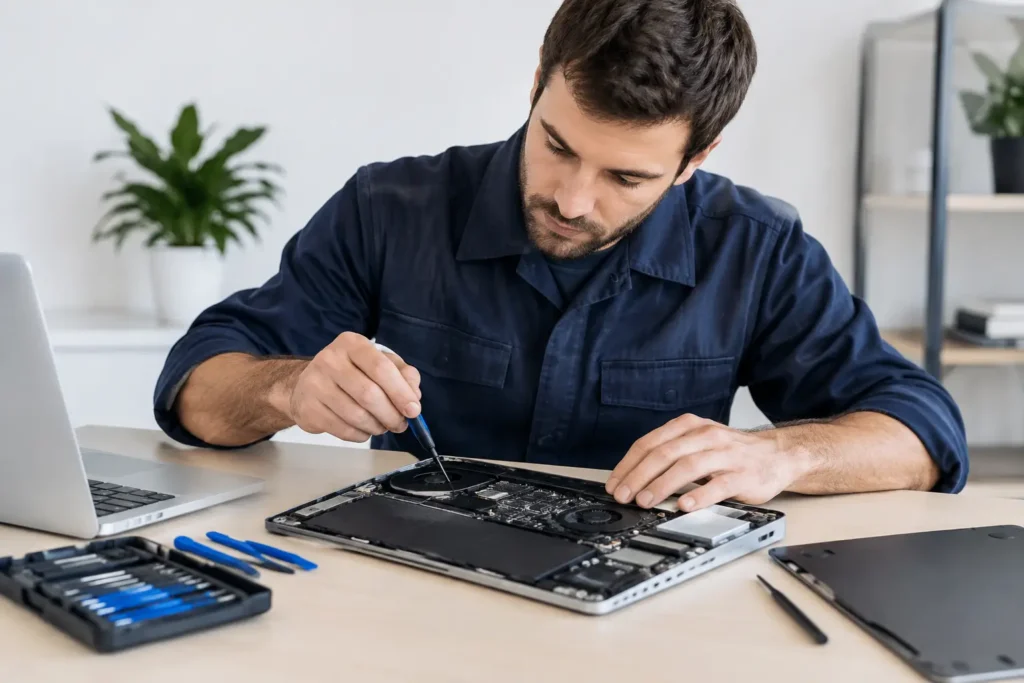
A laptop does not need to be brand new to be useful. Many machines still have plenty of life left in them once the failing component is replaced. A new battery can restore portability. A replacement screen can make the device fully practical again. Fan and thermal work can solve overheating and shutdown issues. Storage or memory improvements can also give an older machine a noticeable lift.
That is why the best reasons to repair laptops are not just about fixing what is broken today. They are about getting more value out of a device you have already paid for. If the processor is still suitable for what you do, it makes sense to repair the parts wearing out around it.
This is particularly relevant for users who do not need cutting-edge performance. If your laptop is mainly used for office work, browsing, video calls, online learning or media, then a well-repaired machine may continue to do the job perfectly well.
It is a better choice for the environment
Throwing away a repairable laptop creates unnecessary electronic waste. Devices contain metals, plastics, batteries and components that take energy and resources to produce. Replacing a whole machine because of one damaged part is rarely the most responsible option.
Repair helps extend the life of technology and reduces the pressure to buy new before it is necessary. For many customers, that is no longer a minor point. People want practical choices that also make sense environmentally.
This does not mean every laptop should always be repaired. Sometimes a machine is beyond economical repair, or its age means replacement is more sensible. But when a straightforward repair can add another year or two of service, that is usually the smarter outcome for both your budget and the environment.
A local repair shop gives you clearer answers
There is a big difference between speaking to someone who actually repairs devices and being pushed straight towards replacement. Good diagnosis matters. Some faults look serious and turn out to be simple. Others appear minor but point to a deeper issue that needs sorting properly.
A proper assessment helps you make a better decision. You can weigh up the cost of repair, the age of the device, the likely lifespan after the fix and whether any other parts are beginning to fail. That kind of honesty is what people want when their laptop has gone wrong.
For local customers, convenience also counts. Being able to talk through the issue, get a realistic timescale and know where your device is being handled removes a lot of stress. That is one reason businesses, schools and families often prefer nearby specialists over distant mail-in services.
Repair makes sense for business and education
For organisations, replacing every faulty laptop is rarely practical. If a school has several student devices with damaged screens or charging problems, or a business has staff machines developing battery and keyboard faults, repair can be a far more manageable option.
It keeps costs under control, reduces interruption and helps maintain continuity. Staff can stay on familiar devices, and IT setups do not have to be rebuilt from scratch every time a single component fails. That becomes even more valuable when there are multiple devices to manage.
The same applies at home. Families often have more than one device in use, and the cost of replacing each faulty laptop adds up quickly. Repair gives people a realistic way to keep essential tech working without overspending.
Common faults that are usually worth repairing
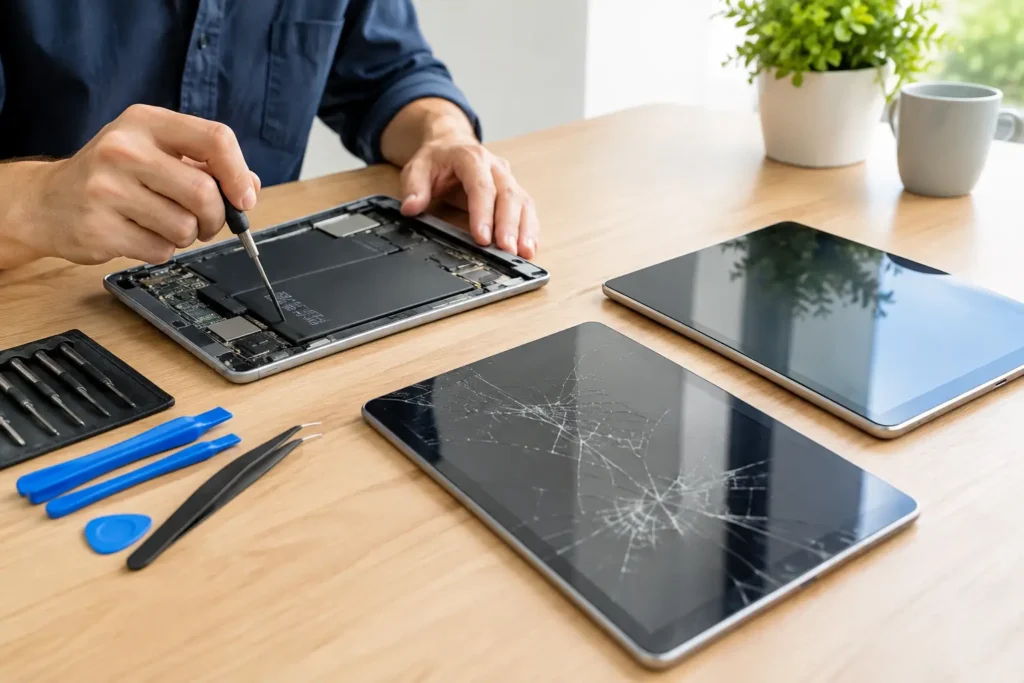
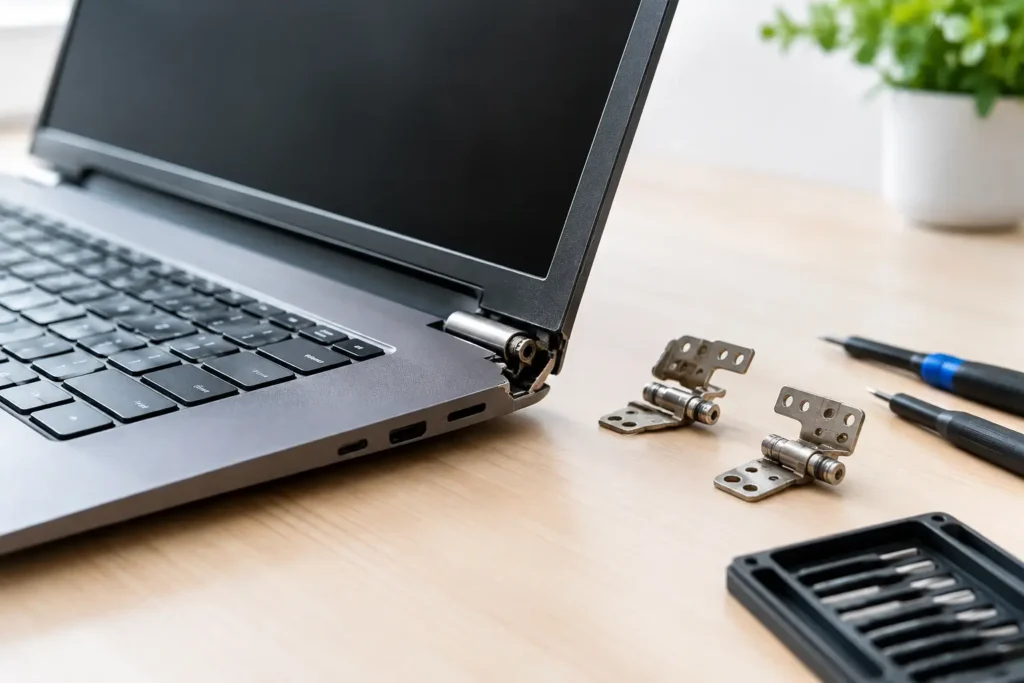
A lot of laptop problems sound worse than they are. Screens get cracked. Batteries stop holding charge. Charging ports loosen. Keyboards fail after spills or heavy wear. Fans clog up, causing overheating and slow performance. Hinges become stiff or damaged. Storage drives fail, or power faults stop the machine from turning on.
These are exactly the kinds of faults that often justify repair. They affect daily use badly, but they do not automatically mean the whole laptop is finished. That is why professional diagnosis matters so much. It helps separate a fixable issue from a machine that is genuinely at the end of its useful life.
At TechLab Repairs, this is the kind of practical decision-making customers value most – quick diagnosis, clear advice and a repair route that gets people back up and running without paying for more than they need.
When replacing is the better option
Being realistic matters. Not every laptop is worth repairing. If the device is very old, parts are hard to source, repair costs are close to replacement value, or the machine no longer meets your needs even when fixed, replacing it may be the smarter move.
The key point is that this should be a decision based on evidence, not panic. A cracked screen or dead battery might look like the end of the road, but often it is not. Equally, a machine with serious board damage and multiple failing parts may not be worth sinking money into.
A good repair service should tell you the difference. Honest advice saves time, money and frustration.
Why repair is often the sensible first step
When a laptop breaks, it is easy to assume replacement is the only answer. Usually, it is better to pause and get it checked properly first. Repair can save money, protect your files, reduce waste, shorten downtime and help you get more life from a machine that still suits your needs.
If your laptop has slowed down, stopped charging, suffered damage or simply stopped working as it should, the best next step is not to write it off too quickly. A straightforward repair may be all that stands between a frustrating fault and a laptop that is back to doing its job properly.