Tea across the keyboard. Rain in a rucksack. A knocked-over glass on the desk five minutes before a meeting. MacBook water damage treatment starts in those first moments, and what you do next can make the difference between a repairable machine and a dead logic board.
The biggest mistake is assuming the laptop is fine because it still powers on. Liquid damage often gets worse after the spill, not at the exact time it happens. Moisture moves, residue dries, and corrosion starts working on tiny components long after the keyboard has been wiped clean. That is why speed matters.
What to do immediately after a spill
First, turn the MacBook off properly if you still can. If the screen is frozen or the machine is behaving oddly, hold the power button down and shut it off. Then unplug the charger and remove any accessories. If you have a modern MacBook with a non-removable battery, do not try to open it unless you know exactly what you are doing.
Once it is off, place the MacBook so liquid is less likely to spread further inside. Usually that means opening it carefully and turning it into an upside-down tent shape on a towel, or laying it in a way that encourages drainage away from the screen and logic board area. The aim is simple – stop more liquid from reaching sensitive parts.
Do not keep pressing keys to test what still works. Do not plug it in to “see if it charges”. Electrical current and liquid are a bad combination, and a machine that looks recoverable can become far more expensive to repair if it is powered while moisture is still inside.
What not to do during MacBook water damage treatment
A lot of bad advice circulates after a spill. Rice is the classic one. It does not clean residue, it does not remove trapped moisture from under chips, and it can leave dust and starch where you do not want it. A radiator, hairdryer, or hot airing cupboard is not much better. Excess heat can warp parts, damage adhesives, and bake sugary or acidic residue further into the board.
Waiting a few days and hoping for the best is another costly move. Water is one thing, but coffee, juice, wine, fizzy drinks, and even tap water can leave conductive deposits behind. Those deposits keep causing trouble after the visible moisture has gone. Keys may fail, the trackpad may click intermittently, the battery may refuse to charge, or the MacBook may appear dead with no warning.
If the spill involved anything other than plain water, professional cleaning becomes even more important. Sugary drinks and alcohol can be especially harsh on internal parts.
Why liquid damage is rarely just a keyboard problem
People often think a spill only affects the top case because that is where the liquid landed. On a MacBook, liquid can travel quickly through the keyboard, around the battery, and onto the logic board. Depending on the model and the amount of liquid, the screen backlight circuit, charging system, SSD area, trackpad connection, and power rails can all be affected.
That is why proper MacBook water damage treatment is not the same as swapping a few sticky keys. A laptop might need internal cleaning, corrosion removal, board-level diagnostics, and replacement of affected parts. Sometimes the keyboard is the least of it.
There is also a timing issue. Some devices come in the same day and only need cleaning plus minor repair. Others arrive a week later after repeated charging attempts, and by then multiple circuits have failed. The earlier the inspection happens, the better the odds of saving both the MacBook and the data on it.
What a professional repair usually involves
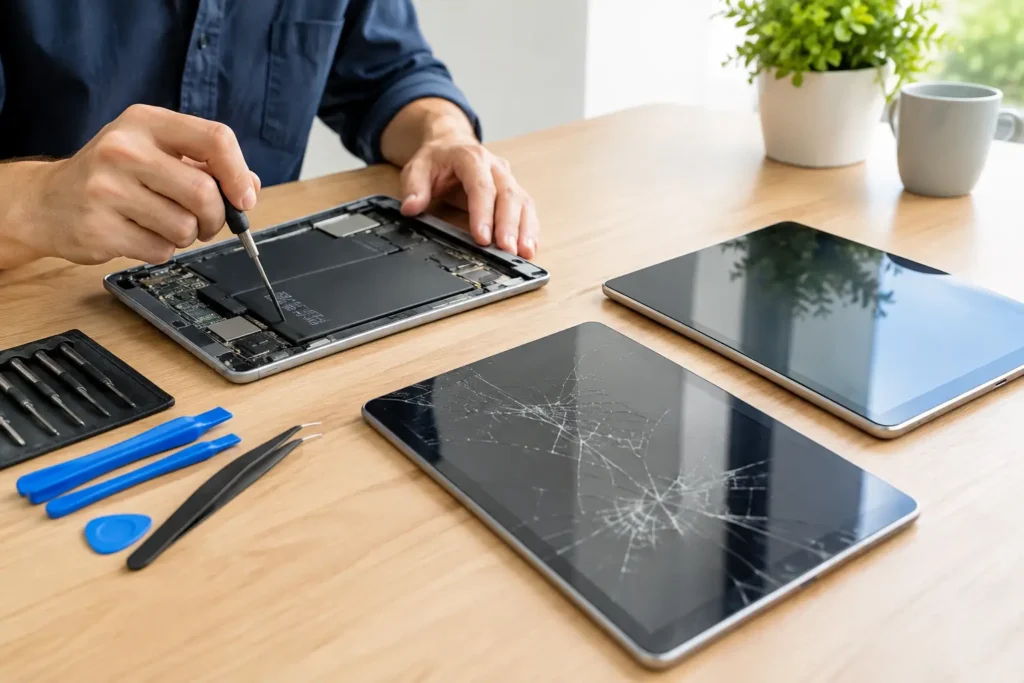
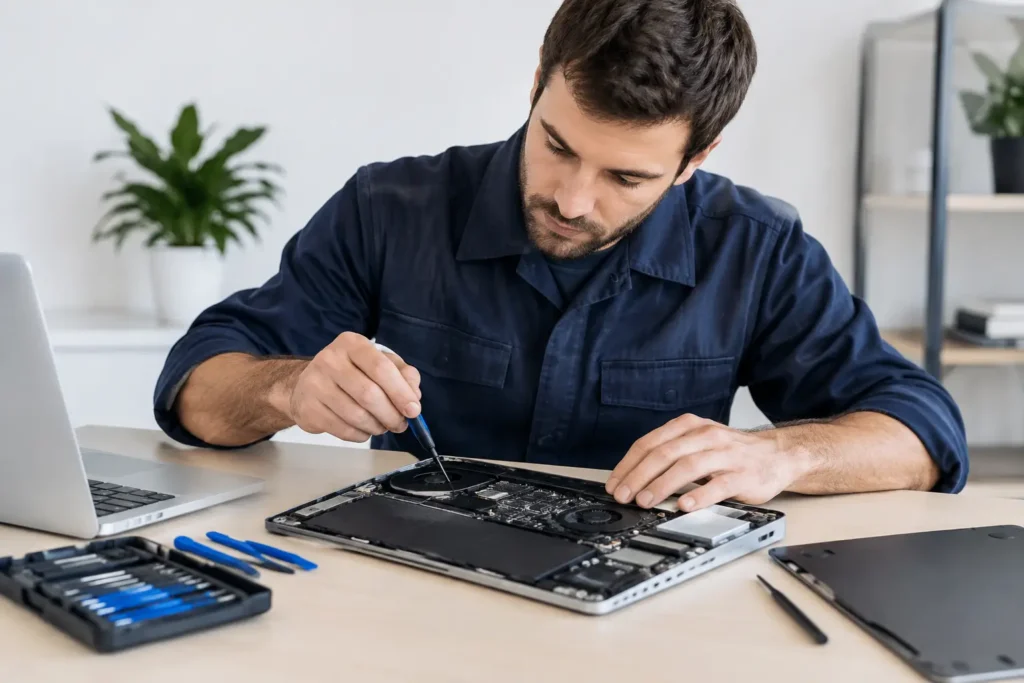
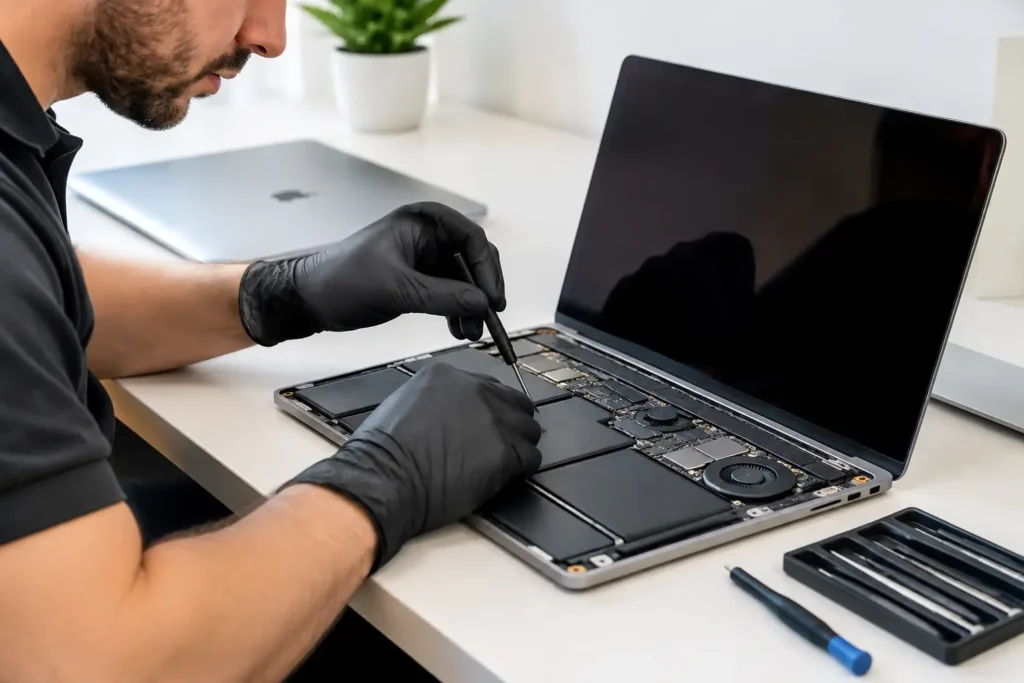
A proper liquid damage assessment starts with opening the device and checking how far the spill has spread. This is not guesswork. The technician will inspect the logic board, connectors, battery area, keyboard layers, and any signs of corrosion or residue.
If contamination is present, the affected areas need specialist cleaning. In many cases, that includes careful board cleaning to remove conductive residue and corrosion before it causes further shorting. After that, the board can be tested properly to see which lines, chips, or components have failed.
From there, the repair path depends on the damage. Sometimes the fix is straightforward, such as replacing a damaged keyboard, trackpad, or battery connector. Other times it needs more detailed logic board work. That might sound serious, but it is often still far cheaper than replacing the MacBook outright – especially if the machine holds important files, school work, business documents, or software setups you cannot easily reproduce.
Can a water-damaged MacBook be saved?
Often, yes. Not always, but more often than people think.
The result depends on four things: what liquid was spilled, how much got in, how quickly the machine was switched off, and whether anyone kept trying to use it afterwards. A small splash of plain water dealt with quickly gives you better odds than a full mug of coffee left overnight in the keyboard.
Model also matters. Some MacBooks are more repair-friendly than others, while some newer designs pack components tightly enough that damage spreads fast. Even so, “liquid damage” does not automatically mean “write-off”. It means the machine needs proper diagnosis before anyone can judge the next step.
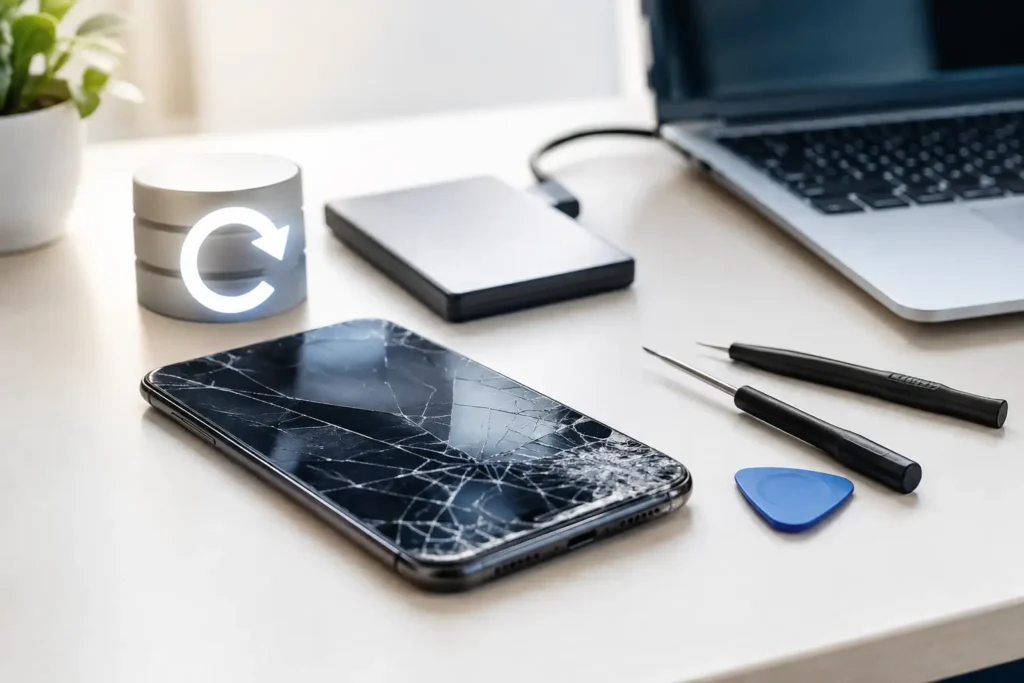
That is especially true if your main concern is data. In many cases, even where full repair is uneconomical, there may still be a route to recover important files. For students, home users, and businesses alike, that can be the most valuable part of the job.
Signs your MacBook has hidden liquid damage
Some symptoms show up immediately, but others take days. If your MacBook starts behaving strangely after any spill or exposure to moisture, take it seriously.
Common signs include random shutdowns, no power, battery not charging, a black screen with fan activity, sticky or dead keys, a trackpad that clicks but does not respond properly, distorted audio, overheating, and a charger that only works at odd angles or not at all. A sweet smell, residue marks, or greenish corrosion around ports can also point to internal contamination.
Intermittent faults are particularly common. The MacBook may boot one day and refuse the next. That does not mean the problem has gone away on its own. Usually, it means corrosion is still progressing.
Is it worth repairing or replacing?
This is where honest advice matters. If the MacBook is relatively new, high-spec, or holds critical data, repair is often the sensible choice. Even logic board work can be good value compared with replacing a recent Apple laptop.
If the machine is older and the damage is widespread, the balance may shift. A technician should be able to explain the likely repair path, the risks, and whether the investment still makes sense. There is no single answer for every spill. Sometimes a targeted repair gets the laptop back into daily use at a sensible cost. Sometimes data recovery is the smarter priority. Sometimes replacement is genuinely the better option.
The key is getting that answer from someone who can inspect the machine properly rather than guessing from symptoms alone.
MacBook water damage treatment and your data
For many people, the laptop matters less than what is on it. Family photos, coursework, accounts, design files, project documents, passwords stored in apps, years of email – losing access can be far more stressful than the hardware fault itself.
That is why secure handling matters during any repair. A good repair process should focus not only on restoring power but also on protecting the contents of the device. If the MacBook is business-owned or used for school or client work, that becomes even more important.
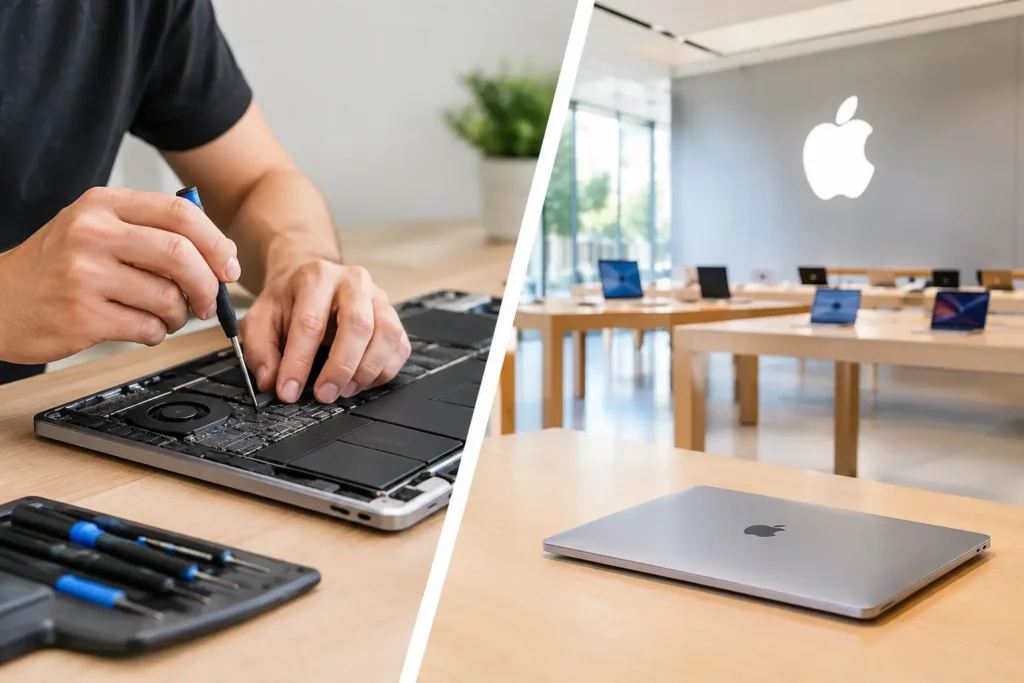
In Cumbria and the surrounding area, local support can make a real difference here. You are not boxing your device up and sending it away with no clear timeline. You can get a faster diagnosis, a clearer explanation, and a practical next step from a nearby specialist such as TechLab Repairs.
The smartest next move after a spill
If your MacBook has been exposed to water or any other liquid, the best next step is simple: stop using it and get it assessed as soon as possible. Quick action gives the repair the best chance, limits corrosion, and improves the odds of saving both the machine and the data.
A spill feels like a disaster in the moment, but it does not always end that way. The right treatment, done early and done properly, can turn a bad afternoon into a repairable problem.