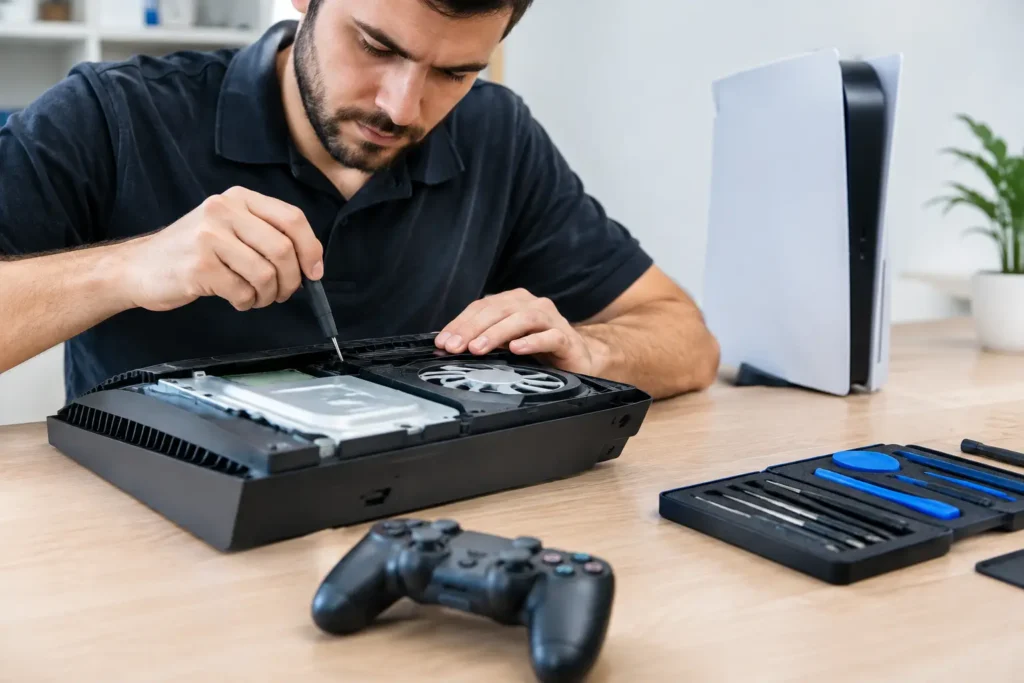
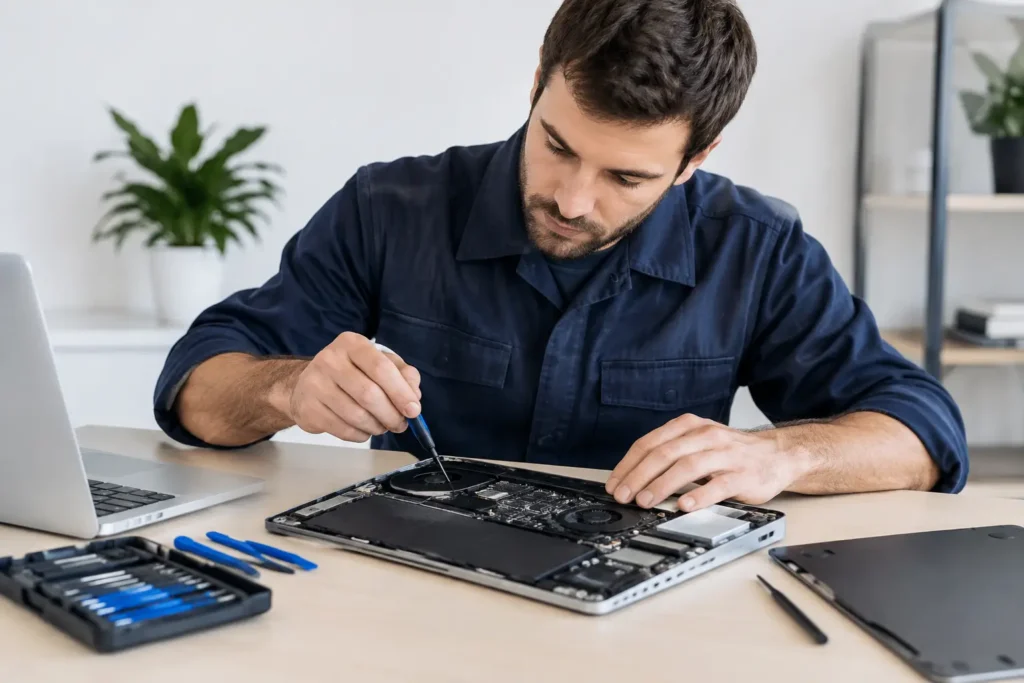
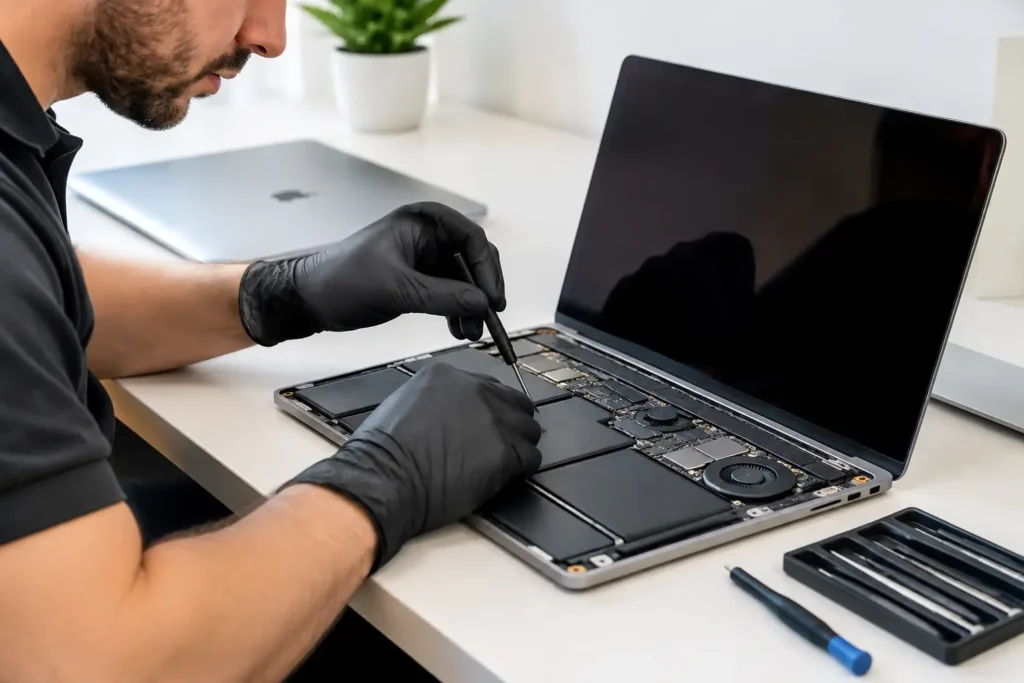
A cracked screen or dead battery usually sends people straight into problem-solving mode. Fair enough – when your phone, laptop or console stops working properly, you want it sorted quickly. But knowing what to do before device repair can save time, protect your data and help avoid awkward surprises once the device is on the bench.
A good repair starts before any tools come out. Whether you are bringing in an iPhone, Samsung handset, MacBook, games console or family laptop, a few simple checks make the whole process smoother for you and for the technician handling it.
What to do before device repair if it still powers on
If your device still turns on, even partially, you are in the best position to prepare it properly. The first job is backing up your data. That means photos, contacts, notes, messages, documents and anything else you would be upset to lose. Most repairs do not affect personal files, but some faults are unpredictable. Liquid damage, power issues and logic board faults can worsen without warning, and in those cases a backup is less of a nice extra and more of a safety net.
For phones and tablets, use your usual cloud backup if it is active, or save key files to a computer. For laptops and desktops, copy important folders to an external drive or secure cloud storage. If the device belongs to a business or school, make sure any work-critical data is accounted for before it leaves your hands. A repair shop can fix hardware faults, but it cannot promise recovery of files that were never backed up.
After that, check whether you can remove any screen locks, passwords or account restrictions that may slow things down. This depends on the fault. If the repair is a simple screen replacement, a technician may still need to test touch, cameras, speakers, charging and other functions afterwards. If the device is locked and you are not available, testing can be limited. That can delay collection or leave some issues unchecked.
That does not mean handing over sensitive passwords casually. The better approach is usually to remove passcodes temporarily where practical, or discuss with the repairer exactly what level of access is needed. On Apple devices, features like Find My iPhone or Activation Lock may need to be turned off before certain repairs can go ahead. On other devices, Google account locks and manufacturer protections can create the same sort of hold-up. If you are unsure, ask first rather than guessing.
Prepare the device, not just the booking
People often focus on the fault itself and forget the physical condition of the device matters too. Take out your SIM card, memory card or any USB dongles before handing the device over, unless they are needed for testing. If you use a case, remove it. The same goes for screen protectors if they are badly damaged or hiding the problem area, although in some cases it is fine to leave them in place until the technician checks the unit.
It also helps to bring the correct charger if the issue involves charging, battery drain, power faults or intermittent switching on and off. Many charging problems are caused by worn cables, damaged plugs or low-quality accessories rather than the device itself. Bringing the cable and plug you actually use gives a clearer picture of the fault and can stop you paying for the wrong repair.
Try to note exactly what happened before the issue started. Was the phone dropped? Did the laptop stop charging after an update? Did the console lose HDMI output after being moved? Did liquid get into the keyboard, and if so, what liquid and when? These details matter. A vague description like “it just stopped working” is common, but a technician can diagnose faster if they know the sequence of events.
What to do before device repair when the device is badly damaged
If the device does not switch on, the screen is black, or there has been liquid damage, your priorities change. At that point, the aim is to avoid making the situation worse.
With liquid damage, stop using the device immediately. Do not keep trying to power it on to “see if it still works”. Do not plug it in. Do not use a hairdryer. And despite how often it gets repeated, do not put it in rice. Rice does not remove corrosion from internal components, and time spent waiting can reduce the chance of a proper repair.
If a battery is swollen, cracked or giving off heat, handle the device carefully and do not attempt home fixes. Swollen batteries can put pressure on screens and internal parts, and in rare cases they become a safety risk. That is a job for a repair specialist, not a kitchen table.
For smashed screens with exposed glass, avoid pressing on the panel more than necessary. If you need to transport the device, place it flat and protect it from further impact. Even if the phone or tablet still responds, extra pressure can damage the display beneath the glass and turn a more straightforward repair into a more expensive one.
Be clear about the fault and your priorities
Not every customer wants the same outcome. Some want the cheapest working fix. Others want everything restored to near-new condition. Some need the device back the same day because it is used for work or school. Others are more concerned about preserving files than the cost of the hardware.
That is why it helps to be honest about your priorities from the start. If your laptop contains coursework due tomorrow, say so. If your phone is old and you only want a battery replacement if the cost makes sense, say that too. If your console has already had a repair elsewhere, mention it. Previous work, aftermarket parts and hidden damage all affect diagnosis.
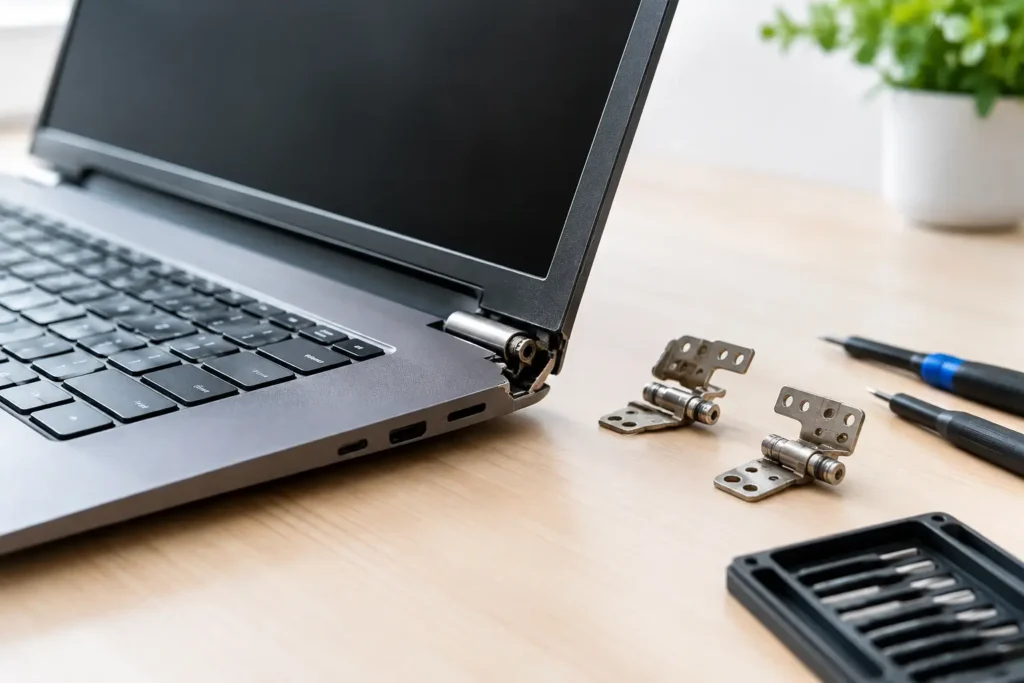
This is especially important with older devices. Sometimes repair is clearly the right option. Sometimes the fault reveals wider wear – weak battery, worn charging port, tired hinges, previous water damage – and then the decision becomes less straightforward. A decent repairer will explain the trade-offs rather than pushing a one-size-fits-all answer.
Think about privacy before handing it over
Most people carry their whole life on one device. Family photos, banking apps, saved passwords, work emails, business files and private messages all sit in the same place. So it is completely reasonable to think about privacy before booking a repair.
Start by logging out of apps that do not need to remain active, especially if the device may be with the repairer for more than a few hours. If you have highly sensitive files on a laptop or desktop, move them to encrypted storage if you can. For business devices, check internal policies before sending hardware in for repair, particularly if it contains customer data or shared access tools.
At the same time, balance privacy with practicality. If the technician cannot test the repaired device properly, you may collect it only to find another issue still needs attention. The best route is clear communication about what access is required, what testing will be performed and how your data will be handled. A trustworthy local repair shop should be comfortable having that conversation.
Don’t forget proof of ownership and warranty questions
Some repairs, especially on newer phones and tablets, may involve security checks or proof that the device belongs to you. This is normal. Anti-theft protections are there for a reason. If the device is linked to an account you no longer control, or it was bought second-hand and never properly reset, deal with that before arranging repair if possible.
It is also worth checking whether the device is still under manufacturer warranty, insurance cover or an extended protection plan. Sometimes a local repair is still the better choice because it is faster and more convenient. Sometimes using another route makes more financial sense. It depends on the fault, your timescale and whether you are happy sending the device away.
For many people across Barrow-in-Furness and the wider area, the biggest advantage of using a local repair service is speed and straight answers. You can speak to someone directly, explain the problem properly and get realistic advice without your device disappearing into a system for days.
Before you hand it over, ask the right questions
A quick conversation can prevent confusion later. Ask how long the repair is likely to take, whether parts are in stock, what testing is included and whether there is a warranty on the repair. If the issue is not fully diagnosed yet, ask what happens if the first suspected fault turns out not to be the only problem.
This matters most with faults like liquid damage, no power and motherboard issues, where the first symptom is not always the root cause. Good repairers will explain that clearly. Fast service is important, but honesty is just as important.
At TechLab Repairs, that practical approach matters because people are not bringing in “devices” in the abstract. They are bringing in their work phone, their child’s iPad, their university laptop or the console used every evening after a long day. Preparing it properly before repair gives you the best chance of a quick, secure and cost-effective fix.
If your device has gone wrong, don’t let the panic make the decisions for you. A few careful steps before repair can save a lot of hassle afterwards – and make getting back to normal much quicker.