A phone upgrade should solve a problem, not create a new bill you did not expect. When weighing up a refurbished phone versus new handset, the right choice comes down to more than the price on the label. You need a device that will handle work calls, school apps, photos, banking and everyday life – with a battery, warranty and condition you can trust.
For many people across Barrow-in-Furness and Cumbria, a professionally refurbished phone is the sensible middle ground. For others, especially those wanting the latest features or several years of manufacturer support, buying new is worth the extra spend. Here is how to make the call with confidence.
The real price difference is only the starting point
A refurbished handset can cost considerably less than the same model bought new. That saving may let you move up a model generation, choose more storage, or keep money aside for a protective case, screen protector and insurance. If your current phone has become slow, has a cracked screen or cannot hold charge, a refurbished upgrade can be a practical alternative to paying full retail price.
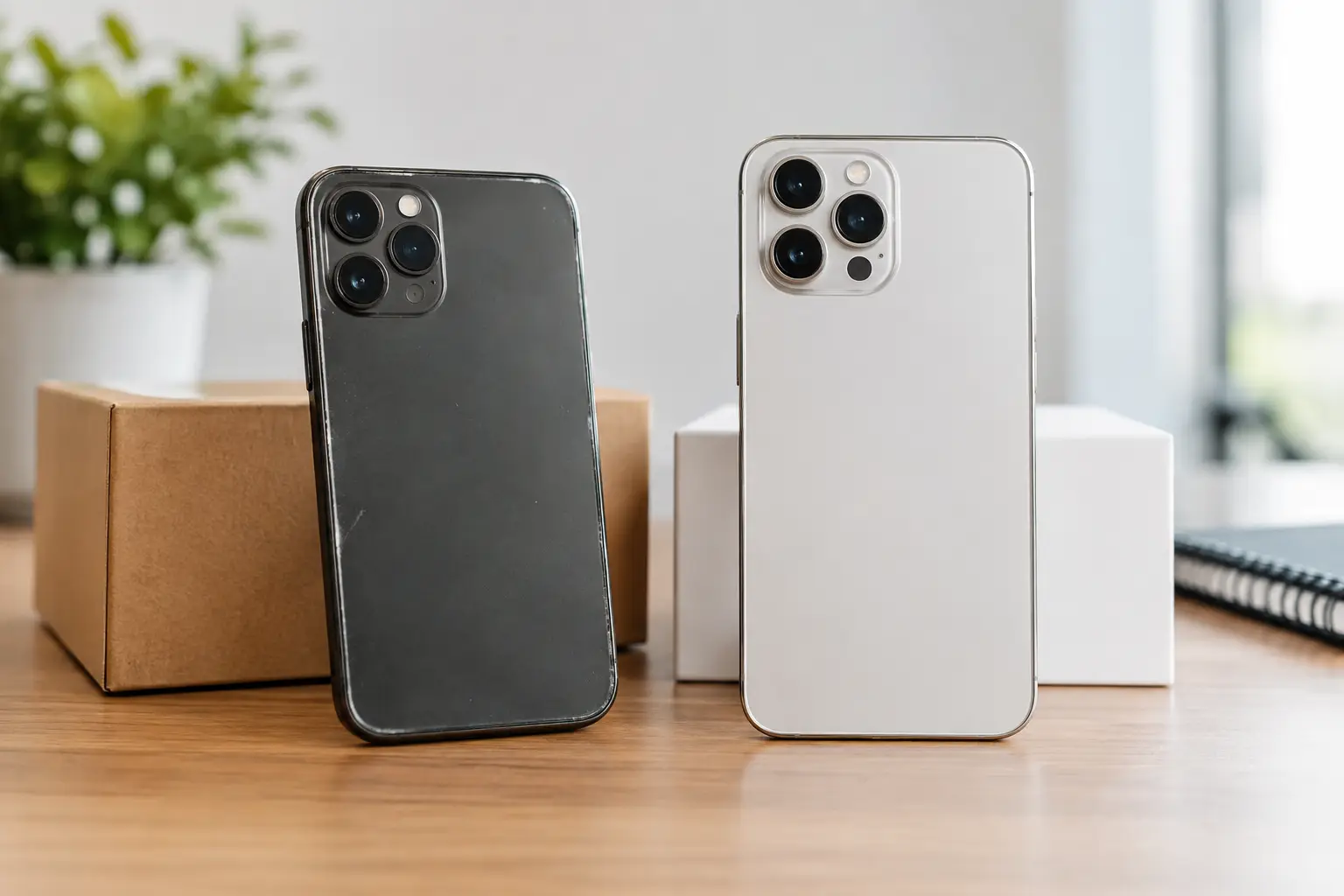
A new handset, however, gives you a known starting point. It has not been used by another owner, the battery is fresh from the factory and it usually includes the full manufacturer warranty. There is also less guesswork around cosmetic condition, accessories and previous repairs.
The key is to compare like for like. A low-cost refurbished phone with a tired battery, limited warranty and unclear condition is not automatically better value than a slightly more expensive device from a reputable seller. Equally, paying for the newest release is not always necessary if a well-maintained model from one or two generations ago does everything you need.
What “refurbished” should mean
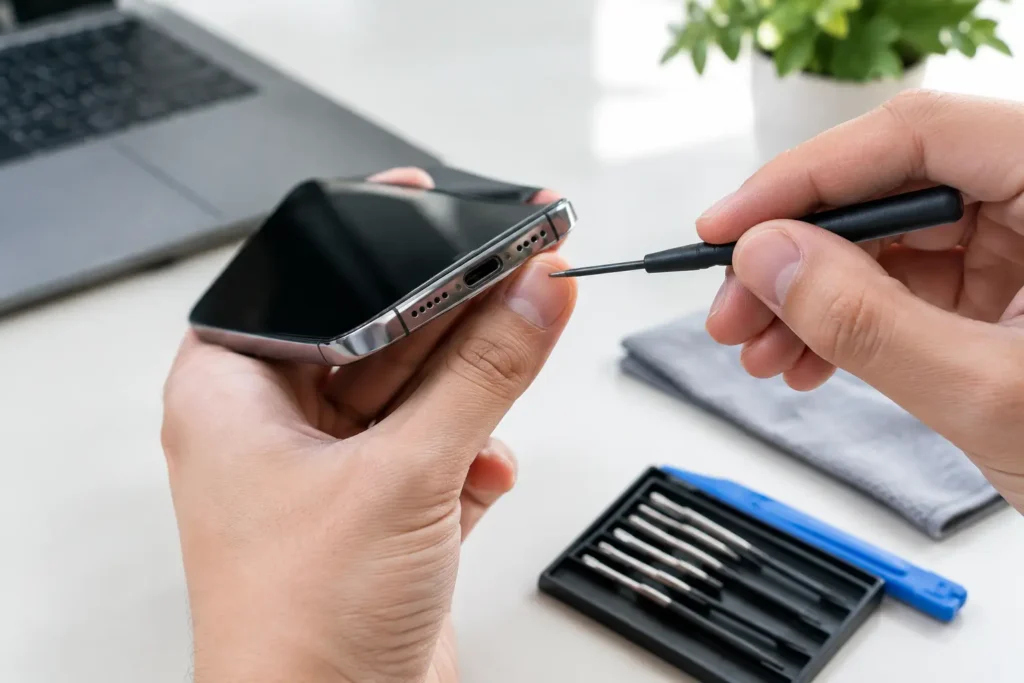
Refurbished does not simply mean second-hand. A used phone may be sold exactly as it was left by its previous owner. A properly refurbished phone should have been inspected, cleaned, data-wiped, tested and, where required, repaired with replacement parts.
That said, refurbishment standards vary. One seller may replace a battery that falls below a certain health level, while another may only confirm that it charges and powers on. Cosmetic grades can vary too. “Excellent” at one retailer may mean a nearly spotless device; elsewhere it may still have visible marks around the frame.
Ask what work has actually been completed. Has the screen been replaced? Is the battery original or new? Have the cameras, microphones, speakers, buttons, charging port, Face ID, fingerprint reader and network connection been tested? A good seller should be able to explain the device condition clearly rather than hiding behind a vague grade.
Refurbished phone versus new handset: performance and lifespan
For everyday use, the gap can be smaller than people expect. A quality refurbished iPhone or Samsung handset from the last few years can still offer fast messaging, reliable maps, contactless payments, social media, video calls and strong cameras. If you mainly use your phone for communication, streaming and browsing, you may not notice much difference from a current flagship.
The bigger question is how long you intend to keep it. New models generally receive software and security updates for longer, which matters for banking apps, workplace security and compatibility with future accessories. They may also have newer processors, better low-light cameras, brighter screens, improved water resistance and more efficient batteries.
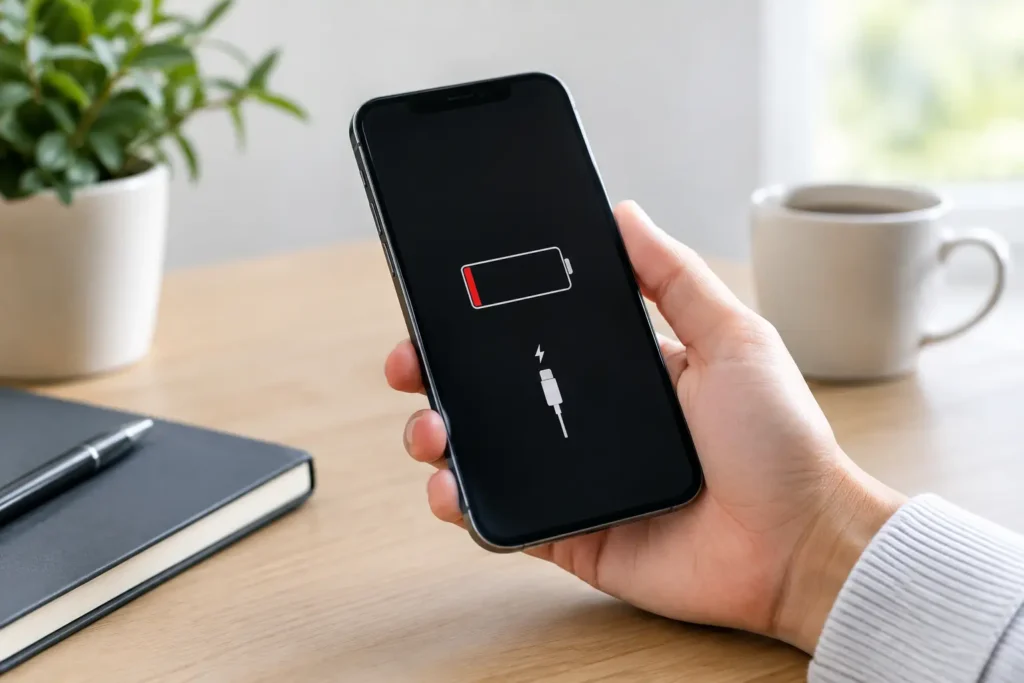
Battery health deserves particular attention. Batteries naturally wear over time, and a phone can appear fine until it starts dropping from 30 per cent to flat or needs charging twice a day. A refurbished phone with a tested, healthy battery can be excellent value. If battery performance is not clearly stated, factor in the potential cost of a replacement later.
When buying new makes sense
A new handset is often the better fit if you keep phones for four or five years and want the longest possible update window. It is also a sensible choice if your phone is central to your job, you need the very latest camera or processing features, or downtime would cause a real problem.
For businesses and schools, consistency can matter more than the lowest purchase price. Buying a batch of matching new devices can simplify setup, accessories, mobile device management and staff support. A full manufacturer warranty may also suit organisations that need clear procurement records and predictable cover.
There is value in certainty. You know the exact history of the device, its battery starts at full capacity, and you are less likely to find an unexpected repair in the near future. Just be realistic about whether you need every new feature or simply want a reliable phone that works well.
When a refurbished phone is the smarter purchase
Refurbished is particularly compelling when you want a premium model without the premium launch price. It can suit students, families buying a first phone for a child, anyone replacing a lost or badly damaged device, and people who would rather choose a proven model than chase annual upgrades.
It is also a more resource-conscious option. Extending the useful life of a phone reduces the demand for a newly manufactured replacement. A device does not become useless because it has had one careful owner or required a professional screen replacement. With the right checks, it can remain a dependable daily phone for years.
For a family, buying a quality refurbished handset can make budgeting easier. You may be able to choose a model with better storage and a stronger camera than a brand-new entry-level phone at the same price. That can be the difference between a device that feels useful for several years and one that feels cramped within months.
Checks to make before you buy
Whether you buy online or locally, do not rely on photos alone. A few straightforward questions can prevent a frustrating purchase:
- Confirm the warranty length and exactly what it covers, including battery and replacement parts.
- Check the stated battery health or minimum battery standard for the handset.
- Make sure the phone is unlocked, not blocked by its IMEI number and not tied to a previous owner’s account.
- Ask about cosmetic grading, any replacement parts and whether key functions have been fully tested.
- Verify the storage capacity, network compatibility and remaining software support for the model.
- Keep your proof of purchase, particularly if you are buying the device for work, school or a family member.
If you can inspect the phone in person, test the screen across the whole display, plug in a charging cable, try the cameras and make a call. Look closely at the charging port and lens glass. Small signs of wear are not necessarily a concern, but loose connections, poor battery performance or unexplained warnings are reasons to walk away.
Do not replace a phone before checking whether it is repairable
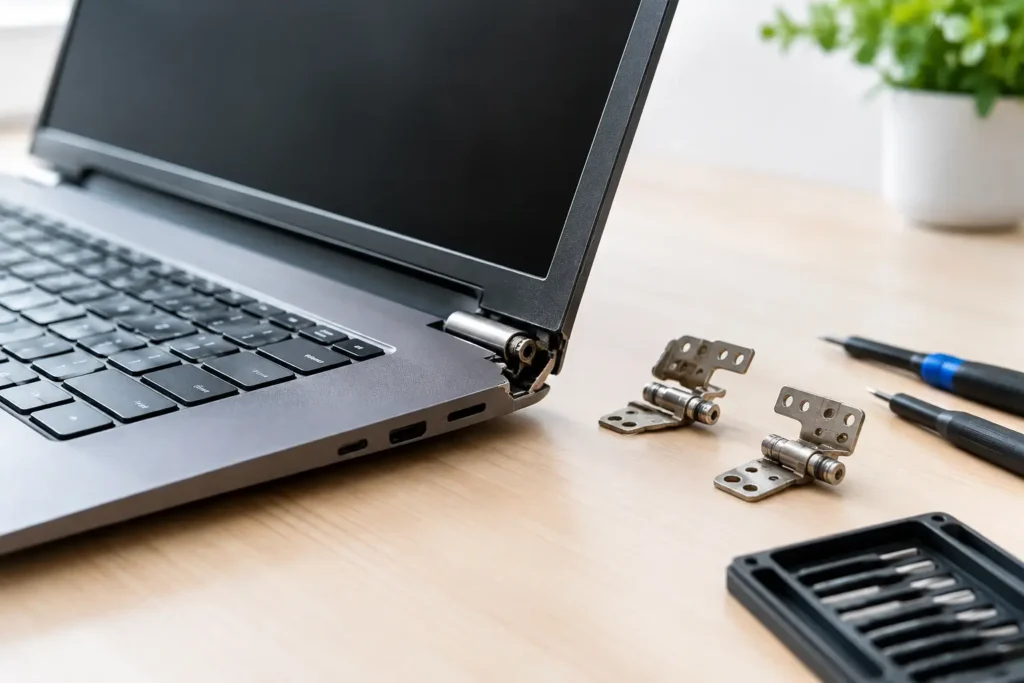
Sometimes the best answer is neither a refurbished phone nor a new one. A handset with a cracked screen, failing battery, charging fault or damaged HDMI port may still have plenty of life left after a proper repair. Replacing a battery can transform a phone that has become unreliable, while a screen repair can cost far less than upgrading to a comparable device.
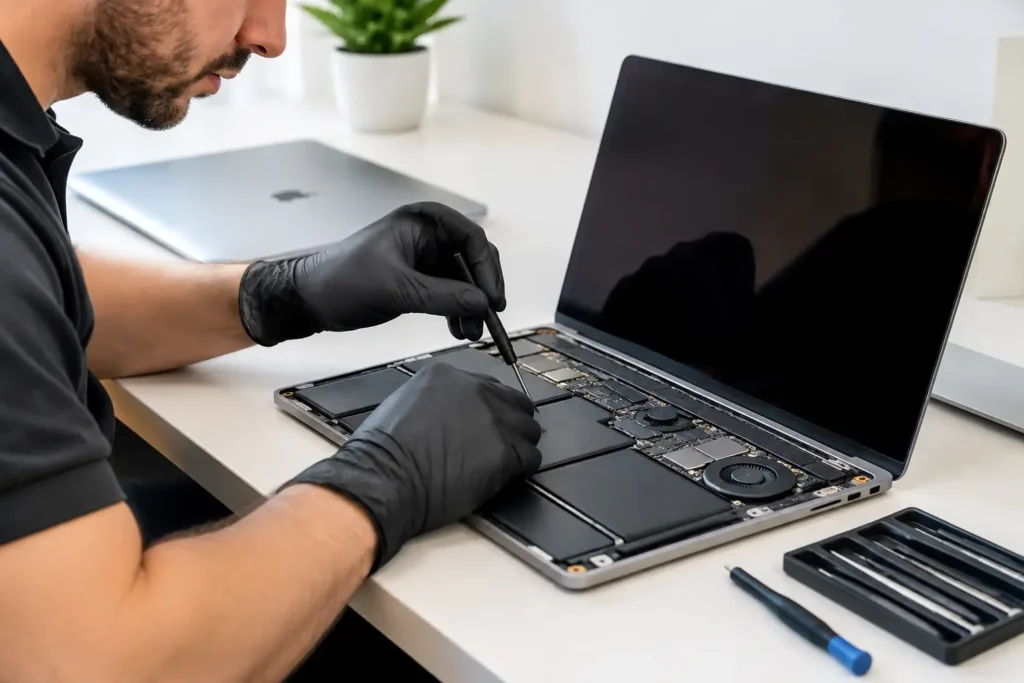
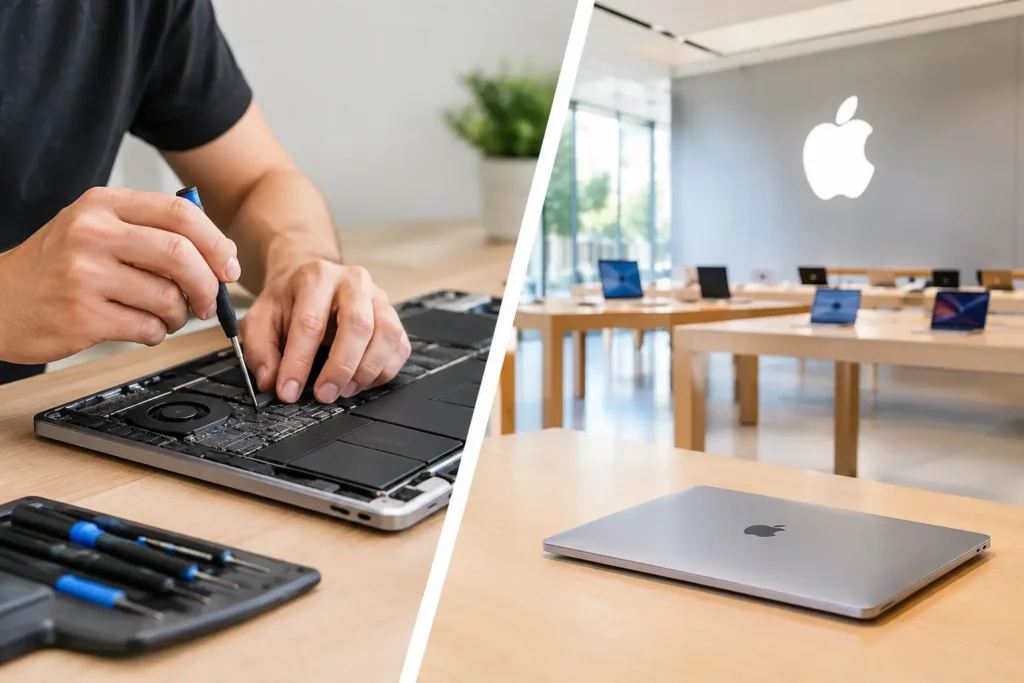
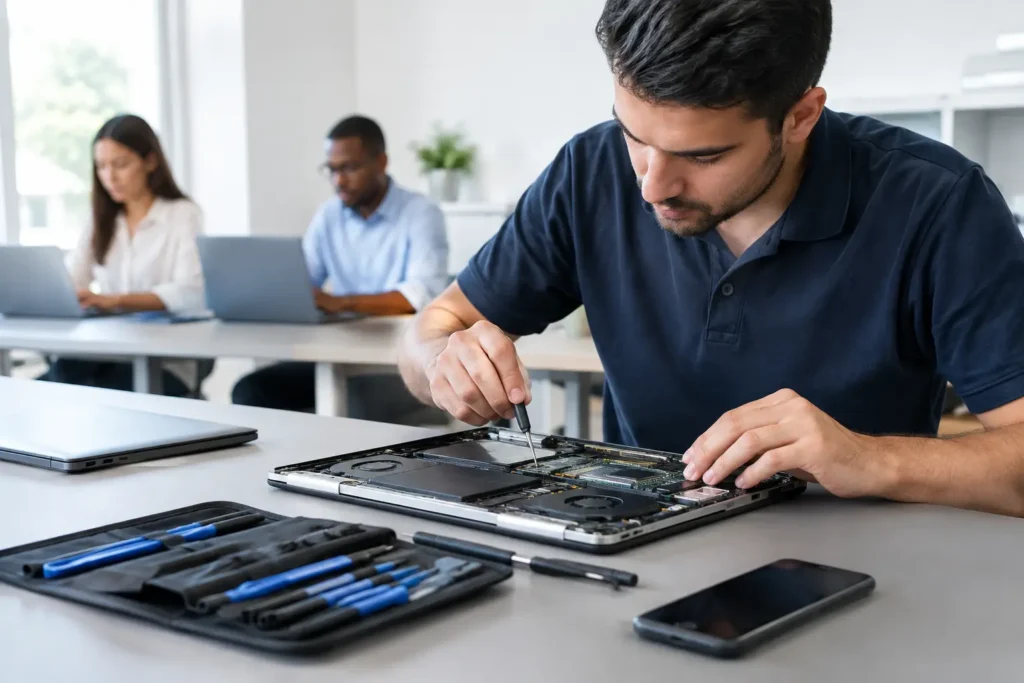
Before spending hundreds of pounds, get the fault diagnosed. TechLab Repairs can assess a wide range of iPhone, Samsung and other devices, explaining the repair options in plain terms so you can decide whether fixing, refurbishing or replacing is the best value. Secure data handling matters here too: your photos, messages and work files should not be an afterthought.
Choose the phone that suits how you actually live
There is no prize for buying the newest handset if a refurbished model covers everything you need. Equally, a new phone is a sound investment when longer support, a fresh battery and complete peace of mind will genuinely make life easier. Start with the device you use now, identify what is frustrating you, and buy the solution rather than the marketing. A clear condition report, honest warranty and reliable local support will always matter more than a shiny box.