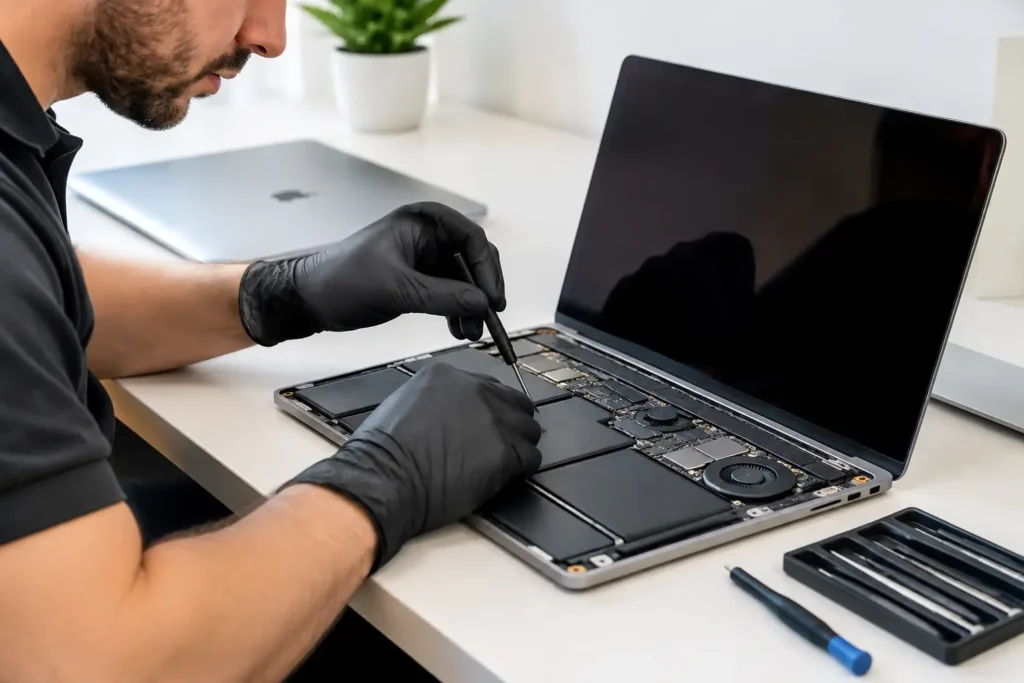
When the card machine stops charging, the office laptop refuses to boot, or a staff phone takes a hit on the shop floor, the problem is rarely just one broken device. For many firms, fixing devices for small businesses is really about keeping sales moving, appointments on track and customers looked after without costly disruption.
A small business does not usually have spare time, spare devices or a full in-house IT team waiting in the background. One faulty tablet at a reception desk can slow down bookings all day. A cracked screen on a delivery driver’s handset can affect communication, navigation and proof of delivery. That is why repair decisions need to be practical, fast and based on what keeps the business operating.
Why fixing devices for small businesses matters
For larger organisations, a broken phone or laptop is often an inconvenience. For smaller firms, it can stop work altogether. A sole trader may run quotes, invoicing, calls and email from one handset. A café might depend on a single tablet for orders, rota updates and payment apps. A school office or local trades business can have years of records, passwords and day-to-day communication tied to a few essential machines.
Replacing everything at the first sign of trouble sounds simple, but it is often the most expensive option. It also creates delays. Setting up a new device, restoring accounts, checking compatibility and making sure staff can get back into systems all take time. In many cases, a professional repair is quicker, more affordable and far less disruptive.
There is also the question of data. Businesses do not just store photos and apps. They hold customer details, supplier information, financial records and internal documents. Sending devices away for assessment or replacing them without a clear plan can create unnecessary risk. Local, specialist repair support often gives businesses more visibility and more confidence about how their devices are handled.
The devices most small businesses rely on
The phrase “business devices” can sound broad, but in practice most firms depend on a fairly familiar mix. Smartphones are usually at the centre of daily communication. Laptops and desktops handle admin, accounts, ordering and customer service. Tablets are common in hospitality, retail and field work. Some businesses also rely on iMacs, MacBooks, gaming-style display systems, consoles used in leisure settings, or specialist hardware connected to screens and HDMI ports.
The key point is that small businesses rarely use technology in isolation. One fault tends to affect several tasks at once. A battery issue can become a missed appointment problem. A charging fault can become a payment delay. A liquid-damaged laptop can become a lost-work panic by the end of the same morning.
That is why broad repair coverage matters. If a business uses Apple, Samsung, Windows laptops, desktops and tablets across different staff roles, it helps to have one repair partner that can deal with the lot rather than bouncing between different specialists.
Repair or replace? The answer depends
Not every device should be repaired, and good advice should say so. The sensible choice depends on the age of the device, the type of fault, the cost of the repair and how critical that device is to daily work.
A straightforward screen replacement on a current phone is usually an easy decision. The same goes for a battery replacement on a laptop that still performs well and runs the software the business needs. These are common repairs that can extend usable life without the cost of buying new.
It becomes less clear with older devices that have multiple issues. If a desktop has major power faults, slow performance, failing storage and outdated software support, replacement may be the better long-term move. The same applies if repair costs begin to approach the value of a dependable replacement.
The trade-off is downtime versus total cost. A cheaper repair is not always better if the device is likely to fail again soon. Equally, buying new is not always wise if the existing machine only needs one targeted fix. The best approach is a proper diagnosis first, then a recommendation based on business use rather than guesswork.
Common repairs that keep firms running
Many business device faults are less dramatic than people expect. They are often everyday hardware problems that build up through heavy use. Screens crack. Batteries fade. Charging ports loosen. Keyboards fail after spills. HDMI ports become damaged from repeated plugging in and out. Internal components can develop faults that look severe but are actually repairable.
Liquid damage is one of the most stressful examples because businesses often assume the data is gone. Sometimes the damage is limited and early treatment makes a real difference. The same goes for logic board faults. These sound terminal, but specialist board-level repair can sometimes save a device that would otherwise be written off.
Power faults are another common issue. A laptop that will not turn on is not automatically beyond repair. It could be a battery, charging circuit, port, motherboard fault or something more isolated. Proper diagnosis matters because replacing a device without understanding the cause can waste money.
What small businesses should expect from a repair service
Speed matters, but speed on its own is not enough. A business repair service should be clear about turnaround, honest about likely outcomes and careful with data. If you are handing over a work phone or company laptop, you need to know the device is being treated professionally from the moment it comes in.
Communication is a big part of this. Businesses should not be left wondering whether a device has been assessed, whether parts are needed or whether the repair is economical. Straightforward updates reduce stress and help managers plan around any disruption.
Security matters just as much. Work devices often contain saved passwords, email access, customer records and internal files. A trustworthy repair process should handle devices with care and discretion. For many local firms, schools and offices, that peace of mind is one of the strongest reasons to use a reputable local specialist rather than posting devices away.
Breadth of service is another practical advantage. If one provider can handle phones, tablets, laptops, desktops and specialist hardware, it saves time and simplifies support. That is especially useful for businesses with mixed devices across teams.
The local advantage for Cumbria businesses
For businesses in Barrow-in-Furness and across Cumbria, local support can make a real difference. Sending devices off to manufacturers or distant service centres often means longer waits, less visibility and more hassle. If a business depends on quick turnaround, that delay can be costly.
A local repair partner is easier to speak to, easier to visit and easier to trust when something urgent happens. There is also a practical benefit in ongoing support. Once a repair team understands how your business operates, the advice becomes more useful. They can help spot repeat issues, recommend sensible maintenance and support multiple devices over time.
That local, one-stop approach is why many organisations choose TechLab Repairs for business and school devices as well as personal tech. Fast, affordable repairs are valuable, but knowing there is dependable help nearby is just as important.
How to reduce future device failures
Repair is only one side of the picture. Small businesses can cut disruption by being more deliberate about device care. That does not require a complicated IT policy. Often it comes down to a few practical habits.
Protective cases and screen protectors make sense for staff phones and tablets used on the move. Charging routines matter too. Devices left permanently on poor-quality chargers often develop battery and port issues earlier. Laptops used in shared spaces benefit from simple spill prevention and regular cleaning. Even cable strain relief at desks can reduce recurring charging and display faults.
It also helps to keep an informal device record. Knowing which devices are older, which have had repeat repairs and which are business-critical makes future decisions easier. If one handset is central to bookings or customer contact, it should be treated differently from a spare office device.
Back-ups are part of this as well. Repair can solve hardware problems, but no business should rely on repair alone as its data plan. Regular back-ups reduce pressure when something does go wrong and make repair-or-replace decisions much simpler.
A smarter way to think about business repairs
The strongest small businesses tend to treat their tech the same way they treat tools, stock or vehicles. It has to work, it has to be dependable and when it breaks, the response needs to be quick and sensible.
Fixing devices for small businesses is not just about mending screens or swapping batteries. It is about protecting continuity, controlling costs and avoiding the knock-on effects that one failed device can cause across a working day. If your phones, tablets or laptops are essential to how you trade, getting them repaired properly is not a stopgap – it is part of keeping the business moving.